THE STORY BEHIND THE STONE
Why Shaniwar Wada
matters.
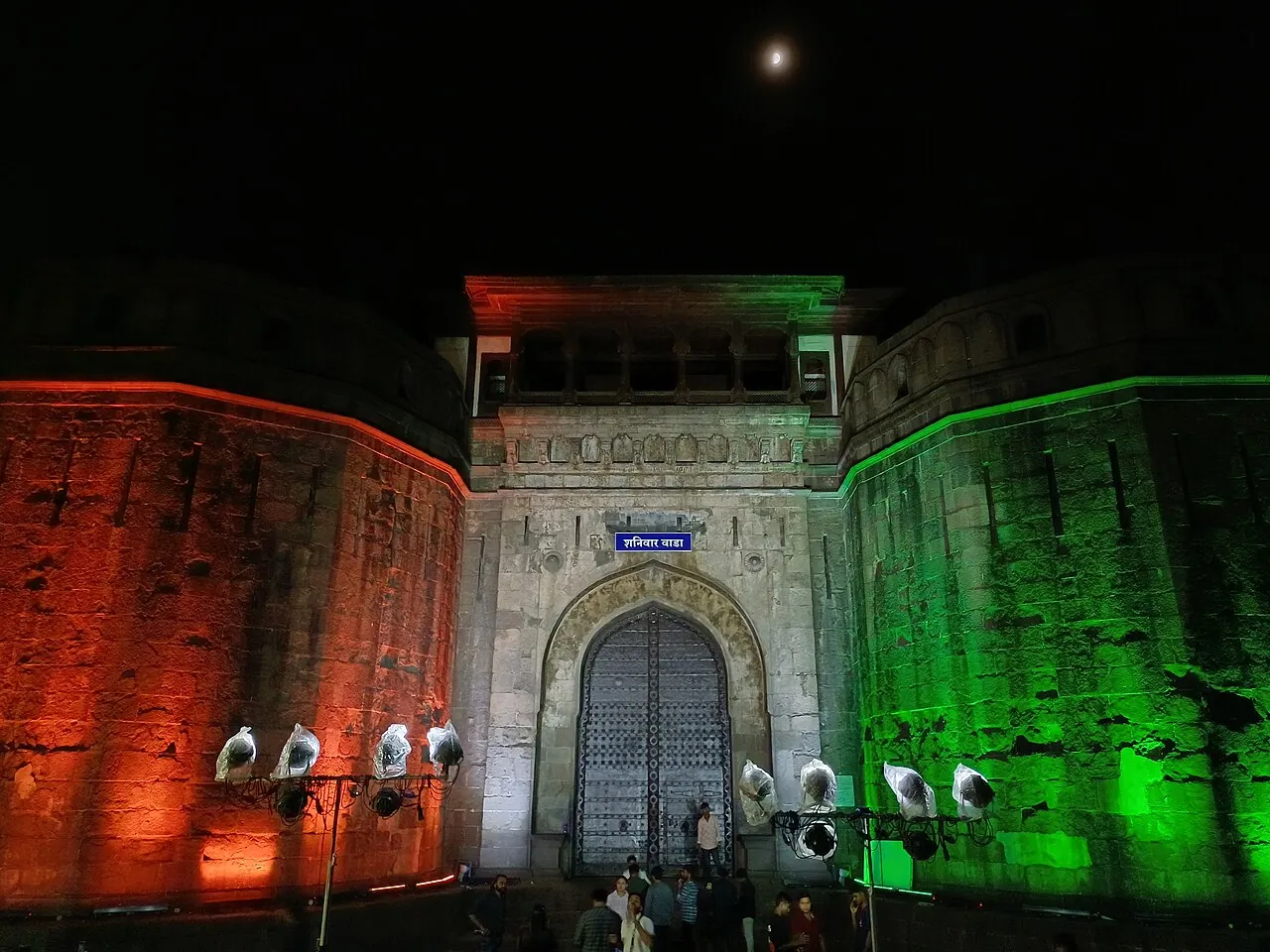
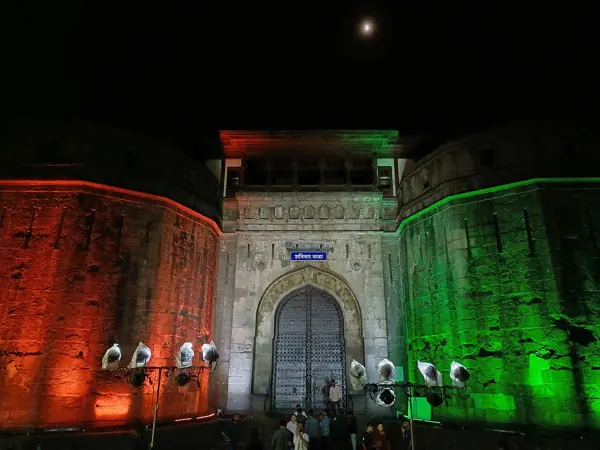
Shaniwar Wada was the fortified residence and political centre of the Peshwas in Pune. Much of the palace complex was destroyed by fire in 1828. Its gates, enclosure and foundations still mark the scale of the former seat of power.
Rulers & historical periods +
Maratha, British / East India Company
Recorded possession intervals may omit changes of control. Exact uninterrupted durations are not assumed from a ruler’s reign.
A PLACE WITHIN THE LARGER STORY
Turning points.
 Explore Shaniwar Wada ↗
Expansion across India
Shaniwar Wada and Pune’s political role
Shaniwar Wada is a historical fortification in the city of Pune, India. Built in 1732, it was the seat of the Peshwas of the Maratha Confederacy until 1818. The fort itself was largely destroyed in 1828 by an unexplained fire, but the surviving structures are now maintained as a tourist site. The Shaniwar Wada was normally the seven-story capital building of the Peshwas of the Maratha Empire. It was supposed to be made entirely of stone. However, after the completion of the base floor or the first story, the people of Satara complained to the Chhatrapati Shahu saying that a stone monument can be sanctioned and built only by the Chhatrapati himself and not the Peshwas. Following this, an official letter was written to the Peshwas stating that the remaining building had to be made of brick and not stone. By 1758, at least a thousand people lived in the fort. In 1773, Narayanrao, who was the tenth and ruling Peshwa then, was murdered by guards on orders of his uncle Raghunathrao and aunt Anandibai. A popular legend has it that Narayanrao's ghost still calls for help on full moon nights.