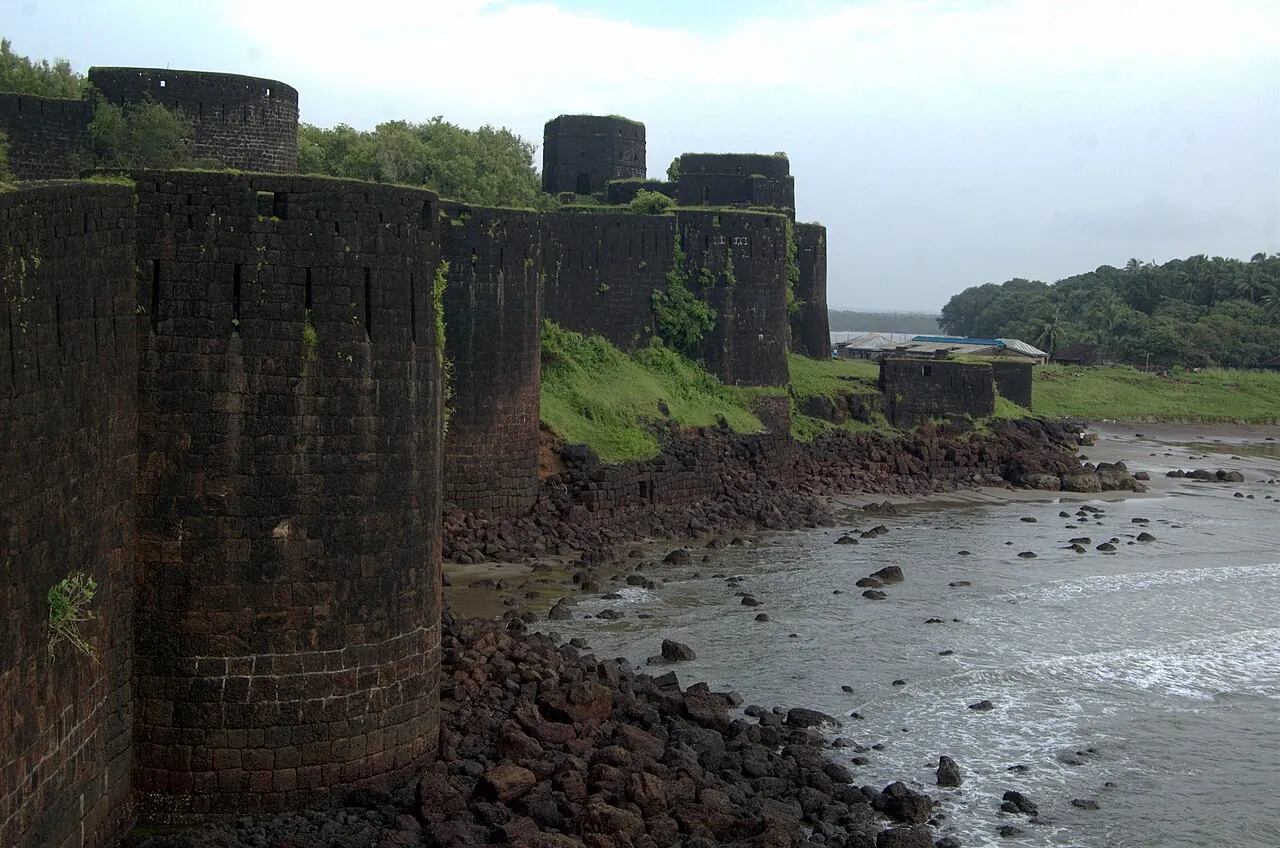
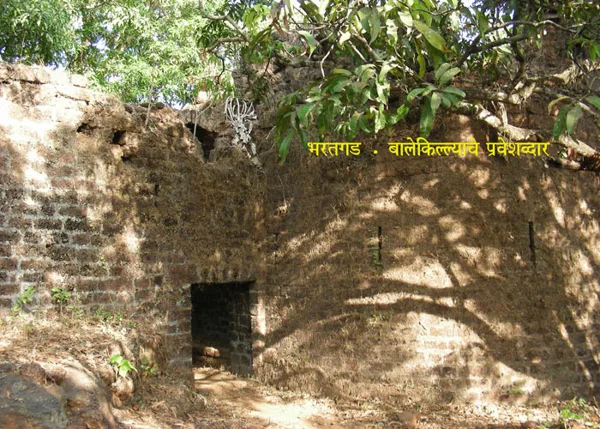
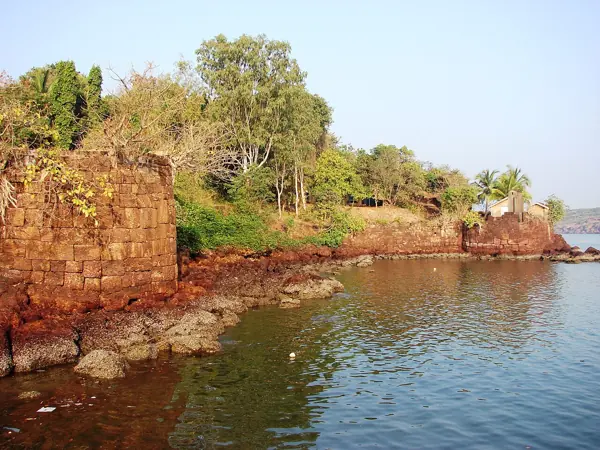
Vijaydurg Fort — documentary photograph

Sindhudurg / Sea fort

Vijaydurg Fort

विजयदुर्ग

Vijaydurg has an earlier history under the Shilahara rulers and was later strengthened under Shivaji Maharaj.

View 9 photographs ↘Documentary photograph
Ravi Vaidyanathan · Original source · CC BY 2.0

YOUR EXPLORATION, AT A GLANCE

EasyMost Recommended

Its documented role in the Maratha fort network gives it exceptional educational and historical value.

View on map ⌖

District
Sindhudurg
Base / nearby village
Not yet verified
Nearby city
Ratnagiri
Source elevation
Not documented

Closest among 11 listed regional hubs by straight-line distance; not road distance. 48 km to the listed city.

THE STORY BEHIND THE STONE

Why Vijaydurg Fort
matters.

Vijaydurg has an earlier history under the Shilahara rulers and was later strengthened under Shivaji Maharaj. Its sheltered coastal position helped it become an important base in the naval history of the Marathas.

The historical source discusses Shivaji Maharaj; see the linked account for the specific episode.

Rulers & historical periods +

Adil Shahi / Bijapur, Mughal, Maratha, British / East India Company

Recorded possession intervals may omit changes of control. Exact uninterrupted durations are not assumed from a ruler’s reign.

A PLACE WITHIN THE LARGER STORY

Turning points.
1664–1667
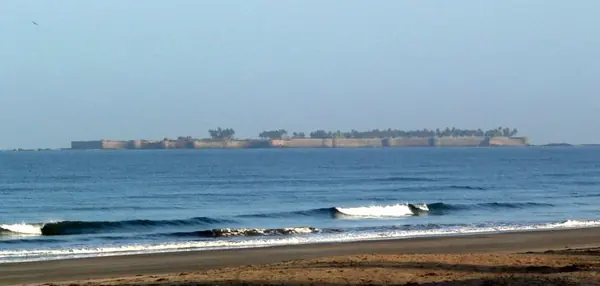
Sindhudurg Fort — documentary photographExplore Sindhudurg Fort ↗

The kingdom takes shape

Sindhudurg and the maritime vision of Swarajya

Chhatrapati Shivaji Maharaj recognised the strategic importance of the coast. Sindhudurg was built on an island off Malvan. Construction began in 1664 and continued until 1667. Hiroji Indulkar is associated with the work’s supervision. The island position made sea access part of its defence. Its walls and gateways were designed for a maritime setting. Coastal strongholds supported naval activity and the protection of shore routes. Vijaydurg, Suvarnadurg and Kolaba belonged to the wider maritime story. Later Maratha naval leaders continued to use and develop coastal bases. Sindhudurg shows that Swarajya’s strategic vision extended beyond the mountains.

Read full story
Sindhudurg stands off Malvan on an island chosen for a major new coastal fortification under Chhatrapati Shivaji Maharaj. Construction began in 1664 and was completed in 1667. The undertaking is associated with the supervision of Hiroji Indulkar. Its scale and setting show the importance assigned to the western seaboard: the Maratha state sought to maintain a presence in a maritime world where local powers and European trading companies contested influence.

An island fort presented different problems from a hilltop stronghold. Materials and labour had to reach the site by water, and its garrison needed dependable supplies. The approaches from the sea, the placement of gateways and the relationship between the walls and surrounding rocks all formed part of the defensive setting. Sindhudurg therefore provides an opportunity to study engineering and logistics alongside the history of kings and campaigns.

The fort should also be read as one part of a longer coastline. Vijaydurg, Suvarnadurg and Kolaba had their own histories and did not all begin in the same construction programme. Together, however, these places reveal the development of bases from which coastal authority and naval activity could be maintained. Later Maratha naval leaders, including Kanhoji Angre and his successors, added another important chapter to that story.

The maritime vision did not remove rivalry or make every expedition successful. Coastal warfare involved changing alliances, difficult navigation and competing control of harbours and shipping. Recognising those complexities makes the achievement of building and maintaining Sindhudurg more understandable. For a visitor today, the fort’s importance lies in the connection it makes between Swarajya, the labour of coastal communities and the technical demands of defence at sea. Its heritage deserves the same care as the better-known mountain capitals.

Sindhudurg Fort ↗Vijaydurg Fort ↗Suvarnadurg ↗Kolaba Fort ↗

Sources: Maharashtra Tourism — Sindhudurg, Sindhudurg District — historical background, UNESCO — Maratha Military Landscapes, Sindhudurg Fort — references

1756
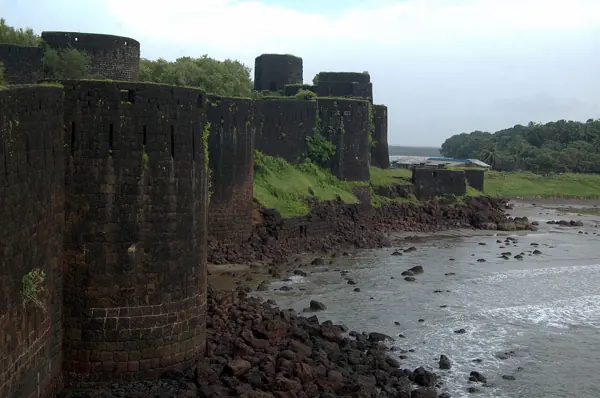
Vijaydurg Fort — documentary photographExplore Vijaydurg Fort ↗

Expansion across India

The attack on Vijaydurg

The Battle of Vijaydurg was fought between Tulaji Angre, the Admiral of the Maratha Navy and the combined forces of the British East India Company and the Maratha Empire led by Peshwa Balaji Baji Rao in early 1756. After the death of Kanhoji Angre, there were two short tenures of Sarkhoji and Sambhaji Angre. Following it, the two brothers Manaji and Tulaji started fighting for the post of Sarkhel. The Peshwa had intervened in the disputes between Manaji and Tulaji. This created two spheres of influence, Manaji in the north at Kulaba and Tulaji in the south at Vijaydurg. Tulaji was brave and a much more skillful seaman than Manaji. In a brief span, he had surpassed the record of his predecessors in the number of English ships captured: Charlotte of Madras, William of Bombay, Svern of Bengal and, Darby, Restoration, Pilot, Augusta and Dadabhoi of Surat. He had also captured Anjanvel from the Siddis of Janjira. Tulaji Angre's tenure was marked by frequent raids into the territories under the Chhatrapatis of Kolhapur and Maratha nobles like the Peshwa, the Pratinidhi, the Sawants of Wadi, etc. These raids led to a feeling of insecurity among the common people and traders of Maharashtra.
Read full story

Adapted source account from the linked Wikipedia article (CC BY-SA 4.0). Parenthetical material and citation markers have been omitted.

The Battle of Vijaydurg was fought between Tulaji Angre, the Admiral of the Maratha Navy and the combined forces of the British East India Company and the Maratha Empire led by Peshwa Balaji Baji Rao in early 1756. After the death of Kanhoji Angre, there were two short tenures of Sarkhoji and Sambhaji Angre. Following it, the two brothers Manaji and Tulaji started fighting for the post of Sarkhel. The Peshwa had intervened in the disputes between Manaji and Tulaji. This created two spheres of influence, Manaji in the north at Kulaba and Tulaji in the south at Vijaydurg. Tulaji was brave and a much more skillful seaman than Manaji. In a brief span, he had surpassed the record of his predecessors in the number of English ships captured: Charlotte of Madras, William of Bombay, Svern of Bengal and, Darby, Restoration, Pilot, Augusta and Dadabhoi of Surat. He had also captured Anjanvel from the Siddis of Janjira. Tulaji Angre's tenure was marked by frequent raids into the territories under the Chhatrapatis of Kolhapur and Maratha nobles like the Peshwa, the Pratinidhi, the Sawants of Wadi, etc. These raids led to a feeling of insecurity among the common people and traders of Maharashtra. Tulaji also allied with the Portuguese against the Marathas. Due to Tulaji's actions, the Peshwa, Balaji Baji Rao, was allied with the British to defeat Tulaji Angre. A treaty was signed according to which a ground force under command of the Peshwa and a naval force under command of the company would attack and destroy Tulaji. Among other articles, the treaty provided that Fort Vijaydurg, when captured, would be given to the Peshwa.
In 1755, Commodore William James of the Bombay Marine attacked the fort Suvarnadurg while the Peshwa's army started capturing land and other coastal forts of Angre. This isolated Suvarnadurg from landward. James first bombarded the fort from the west. 800 shots and shells were expended at a range of 100 yards, but the walls did not collapse. He then entered the channel between the fort and the coast and fired on the eastern face as well as the main gate. Both gave way. Some of the garrison tried to escape from the fort by a tunnel running into the sea, but were discovered and killed. Considerable damage had been caused inside the fort by the bombardment and the garrison, finding no hope of relief or reinforcements, surrendered. James' squadron returned to Bombay for the monsoons. After the fall of Suvarnadurg and all other forts of the Angre, Vijaydurg was the only fort left under the command of Tulaji. In 1756, a large force under Admiral Watson converged on Vijaydurg. Watson had arrived at Bombay from eastern waters and had with him Colonel Clive with 500 topasses and other troops. The English ships took station with Watson flying his flag on HMS Protector. Two bomb vessels were in the extreme east. The Maratha ships were anchored at the mouth of the creek, close to the fort and bunched up, almost hull to hull. Amongst these was the company's ship Restoration, which caught fire.

Consult the original article and its cited historical works for source evidence and differing interpretations. The timeline date identifies the event or beginning of the period; this account may cover a longer span.

Vijaydurg Fort ↗

Sources: Battle of Vijaydurg — historical account and references, Contributor history and attribution, CC BY-SA 4.0 — adapted source extract

READING THE REMAINS

Architecture &
fort features.

Explore features described in the historical source. Their surviving condition and access can vary.

01Temple remains +

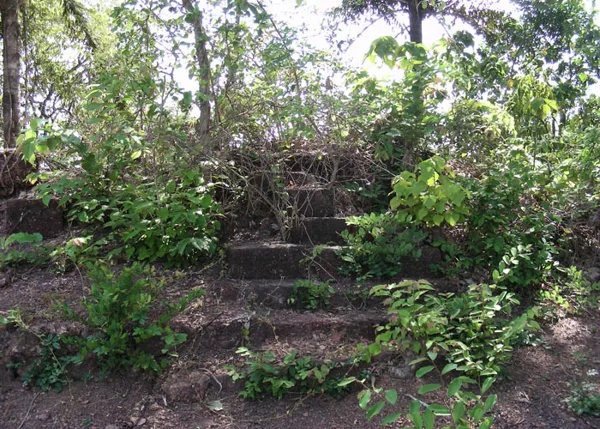
Temple remains is recorded in the linked account of Vijaydurg Fort. Explore the historical sources ↗

Feature inventory only. A surveyed top-down plan is not yet available in this guide.

KNOW THE APPROACH

Plan your
exploration.

Easy
  • The source assigns this grade but does not provide enough route detail to explain individual obstacles.

By road:- Vijaydurg is 525 kms from Mumbai on the Goa highway via Talere junction.By Railway:- Vaibhavwadi railway station is 67 kms from Vijaydurg on the Konkan railway route.

Assessment & safety notes +

Approach described in the linked field guide. Provisional — source guide, current conditions unverified.

Check current local access and weather before travelling. Carry water, use established routes, and leave stonework undisturbed. A map pin identifies the monument, not a safe trailhead or landing point.

Source review: 2026-11-15. Stars describe route difficulty; recommendations are separate editorial judgements. No community review counts are displayed.

KEEP THE JOURNEY GOING

More of Sindhudurg.

All forts ↗

MAHARASHTRA TOURISM · BROCHURE GUIDE

Vijaydurg Fort: heritage & nearby places

Vijaydurg’s sea-facing defences and sheltered coastal setting made it an important Maratha naval stronghold. The brochure traces its origins to the 12th century and its later capture by Chhatrapati Shivaji Maharaj.

Landmarks to look for

  • Sea-facing ramparts
  • Rameshwar Temple

Places in the wider area

  • Kunkeshwar Beach
  • Vijaydurg Beach
  • Devghali Beach
  • Devgad Beach
  • Mithmumbari Beach
  • Devgad Windmills

Brochure activity ideas: Coastal heritage, local food and culture; the brochure also advertises water activities and zipline.

Travel distances from the brochure

Distances are reproduced as brochure figures, not current measured routes. The brochure is undated. Confirm routes and access locally.

By air
Dabolim 180 km; Kolhapur 150 km; Chipi 100 km; Mopa 159 km
By rail
Ratnagiri 120 km; Kankavali 70 km
By road
Goa 180 km; Mumbai 400 km; Pune 340 km

Source clarification: The brochure’s “only two forts” flag claim and 40-km creek claim are not independently established here. Activity availability is unverified.

Adapted from Maharashtra Tourism, Guardians of History — The formidable forts of Maharashtra, PDF pages 11. Read the original PDF ↗ · Explore all brochure forts ↗

Research sources & image credits +
  1. Vijaydurg Fort — history, geographical facts and references ↗
  2. Trekshitiz — field guide and source trek information ↗

Source review: 2026-11-15. Coordinates: Source-referenced.

Research approach and credits ↗