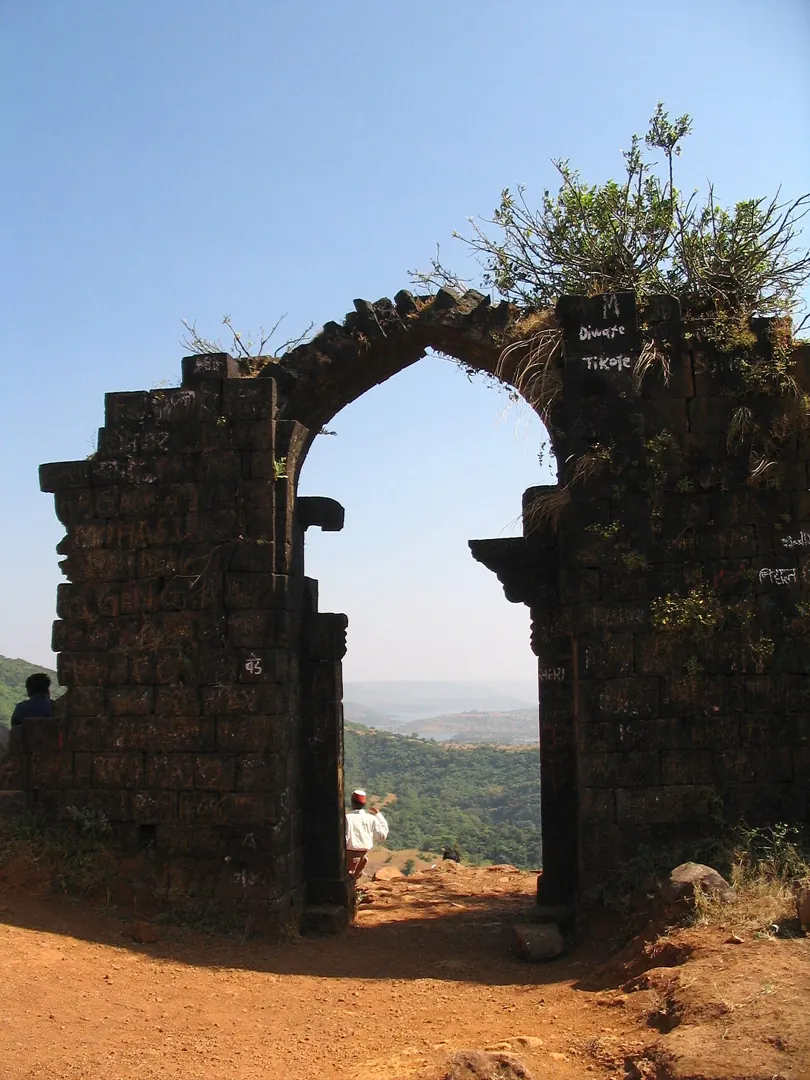
Vishalgad — documentary photograph

Kolhapur / Hill fort

Vishalgad

Known earlier as Khelna, Vishalgad has a history that includes Shilahara, Yadava and later Deccan powers.

View 9 photographs ↘Documentary photograph
Ankur P · Original source · CC BY-SA 2.0

YOUR EXPLORATION, AT A GLANCE

ModerateVisit

A worthwhile local heritage study in Kolhapur; consult the source account to understand the remains and confirm access.

View on map ⌖

District
Kolhapur
Base / nearby village
Not yet verified
Nearby city
Ratnagiri
Source elevation
1090 m

Closest among 11 listed regional hubs by straight-line distance; not road distance. 47 km to the listed city.

THE STORY BEHIND THE STONE

Why Vishalgad
matters.

Known earlier as Khelna, Vishalgad has a history that includes Shilahara, Yadava and later Deccan powers. Its connection with Shivaji Maharaj’s escape from Panhala in 1660 gives it an important place in Maratha memory.

Also known as Khelna

Rulers & historical periods +

Shilahara, Yadava

Shilahara dynasty (1178–1216) Yadavas of Devagiri (1216–1317) Surve Dynasty (1317–1471) Bahamani Sultanate (1471–1525) Bijapur Sultanate (1525–1660) Maratha Empire (1660–1689; 1707–1818) Mughal Empire (1689–1707) East India Company (1818–1858) British Empire (1858–1947) Government of India (1947–present) (source infobox; intervals are approximate and may omit changes of possession)

Recorded possession intervals may omit changes of control. Exact uninterrupted durations are not assumed from a ruler’s reign.

A PLACE WITHIN THE LARGER STORY

Turning points.
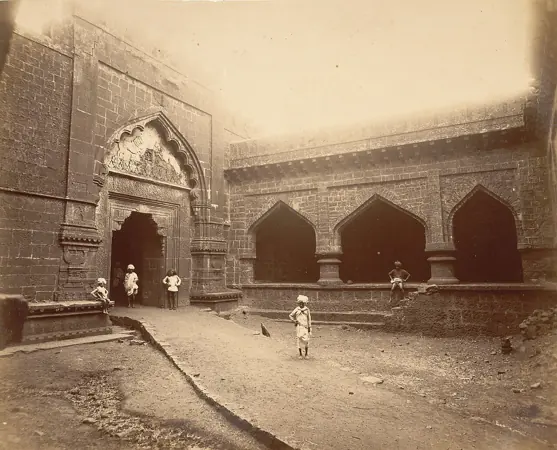
1660
Panhala Fort — documentary photographExplore Panhala Fort ↗

The kingdom takes shape

From Panhala to Vishalgad

Chhatrapati Shivaji Maharaj held Panhala after the campaign of 1659. In 1660, Bijapur forces under Siddi Jauhar besieged the fort. The prolonged siege restricted movement and threatened his position. He escaped from Panhala and made for Vishalgad. The withdrawal depended on the efforts of accompanying Maratha troops. Baji Prabhu Deshpande helped hold back the pursuing forces. He died in the fighting associated with the pass now called Pavan Khind. Chhatrapati Shivaji Maharaj reached the refuge of Vishalgad. Panhala later returned to Maratha control in 1673. The episode is remembered for leadership, loyalty and sacrifice.
Read full story

Panhala was a major stronghold in the southern Deccan before it entered Maratha history. Its broad summit, stores and position above routes connecting the inland plateau with the Konkan made it a valuable possession. Chhatrapati Shivaji Maharaj acquired it after the successes of 1659. In the following year, the Bijapur commander Siddi Jauhar brought a large force against him and established a prolonged siege.

The central problem was movement. A defended fort could protect its occupants, but a close siege also limited their ability to act elsewhere. Chhatrapati Shivaji Maharaj escaped and moved towards Vishalgad. During the pursuit, Baji Prabhu Deshpande and the men with him resisted the pursuing troops at a narrow pass. Baji Prabhu died in that fighting, which is remembered through the name Pavan Khind. The withdrawal allowed Chhatrapati Shivaji Maharaj to reach another stronghold and continue directing the struggle.

This episode is especially useful for understanding a network of forts. Panhala and Vishalgad were not interchangeable buildings; their value depended on routes between them, the condition of those routes and the people able to defend them. The memory of Baji Prabhu and the accompanying soldiers also reminds visitors that royal history depended on collective effort. Individual leadership and the service of commanders, garrisons and local supporters were closely connected.

The escape did not mean that Panhala had become permanently secure. It passed out of Maratha possession and was recovered in 1673. That later recovery belongs to a separate campaign, not to the escape itself. Dates and details in popular retellings vary, so the site presents the established sequence without treating every dramatic tradition as a contemporary record. The lasting importance of the event is the survival of leadership through a difficult military situation and the sacrifice remembered along the route.

Panhala Fort ↗Vishalgad ↗

Sources: Kolhapur Gazetteer — Panhala siege and recovery, Maharashtra Tourism — Panhala, Incredible India — Panhala Fort

READING THE REMAINS

Architecture &
fort features.

Explore features described in the historical source. Their surviving condition and access can vary.

Architectural features await a reliable, fort-specific account.

Feature inventory only. A surveyed top-down plan is not yet available in this guide.

KNOW THE APPROACH

Plan your
exploration.

Moderate
  • The source assigns this grade but does not provide enough route detail to explain individual obstacles.

There is a distance of 80 km between Kolhapur and Vishalgad. There are two ways to reach Vishalgad from Kolhapur.1) Kolhapur – Malkapur – Pandharpani (Paavankhind) – Bhaat tali – Gajapur – Vishalgad. This way one gets to visit Paavankhind on the way.2) Kolhapur – Malkapur – Amba – Gajapur…

Assessment & safety notes +

Approach described in the linked field guide. Provisional — source guide, current conditions unverified.

Check current local access and weather before travelling. Carry water, use established routes, and leave stonework undisturbed. A map pin identifies the monument, not a safe trailhead or landing point.

Source review: 2026-11-15. Stars describe route difficulty; recommendations are separate editorial judgements. No community review counts are displayed.

KEEP THE JOURNEY GOING

More of Kolhapur.

All forts ↗
Research sources & image credits +
  1. Vishalgad — history, geographical facts and references ↗
  2. Trekshitiz — field guide and source trek information ↗

Source review: 2026-11-15. Coordinates: Source-referenced.

Research approach and credits ↗