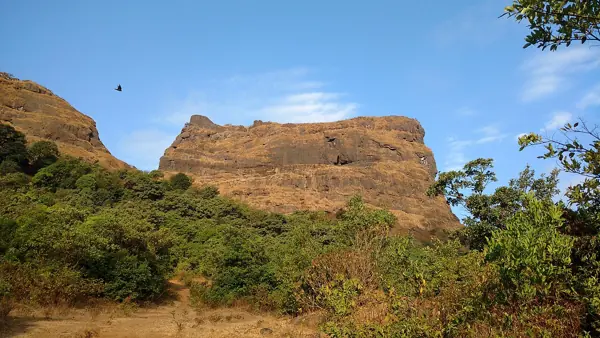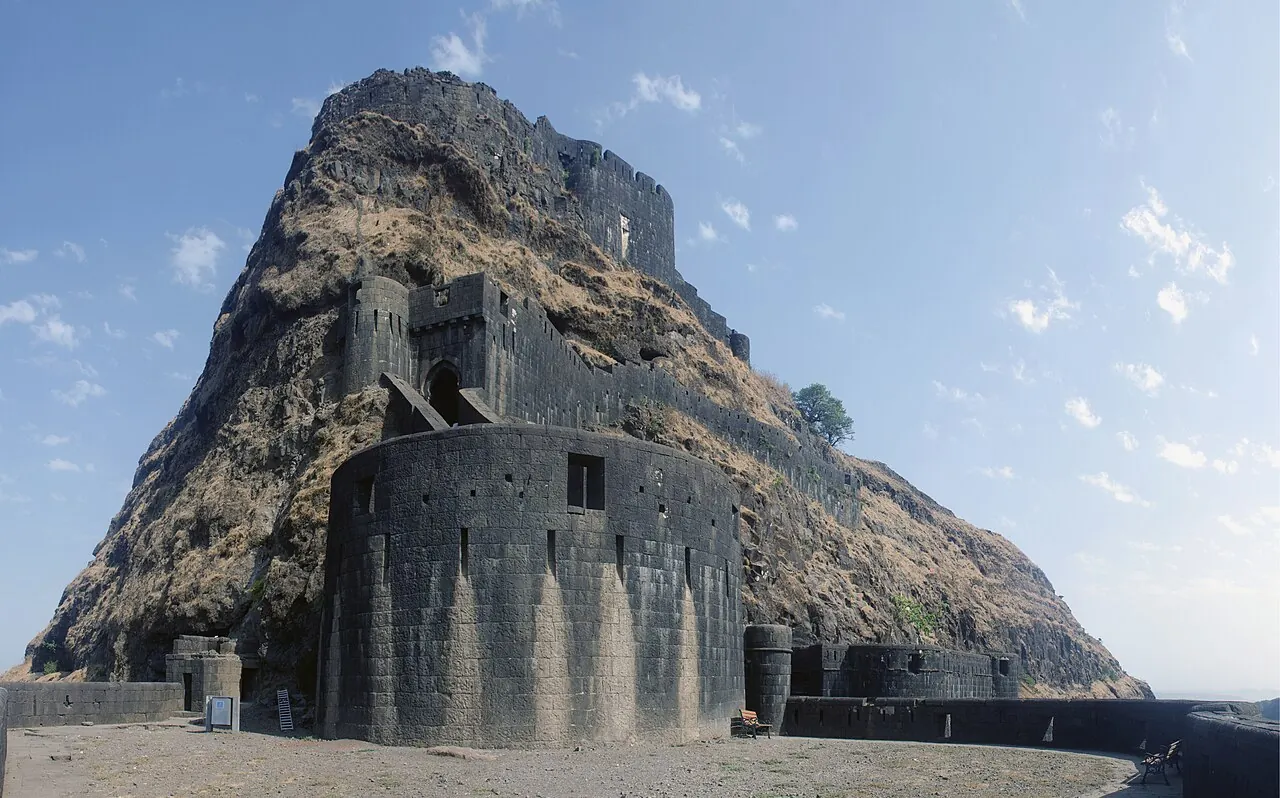
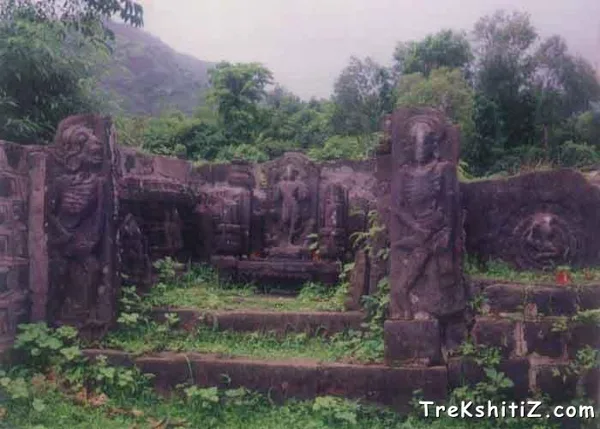
Lohagad — documentary photograph

Pune / Hill fort

Lohagad

लोहगड

Lohagad overlooks the routes near the ancient trading centres of the western Deccan.

View 9 photographs ↘Documentary photograph
Rangan Datta Wiki · Original source · CC BY-SA 4.0

YOUR EXPLORATION, AT A GLANCE

Difficulty Not Yet VerifiedMost Recommended

Its documented role in the Maratha fort network gives it exceptional educational and historical value.

View on map ⌖

District
Pune
Base / nearby village
Lohagadwadi
Nearby city
Pune
Source elevation
Not documented

Closest among 11 listed regional hubs by straight-line distance; not road distance. 45 km to the listed city.

THE STORY BEHIND THE STONE

Why Lohagad
matters.

Lohagad overlooks the routes near the ancient trading centres of the western Deccan. It changed hands between several powers, including the Marathas and Mughals. Its long fortified spur, Vinchu Kata, is a distinctive part of the defensive landscape.

The historical source discusses Shivaji Maharaj; see the linked account for the specific episode.

Rulers & historical periods +

Yadava, Mughal, Maratha

Recorded possession intervals may omit changes of control. Exact uninterrupted durations are not assumed from a ruler’s reign.

A PLACE WITHIN THE LARGER STORY

Turning points.
1665
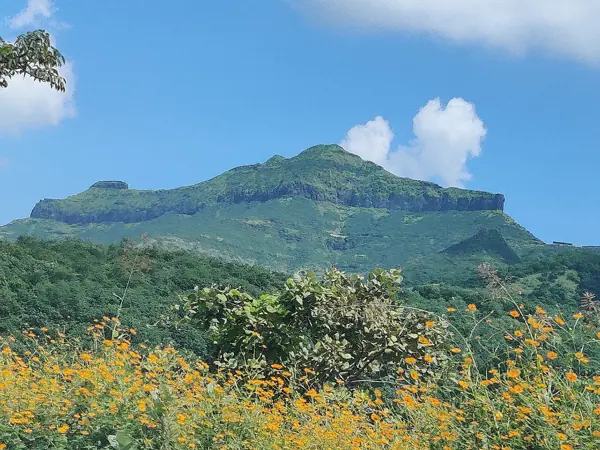
Purandar fort — documentary photographExplore Purandar fort ↗

The kingdom takes shape

Purandar: resistance and diplomacy

Mughal forces campaigned against Chhatrapati Shivaji Maharaj in 1665. Mirza Raja Jai Singh directed the campaign, with Diler Khan at Purandar. Murarbaji Deshpande is remembered for his defence of the fort. He lost his life during the fighting. Pressure on Purandar contributed to negotiations. The Treaty of Purandar required the transfer of twenty-three forts. Chhatrapati Shivaji Maharaj retained twelve forts, including Rajgad. Several surrendered strongholds were recovered in later campaigns. Purandar therefore represents diplomacy as well as armed resistance. Its history shows that Swarajya developed through changing circumstances.
Read full story

The campaign of 1665 placed serious pressure on the territories held by Chhatrapati Shivaji Maharaj. Mirza Raja Jai Singh led the Mughal expedition, while Diler Khan took a prominent part in the operations against Purandar. The fort and its companion stronghold of Vajragad formed a defensive setting in which the loss of an adjacent height could affect the security of the larger position. Purandar’s history makes the relationship between neighbouring forts particularly clear.

Murarbaji Deshpande led a determined defence and died in the fighting. He is remembered with respect as a commander whose service became central to the fort’s historical identity. The military pressure nevertheless led to negotiations. Under the Treaty of Purandar, Chhatrapati Shivaji Maharaj agreed to surrender twenty-three forts while retaining twelve, among them Rajgad. A treaty of this kind affected revenue and territorial authority as well as the possession of masonry walls.

The agreement should be read as a decision made under particular constraints, rather than as the end of the Maratha political project. Strongholds changed hands again as relations and campaigns changed. Purandar itself returned to Maratha control in 1670. Lohagad and other forts also re-entered the Maratha network in that period. The five years between treaty and recovery help visitors see that the history of a fort often consists of several distinct phases of possession.

Purandar carries another important association: it is the birthplace of Chhatrapati Sambhaji Maharaj. That connection gives the site significance beyond the siege alone. A visit can therefore bring together family history, the service of Murarbaji, the geography of the defences and the choices made through negotiation. This fuller view honours the people involved without reducing a complex campaign to a single slogan or treating temporary concessions as permanent outcomes.

Purandar fort ↗Lohagad ↗Rajgad ↗Tikona ↗

Sources: Maharashtra Tourism — Purandar, Purandar Fort — source article and references, Treaty of Purandar (1665) — terms and references

READING THE REMAINS

Architecture &
fort features.

Explore features described in the historical source. Their surviving condition and access can vary.

01Gateways +

Gateways is recorded in the linked account of Lohagad. Explore the historical sources ↗

02Caves +

Caves is recorded in the linked account of Lohagad. Explore the historical sources ↗

Feature inventory only. A surveyed top-down plan is not yet available in this guide.

KNOW THE APPROACH

Plan your
exploration.

Difficulty Not Yet Verified
  • Reliable route evidence is insufficient for a numerical rating.

Detailed routes are not verified. Consult the source guide and confirm access locally.

Assessment & safety notes +

Not verified. Insufficient evidence.

Check current local access and weather before travelling. Carry water, use established routes, and leave stonework undisturbed. A map pin identifies the monument, not a safe trailhead or landing point.

Source review: 2026-11-15. Stars describe route difficulty; recommendations are separate editorial judgements. No community review counts are displayed.

KEEP THE JOURNEY GOING

More of Pune.

All forts ↗

MAHARASHTRA TOURISM · BROCHURE GUIDE

Lohagad: heritage & nearby places

Lohagad, the Iron Fort, overlooks the Pawna landscape near Lonavala and is linked by a ridge to Visapur. Its surviving gates and Vinchu Kata spur make it a distinctive introduction to Maharashtra’s hill forts.

Landmarks to look for

  • Four major gates
  • Vinchu Kata

Places in the wider area

  • Pawna Dam
  • Bhaja Caves
  • Karla Caves
  • Visapur Fort

Brochure activity ideas: Trekking and nature photography.

Travel distances from the brochure

Distances are reproduced as brochure figures, not current measured routes. The brochure is undated. Confirm routes and access locally.

By air
Pune 70 km; Mumbai 110 km
By rail
Lonavala 15 km; Malavli 5 km
By road
Pune 65 km; Mumbai 100 km; Lonavala 15 km

Source clarification: The brochure also promotes climbing and paragliding; these are not confirmed fort facilities or visitor permissions.

Adapted from Maharashtra Tourism, Guardians of History — The formidable forts of Maharashtra, PDF pages 8, 9. Read the original PDF ↗ · Explore all brochure forts ↗

Research sources & image credits +
  1. Lohagad — history, geographical facts and references ↗

Source review: 2026-11-15. Coordinates: Source-referenced.

Research approach and credits ↗