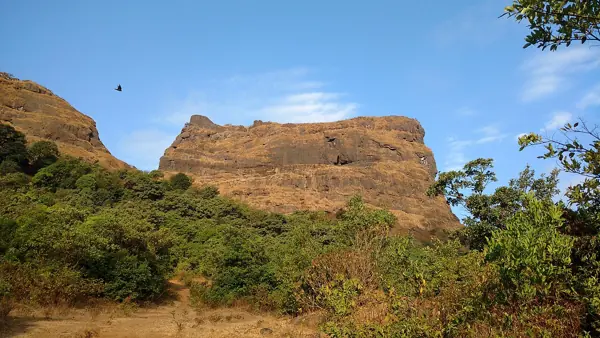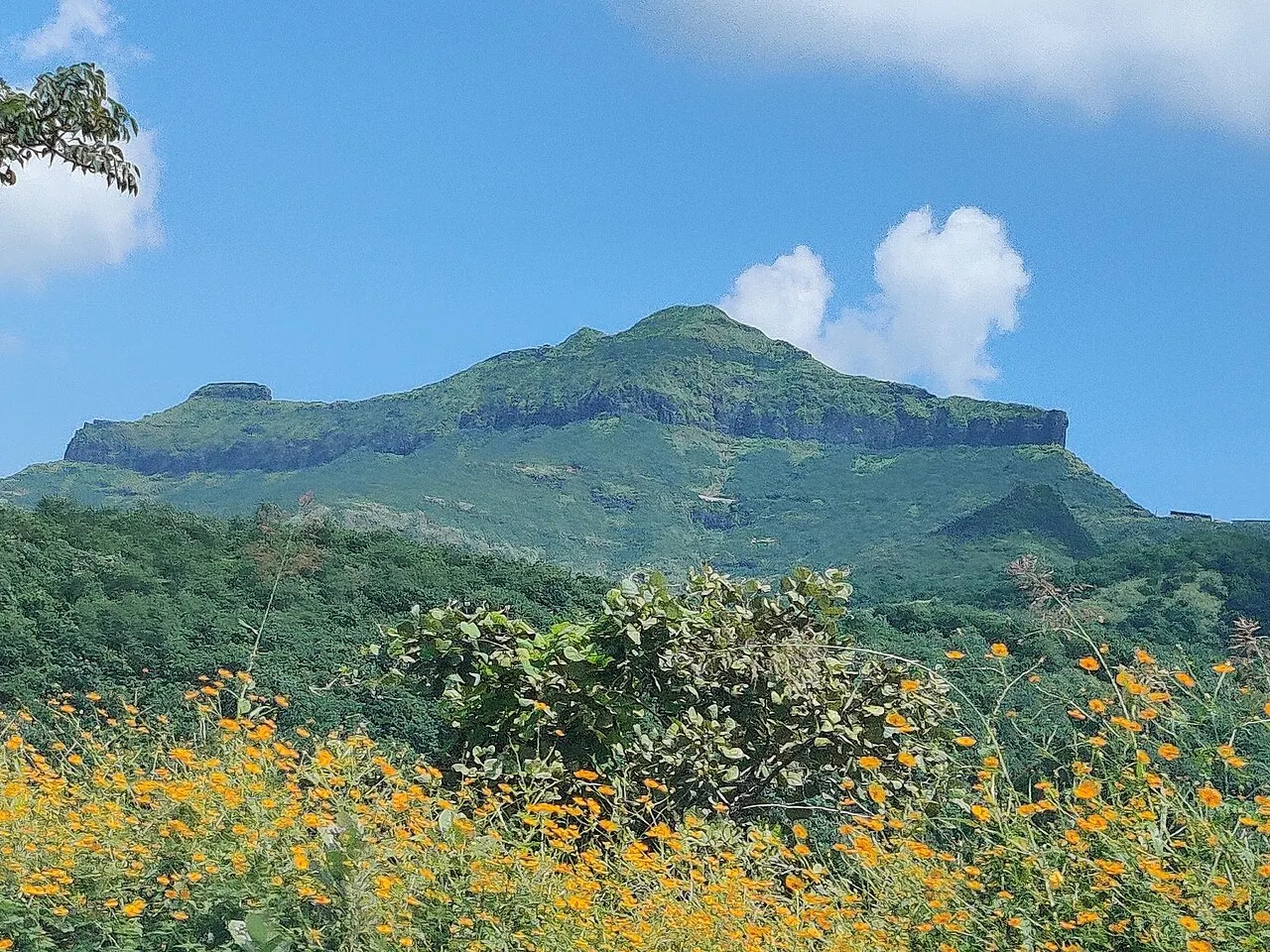
Purandar fort — documentary photograph

Pune / Hill fort

Purandar fort

पुरंदर

Hill fort in Pune, within the Western Maharashtra region of Maharashtra.

View 9 photographs ↘Documentary photograph
Ashwin Baindur · Original source · CC BY-SA 4.0

YOUR EXPLORATION, AT A GLANCE

EasyRecommended

The source describes bastions, temple remains, gateways, offering a useful introduction to this fort’s architecture.

View on map ⌖

District
Pune
Base / nearby village
Not yet verified
Nearby city
Pune
Source elevation
1,374 metres (4,508 ft)

Closest among 11 listed regional hubs by straight-line distance; not road distance. 30 km to the listed city.

THE STORY BEHIND THE STONE

Why Purandar fort
matters.

Near the foothills of Purandar, is the small village called Narayanpur. In this village is a temple of Lord Mahadev constructed sometime during the Yadav’s dynasty. The fort is thus blessed with a history of around 1000 to 1200 years.Just as Lord Indra occupies an undisputed position among gods and goddess, same is the status of Purandar among other forts. Its mythological name is “Indraneel Parvat”. As per Hindu mythology, when Lord Hanuman attempted to carry Dronagiri mountain range, a portion of it slipped off his hands and fell down to form “Indraneel Parvat”. The history of this glorious fort dates back to the Bahamani Regime. Chandrasampat Deshpande of Bedar…

The historical source discusses Shivaji Maharaj; see the linked account for the specific episode.

Rulers & historical periods +

Yadava, Adil Shahi / Bijapur, Mughal, Maratha, British / East India Company

Recorded possession intervals may omit changes of control. Exact uninterrupted durations are not assumed from a ruler’s reign.

A PLACE WITHIN THE LARGER STORY

Turning points.
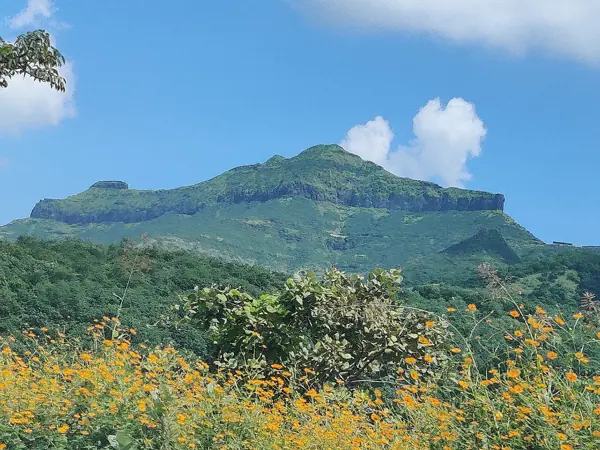
1657 · life and context
Purandar fort — documentary photographExplore Purandar fort ↗

Foundations of Swarajya

Early life of Chhatrapati Sambhaji Maharaj

Sambhaji, also known as Shambhuraje, ruled from 1681 to 1689 as the second king of the Maratha Empire, a prominent state in early modern India. He was the eldest son of Shivaji, the founder of the Maratha Empire. At the age of nine, Sambhaji was taken as a political hostage of the Mughal Empire, to guarantee his father's compliance with the treaty of Purandar. He later accompanied his father to Agra where both were placed under house arrest by the Mughal Emperor Aurangzeb; they subsequently escaped. He was later confined by his father at Panhala Fort, with some theories suggesting that it was due to his addiction to "sensual pleasures" or for violating a Brahmin woman. He subsequently defected to the Mughal Empire and served under Diler Khan in the Battle of Bhupalgarh against his father. He ascended the throne following his father's death, with his rule being largely shaped by the ongoing wars between the Marathas and the Mughal Empire, as well as other neighbouring powers such as the Siddi of Janjira, the Wadiyars of Mysore and the Portuguese Empire in Goa. Early in his rule, Marathas under Sambhaji attacked and disrupted supply lines and raided into the Mughal territory, although they were unsuccessful in taking over main forts. In 1683, Sambhaji executed 24 members of influential families including top government ministers after discovering a plot to poison him. By 1685, Mughals had gradually pushed back Sambhaji's forces by taking over their strongholds.

Read full story

Adapted source account from the linked Wikipedia article (CC BY-SA 4.0). Parenthetical material and citation markers have been omitted.

Sambhaji, also known as Shambhuraje, ruled from 1681 to 1689 as the second king of the Maratha Empire, a prominent state in early modern India. He was the eldest son of Shivaji, the founder of the Maratha Empire. At the age of nine, Sambhaji was taken as a political hostage of the Mughal Empire, to guarantee his father's compliance with the treaty of Purandar. He later accompanied his father to Agra where both were placed under house arrest by the Mughal Emperor Aurangzeb; they subsequently escaped. He was later confined by his father at Panhala Fort, with some theories suggesting that it was due to his addiction to "sensual pleasures" or for violating a Brahmin woman. He subsequently defected to the Mughal Empire and served under Diler Khan in the Battle of Bhupalgarh against his father. He ascended the throne following his father's death, with his rule being largely shaped by the ongoing wars between the Marathas and the Mughal Empire, as well as other neighbouring powers such as the Siddi of Janjira, the Wadiyars of Mysore and the Portuguese Empire in Goa. Early in his rule, Marathas under Sambhaji attacked and disrupted supply lines and raided into the Mughal territory, although they were unsuccessful in taking over main forts. In 1683, Sambhaji executed 24 members of influential families including top government ministers after discovering a plot to poison him. By 1685, Mughals had gradually pushed back Sambhaji's forces by taking over their strongholds. Desertions became common by the end of his reign, and he had alienated Maratha deshmukhs by burning villages to deny supplies to the Portuguese. In 1689, he was captured by Mughal forces and executed.

His brother Rajaram I succeeded him as king and continued the Mughal–Maratha Wars. Sambhaji is viewed poorly by historians, who note that his personal problems—and war crimes committed by his soldiers—overshadowed his moderate military and administrative successes. Maratha soldiers under Sambhaji's command during his campaigns committed atrocities against civilians including massacres and mass rape. As a ruler, Sambhaji implemented drought relief measures and encouraged agricultural development while continuing his father's administrative systems. He was also a scholar who authored several works in Sanskrit and Hindustani, including the political treatise Budhbhushanam. His torture and death at the hands of the Mughal Empire elevated him to the status of a martyr. He remains popular in modern India among many Hindu nationalists. Sambhaji was born at Purandar fort to the Maratha Chhtrapati, Shivaji, and his first wife, Saibai, who died when he was two years old. He was then raised by his paternal grandmother Jijabai. At the age of nine, Sambhaji was sent to live with Raja Jai Singh I of Amber as a political hostage to ensure compliance with the Treaty of Purandar that Shivaji had signed with the Mughals on 11 June 1665. As a result of the treaty, Sambhaji became a Mughal mansabdar. He and his father Shivaji attended the Mughal emperor Aurangzeb's court at Agra on 12 May 1666. Aurangzeb put both of them under house arrest but they escaped on 22 July 1666.

Consult the original article and its cited historical works for source evidence and differing interpretations. The timeline date identifies the event or beginning of the period; this account may cover a longer span.

Purandar fort ↗

Sources: Sambhaji — historical account and references, Contributor history and attribution, CC BY-SA 4.0 — adapted source extract

1665
Purandar fort — documentary photographExplore Purandar fort ↗

The kingdom takes shape

Purandar: resistance and diplomacy

Mughal forces campaigned against Chhatrapati Shivaji Maharaj in 1665. Mirza Raja Jai Singh directed the campaign, with Diler Khan at Purandar. Murarbaji Deshpande is remembered for his defence of the fort. He lost his life during the fighting. Pressure on Purandar contributed to negotiations. The Treaty of Purandar required the transfer of twenty-three forts. Chhatrapati Shivaji Maharaj retained twelve forts, including Rajgad. Several surrendered strongholds were recovered in later campaigns. Purandar therefore represents diplomacy as well as armed resistance. Its history shows that Swarajya developed through changing circumstances.

Read full story
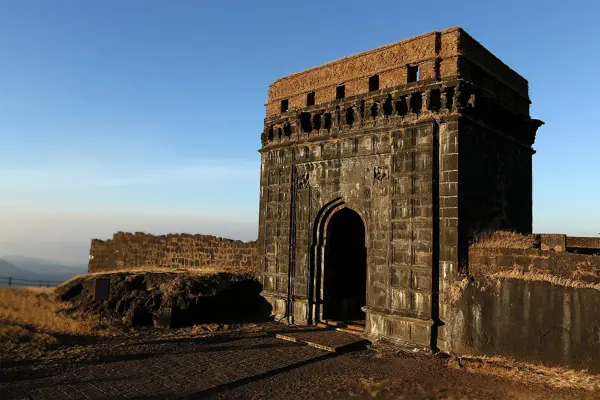
The campaign of 1665 placed serious pressure on the territories held by Chhatrapati Shivaji Maharaj. Mirza Raja Jai Singh led the Mughal expedition, while Diler Khan took a prominent part in the operations against Purandar. The fort and its companion stronghold of Vajragad formed a defensive setting in which the loss of an adjacent height could affect the security of the larger position. Purandar’s history makes the relationship between neighbouring forts particularly clear.

Murarbaji Deshpande led a determined defence and died in the fighting. He is remembered with respect as a commander whose service became central to the fort’s historical identity. The military pressure nevertheless led to negotiations. Under the Treaty of Purandar, Chhatrapati Shivaji Maharaj agreed to surrender twenty-three forts while retaining twelve, among them Rajgad. A treaty of this kind affected revenue and territorial authority as well as the possession of masonry walls.

The agreement should be read as a decision made under particular constraints, rather than as the end of the Maratha political project. Strongholds changed hands again as relations and campaigns changed. Purandar itself returned to Maratha control in 1670. Lohagad and other forts also re-entered the Maratha network in that period. The five years between treaty and recovery help visitors see that the history of a fort often consists of several distinct phases of possession.

Purandar carries another important association: it is the birthplace of Chhatrapati Sambhaji Maharaj. That connection gives the site significance beyond the siege alone. A visit can therefore bring together family history, the service of Murarbaji, the geography of the defences and the choices made through negotiation. This fuller view honours the people involved without reducing a complex campaign to a single slogan or treating temporary concessions as permanent outcomes.

Purandar fort ↗Lohagad ↗Rajgad ↗Tikona ↗

Sources: Maharashtra Tourism — Purandar, Purandar Fort — source article and references, Treaty of Purandar (1665) — terms and references

1681–1689
Raigad — documentary photographExplore Raigad ↗

Resistance and endurance

Chhatrapati Sambhaji Maharaj: kingship and resistance

Chhatrapati Sambhaji Maharaj was born at Purandar in 1657. He succeeded Chhatrapati Shivaji Maharaj after the crisis of 1680. His formal coronation at Raigad took place in January 1681. He carried responsibility for the Maratha state during intense warfare. Aurangzeb’s arrival in the Deccan brought sustained Mughal pressure. The kingdom also faced challenges along its western coast. Forts, commanders and supply systems sustained resistance across several fronts. His reign cannot be understood through battles alone. He was captured and executed in 1689. His life remains an enduring part of Maharashtra’s memory of courage and duty.
Read full story

Chhatrapati Sambhaji Maharaj inherited a substantial but contested state. Born at Purandar in 1657, he had grown up within the political world created by Chhatrapati Shivaji Maharaj. After his father’s death in 1680, a succession struggle preceded his establishment as ruler. The formal coronation at Raigad took place in January 1681. Some accounts give different day dates, so the month and year are used here rather than presenting that disagreement as settled.

His reign coincided with a particularly demanding phase of the Mughal–Maratha conflict. Aurangzeb brought the imperial court and army into the Deccan, making warfare prolonged and geographically extensive. The Maratha state also dealt with the Siddis and Portuguese on the coast. Decisions about armies, supplies, diplomacy and the protection of territory were therefore connected across several fronts. A ruler could not be physically present at every fort that resisted an attack.

The forts mattered as places for garrisons, stores, administration and communication. Their survival depended on commanders and communities as well as royal direction. Remembering Chhatrapati Sambhaji Maharaj’s contribution should include that work of maintaining a state under pressure, rather than relying on unsupported claims that no fort was ever lost or that every campaign ended in victory. Historical respect is compatible with recognising the difficulty and complexity of the circumstances.

He was captured at Sangameshwar in 1689 and executed by order of Aurangzeb. The Maratha struggle continued under Chhatrapati Rajaram Maharaj and later under Maharani Tarabai’s leadership. His death was therefore a profound rupture, but not the end of Maratha resistance. Raigad, Purandar and Panhala provide different points of entry into his life: royal capital, birthplace and a stronghold associated with the succession. Together they give his memory a fuller historical setting.

Raigad ↗Purandar fort ↗Panhala Fort ↗

Sources: Kolhapur Gazetteer — succession and January 1681 coronation, University of Mumbai — History of Medieval India, Sambhaji — biographical account and references, Sangli Gazetteer — capture and execution in 1689

READING THE REMAINS

Architecture &
fort features.

Explore features described in the historical source. Their surviving condition and access can vary.

01Bastions +

Bastions is recorded in the linked account of Purandar fort. Explore the historical sources ↗

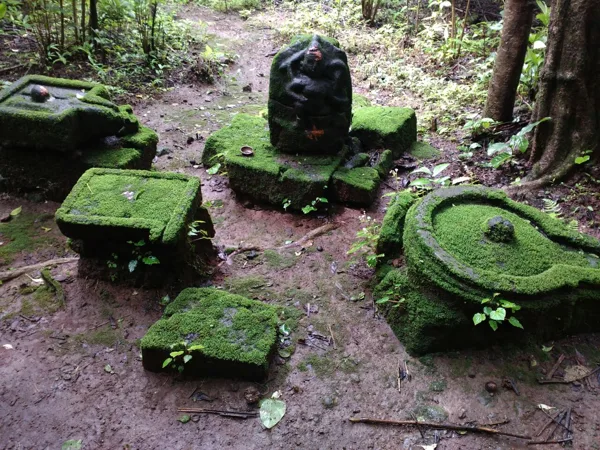
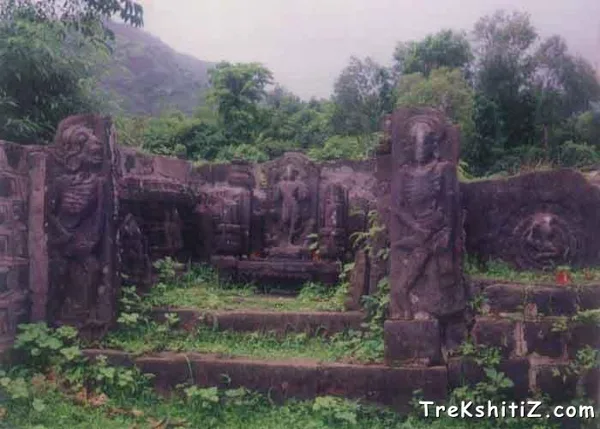
02Temple remains +

Temple remains is recorded in the linked account of Purandar fort. Explore the historical sources ↗

03Gateways +

Gateways is recorded in the linked account of Purandar fort. Explore the historical sources ↗

Feature inventory only. A surveyed top-down plan is not yet available in this guide.

KNOW THE APPROACH

Plan your
exploration.

Easy
  • The source assigns this grade but does not provide enough route detail to explain individual obstacles.

Detailed routes are not verified. Consult the source guide and confirm access locally.

Assessment & safety notes +

Approach described in the linked field guide. Provisional — source guide, current conditions unverified.

Check current local access and weather before travelling. Carry water, use established routes, and leave stonework undisturbed. A map pin identifies the monument, not a safe trailhead or landing point.

Source review: 2026-11-15. Stars describe route difficulty; recommendations are separate editorial judgements. No community review counts are displayed.

KEEP THE JOURNEY GOING

More of Pune.

All forts ↗
Research sources & image credits +
  1. Purandar fort — history, geographical facts and references ↗
  2. Trekshitiz — field guide and source trek information ↗

Source review: 2026-11-15. Coordinates: Source-referenced.

Research approach and credits ↗