THE STORY BEHIND THE STONE
Why Raigad
matters.
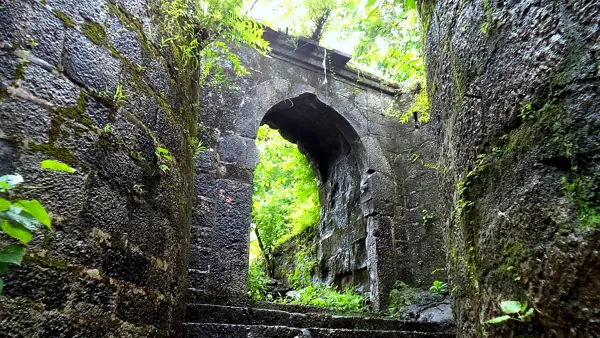
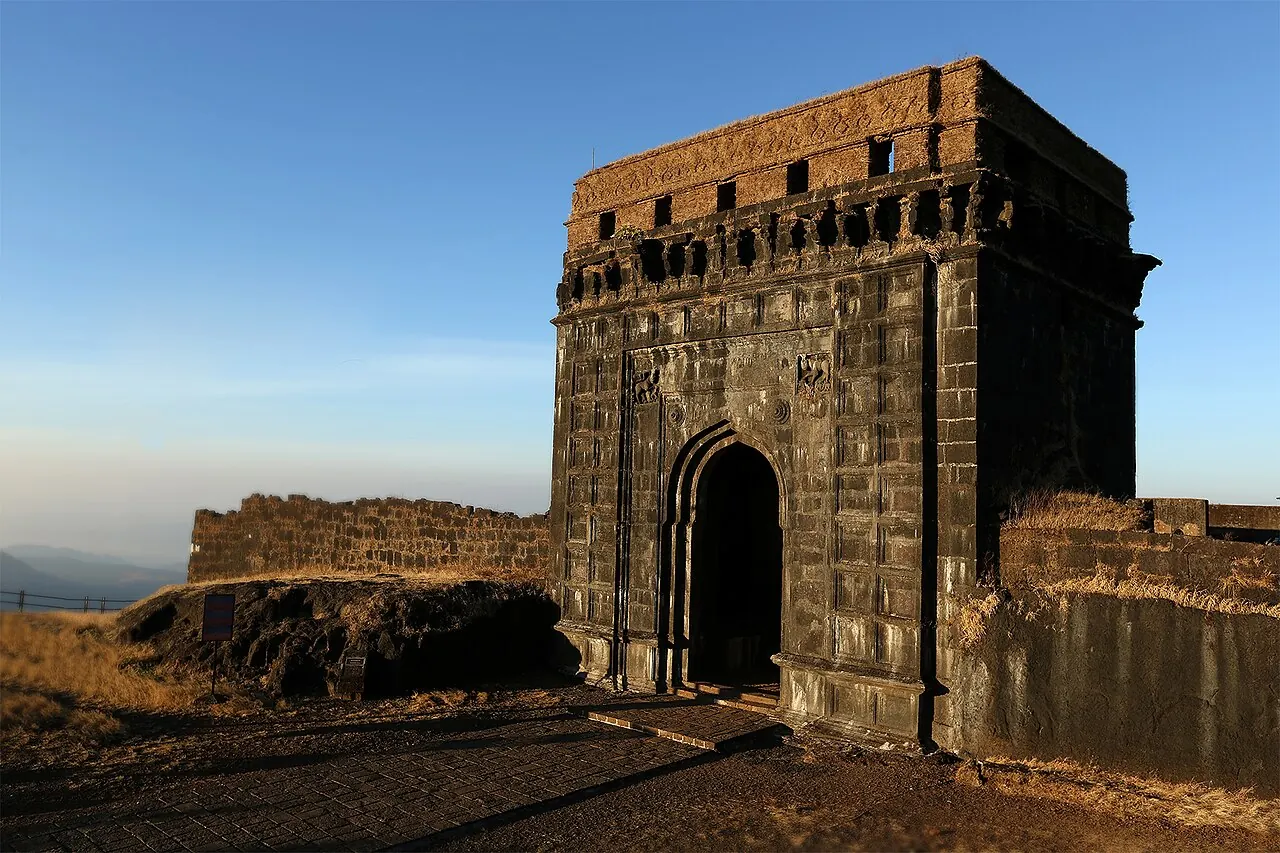
Raigad became the capital of Chhatrapati Shivaji Maharaj’s kingdom. His coronation took place here in 1674. The remains of the royal precinct, gateways and water systems make the fort a key place for understanding the government and ceremony of Swarajya.
Also known as Rairi
Rulers & historical periods +
Individual ruling powers have not been established in this entry.
Shirke family (before 1656) Maratha Empire (1656–1689; 1739–1818) Mughal Empire (1689–1739) East India Company (1818–1858) British Raj (1858-1947) Government of India (after 1947) (source infobox; intervals are approximate and may omit changes of possession)
Recorded possession intervals may omit changes of control. Exact uninterrupted durations are not assumed from a ruler’s reign.
A PLACE WITHIN THE LARGER STORY
Turning points.
 Explore Raigad ↗
Kingship and administration
Raigad and the coronation of Chhatrapati Shivaji Maharaj
Raigad developed from the earlier stronghold of Rairi. Chhatrapati Shivaji Maharaj acquired it in 1656. It became a carefully developed royal and administrative centre. His coronation took place here on 6 June 1674. The ceremony formally expressed sovereign kingship. Raigad brought court, administration and defence together. The capital connected the Sahyadri uplands with the Konkan. Chhatrapati Shivaji Maharaj died at the fort in 1680. Chhatrapati Sambhaji Maharaj continued the royal association with Raigad. The site remains central to the memory of Swarajya and public service.
Read full story
Explore Raigad ↗Kingship and administration
Death of Chhatrapati Shivaji Maharaj
In late March 1680, Shivaji fell ill with fever and dysentery, dying around 3–5 April 1680 at the age of 50, at Raigad Fort, on the eve of Hanuman Jayanti. The cause of Shivaji's death is disputed. British records state Shivaji died of bloody flux, after being sick for 12 days. In a contemporary work in Portuguese, in the Biblioteca Nacional de Lisboa, the recorded cause of death of Shivaji is anthrax. However, Krishnaji Anant Sabhasad, author of the Sabhasad Bakhar, a biography of Shivaji has mentioned fever as the cause of death. Putalabai, the childless eldest of the surviving wives of Shivaji committed sati by jumping into his funeral pyre. Another surviving spouse, Sakwarbai, was not allowed to follow suit because she had a young daughter. There were also allegations, though doubted by later scholars, that his second wife Soyarabai had poisoned him in order to put her 10-year-old son Rajaram on the throne. After Shivaji's death, Soyarabai made plans, with various ministers, to crown her son Rajaram rather than her stepson Sambhaji. On 21 April 1680, ten-year-old Rajaram was installed on the throne.
Read full story
Explore Raigad ↗Resistance and endurance
Chhatrapati Sambhaji Maharaj: kingship and resistance
Chhatrapati Sambhaji Maharaj was born at Purandar in 1657. He succeeded Chhatrapati Shivaji Maharaj after the crisis of 1680. His formal coronation at Raigad took place in January 1681. He carried responsibility for the Maratha state during intense warfare. Aurangzeb’s arrival in the Deccan brought sustained Mughal pressure. The kingdom also faced challenges along its western coast. Forts, commanders and supply systems sustained resistance across several fronts. His reign cannot be understood through battles alone. He was captured and executed in 1689. His life remains an enduring part of Maharashtra’s memory of courage and duty.