THE STORY BEHIND THE STONE
Why Purandar fort
matters.
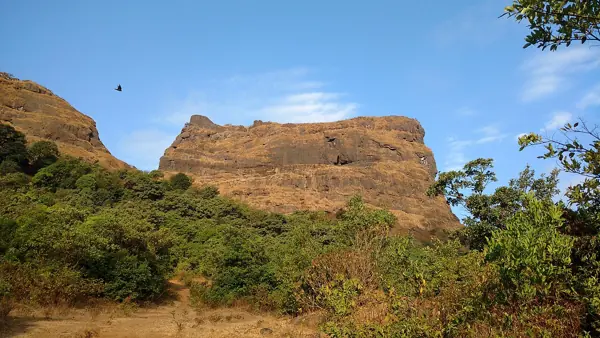
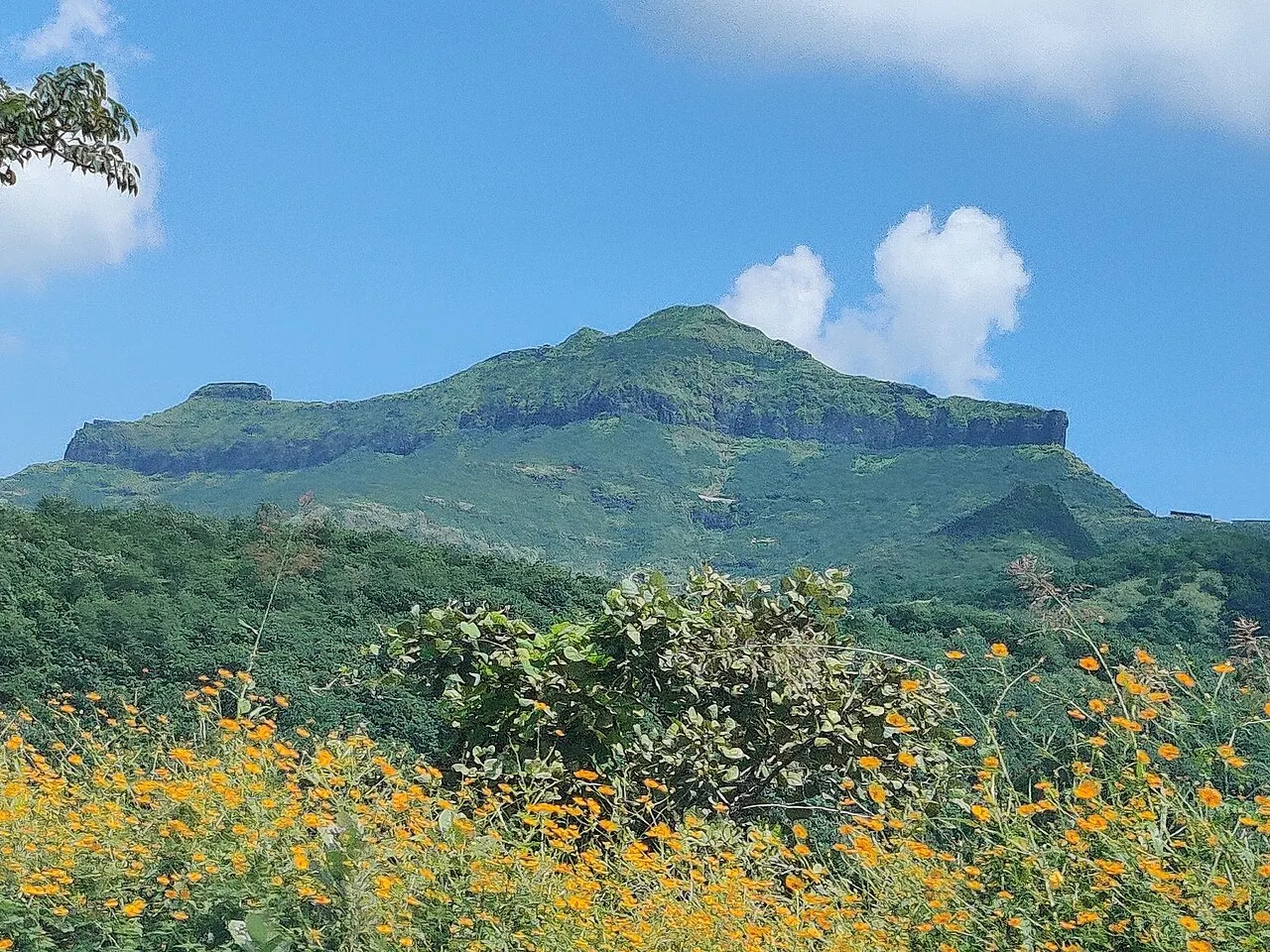
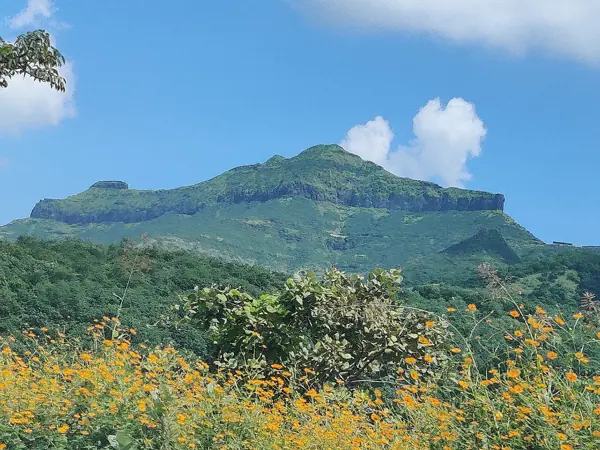
Near the foothills of Purandar, is the small village called Narayanpur. In this village is a temple of Lord Mahadev constructed sometime during the Yadav’s dynasty. The fort is thus blessed with a history of around 1000 to 1200 years.Just as Lord Indra occupies an undisputed position among gods and goddess, same is the status of Purandar among other forts. Its mythological name is “Indraneel Parvat”. As per Hindu mythology, when Lord Hanuman attempted to carry Dronagiri mountain range, a portion of it slipped off his hands and fell down to form “Indraneel Parvat”. The history of this glorious fort dates back to the Bahamani Regime. Chandrasampat Deshpande of Bedar…
The historical source discusses Shivaji Maharaj; see the linked account for the specific episode.
Rulers & historical periods +
Yadava, Adil Shahi / Bijapur, Mughal, Maratha, British / East India Company
Recorded possession intervals may omit changes of control. Exact uninterrupted durations are not assumed from a ruler’s reign.
A PLACE WITHIN THE LARGER STORY
Turning points.
 Explore Purandar fort ↗
Foundations of Swarajya
Early life of Chhatrapati Sambhaji Maharaj
Sambhaji, also known as Shambhuraje, ruled from 1681 to 1689 as the second king of the Maratha Empire, a prominent state in early modern India. He was the eldest son of Shivaji, the founder of the Maratha Empire. At the age of nine, Sambhaji was taken as a political hostage of the Mughal Empire, to guarantee his father's compliance with the treaty of Purandar. He later accompanied his father to Agra where both were placed under house arrest by the Mughal Emperor Aurangzeb; they subsequently escaped. He was later confined by his father at Panhala Fort, with some theories suggesting that it was due to his addiction to "sensual pleasures" or for violating a Brahmin woman. He subsequently defected to the Mughal Empire and served under Diler Khan in the Battle of Bhupalgarh against his father. He ascended the throne following his father's death, with his rule being largely shaped by the ongoing wars between the Marathas and the Mughal Empire, as well as other neighbouring powers such as the Siddi of Janjira, the Wadiyars of Mysore and the Portuguese Empire in Goa. Early in his rule, Marathas under Sambhaji attacked and disrupted supply lines and raided into the Mughal territory, although they were unsuccessful in taking over main forts. In 1683, Sambhaji executed 24 members of influential families including top government ministers after discovering a plot to poison him. By 1685, Mughals had gradually pushed back Sambhaji's forces by taking over their strongholds.
Read full story
Explore Purandar fort ↗The kingdom takes shape
Purandar: resistance and diplomacy
Mughal forces campaigned against Chhatrapati Shivaji Maharaj in 1665. Mirza Raja Jai Singh directed the campaign, with Diler Khan at Purandar. Murarbaji Deshpande is remembered for his defence of the fort. He lost his life during the fighting. Pressure on Purandar contributed to negotiations. The Treaty of Purandar required the transfer of twenty-three forts. Chhatrapati Shivaji Maharaj retained twelve forts, including Rajgad. Several surrendered strongholds were recovered in later campaigns. Purandar therefore represents diplomacy as well as armed resistance. Its history shows that Swarajya developed through changing circumstances.
Read full story
 Explore Raigad ↗
Resistance and endurance
Chhatrapati Sambhaji Maharaj: kingship and resistance
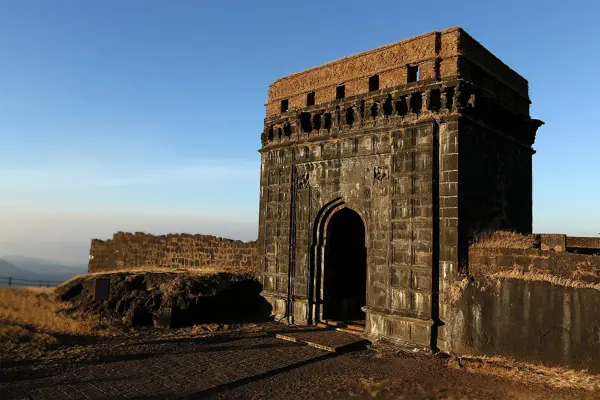
Chhatrapati Sambhaji Maharaj was born at Purandar in 1657. He succeeded Chhatrapati Shivaji Maharaj after the crisis of 1680. His formal coronation at Raigad took place in January 1681. He carried responsibility for the Maratha state during intense warfare. Aurangzeb’s arrival in the Deccan brought sustained Mughal pressure. The kingdom also faced challenges along its western coast. Forts, commanders and supply systems sustained resistance across several fronts. His reign cannot be understood through battles alone. He was captured and executed in 1689. His life remains an enduring part of Maharashtra’s memory of courage and duty.