स्वराज्य / A LIVING HISTORY

From a vision
to a lasting legacy.

The people, places and turning points of the Maratha state.
Explore the story in chronological order, one chapter at a time.

61 sourced chapters · forts connected to their stories
1347

The Deccan before Swarajya

Bahmani Sultanate

The Bahmani Kingdom, or the Bahmani Sultanate, was a late medieval Persianate kingdom that ruled the Deccan Plateau in India. The first independent Muslim sultanate of the Deccan, the Bahmani Kingdom came to power in 1347 during the rebellion of Ismail Mukh against Muhammad bin Tughlaq, the Sultan of Delhi. Ismail Mukh then abdicated in favour of Zafar Khan, who established the Bahmani Sultanate. The Bahmani Kingdom was perpetually at war with its neighbours, including its rival to the south, the Vijayanagara Empire, which outlasted the sultanate. The Mahmud Gawan Madrasa was created by Mahmud Gawan, the vizier regent of the sultanate from 1466 until his execution in 1481, during a conflict between the foreign and local nobility. Bidar Fort was built by Ahmad Shah I, who relocated the capital to the city of Bidar. Ahmad Shah led campaigns against Vijayanagara and the sultanates of Malwa and Gujarat. His campaign against Vijayanagara in 1423 included a siege of the capital, ending in the expansion of the Sultanate. Mahmud Gawan would later lead campaigns against Malwa, Vijayanagara, and the Gajapatis, and extended the sultanate to its maximum extent. The sultanate began to decline under Mahmood Shah.

Read full story

Adapted source account from the linked Wikipedia article (CC BY-SA 4.0). Parenthetical material and citation markers have been omitted.

The Bahmani Kingdom, or the Bahmani Sultanate, was a late medieval Persianate kingdom that ruled the Deccan Plateau in India. The first independent Muslim sultanate of the Deccan, the Bahmani Kingdom came to power in 1347 during the rebellion of Ismail Mukh against Muhammad bin Tughlaq, the Sultan of Delhi. Ismail Mukh then abdicated in favour of Zafar Khan, who established the Bahmani Sultanate. The Bahmani Kingdom was perpetually at war with its neighbours, including its rival to the south, the Vijayanagara Empire, which outlasted the sultanate. The Mahmud Gawan Madrasa was created by Mahmud Gawan, the vizier regent of the sultanate from 1466 until his execution in 1481, during a conflict between the foreign and local nobility. Bidar Fort was built by Ahmad Shah I, who relocated the capital to the city of Bidar. Ahmad Shah led campaigns against Vijayanagara and the sultanates of Malwa and Gujarat. His campaign against Vijayanagara in 1423 included a siege of the capital, ending in the expansion of the Sultanate. Mahmud Gawan would later lead campaigns against Malwa, Vijayanagara, and the Gajapatis, and extended the sultanate to its maximum extent. The sultanate began to decline under Mahmood Shah. Through a combination of factional strife and the revolt of five provincial governors, the Bahmani Sultanate split up into five states, known as the Deccan Sultanates.

The initial revolts of Yusuf Adil Shah, Malik Ahmad Nizam Shah I, and Fathullah Imad-ul-Mulk in 1490, and Qasim Barid I in 1492 saw the end of any real Bahmani power, and the last independent sultanate, Golkonda, in 1518, ended the Bahmanis' 180-year rule over the Deccan. The last four Bahmani rulers were puppet monarchs under Amir Barid I of the Bidar Sultanate, and the kingdom formally dissolved in 1527. Abd-al-Malek Esami, a contemporary historian, states that Bahman Shah was born in Ghazni, Afghanistan. He was either of Afghan or Turk origin. Encyclopedia Iranica states him to be a Khorasani adventurer, who claimed descent from Bahram Gur. Ferishta mentions that later poets "who wanted to flatter him" called Bahman Shah a descendant of Bahram Gur, but considers it implausible. Andre Wink, known for his studies on India, stated that he was an Afghan. According to the medieval historian Ferishta, his obscurity makes it difficult to track his origin, but he is nonetheless stated to be of Afghan birth. Ziauddin Barani, the court chronicler of Sultan Firuz Shah, states that Hasan Gangu, the Bahmani Sultanate's founder, was "born in very humble circumstances" and that "For the first thirty years of his life he was nothing more than a field laborer." He was made a commander of a hundred horsemen by the Delhi Sultan, Muhammad bin Tughluq, who was pleased with his honesty. This sudden rise in the military and socio-economic ladder was common in this era of Muslim India. Zafar Khan or Hasan Gangu was among the inhabitants of Delhi who were forced to migrate to the Deccan, to build a large Muslim settlement in the region of Daulatabad. Zafar Khan was a man of ambition and looked forward to the adventure.

Consult the original article and its cited historical works for source evidence and differing interpretations. The timeline date identifies the event or beginning of the period; this account may cover a longer span.

Sources: Bahmani Sultanate — historical account and references, Contributor history and attribution, CC BY-SA 4.0 — adapted source extract
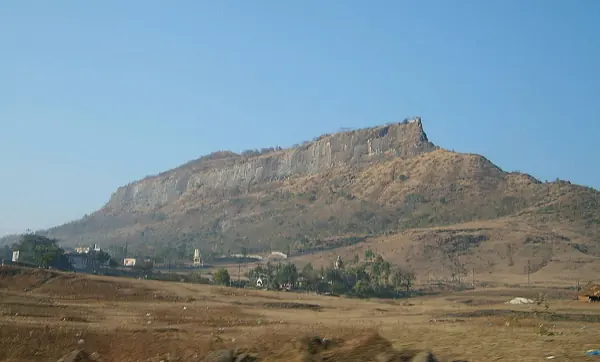

1490

The Deccan before Swarajya

Ahmadnagar Sultanate

The Ahmadnagar Sultanate was an early modern sultanate located in the northwestern Deccan, ruled by the Nizam Shahi dynasty. One of the five Deccan sultanates, it was established by Ahmad Nizam Shah I in 1490; Nizam Shah I was the son of Malik Hasan Bahri who was of Kulkarni origin from Pathri in Marathwada. After serving as governor of Beed and other districts, Malik Ahmad declared independence from the Bahmani Sultanate and established Ahmadnagar Sultanate. Initially the capital was in the town of Junnar with its fort, later renamed Shivneri. In 1494, the foundation was laid for the new capital Ahmednagar. A land fort called Ahmednagar Fort was the headquarters of the Ahmednagar Sultanate. It was situated between the sultanates of Gujarat and Bijapur. After Malik Ahmad died in 1510, his young son Burhan Nizam Shah I became ruler, converting to Nizari Isma'ili Shi'a Islam. The dynasty played a major role in the Deccan region, including forming an alliance of Muslim sultanates that defeated the Vijayanagara Empire at the Battle of Talikota in 1565, where Sultan Hussain Nizam Shah I personally beheaded Rama Raya, the Vijayanagara regent. Subsequent rulers included Murtaza Nizam Shah I, who expanded the kingdom to its largest size and repelled a Mughal invasion in 1586.

Read full story

Adapted source account from the linked Wikipedia article (CC BY-SA 4.0). Parenthetical material and citation markers have been omitted.

The Ahmadnagar Sultanate was an early modern sultanate located in the northwestern Deccan, ruled by the Nizam Shahi dynasty. One of the five Deccan sultanates, it was established by Ahmad Nizam Shah I in 1490; Nizam Shah I was the son of Malik Hasan Bahri who was of Kulkarni origin from Pathri in Marathwada. After serving as governor of Beed and other districts, Malik Ahmad declared independence from the Bahmani Sultanate and established Ahmadnagar Sultanate. Initially the capital was in the town of Junnar with its fort, later renamed Shivneri. In 1494, the foundation was laid for the new capital Ahmednagar. A land fort called Ahmednagar Fort was the headquarters of the Ahmednagar Sultanate. It was situated between the sultanates of Gujarat and Bijapur. After Malik Ahmad died in 1510, his young son Burhan Nizam Shah I became ruler, converting to Nizari Isma'ili Shi'a Islam. The dynasty played a major role in the Deccan region, including forming an alliance of Muslim sultanates that defeated the Vijayanagara Empire at the Battle of Talikota in 1565, where Sultan Hussain Nizam Shah I personally beheaded Rama Raya, the Vijayanagara regent. Subsequent rulers included Murtaza Nizam Shah I, who expanded the kingdom to its largest size and repelled a Mughal invasion in 1586. Internal strife and assassinations marked later reigns, with regents like Chand Bibi and Malik Ambar defending the sultanate from Mughal attacks until Ahmadnagar was eventually conquered. In 1636 Aurangzeb, then Mughal viceroy of the Deccan, annexed the sultanate to the Mughal Empire.

The Ahmadnagar Sultanate was notable for its cultural contributions, including the earliest Deccan school of painting and extensive architectural works such as palaces, forts, mosques, and tombs. The capital city Ahmadnagar was modelled after major Persianate cities and was considered highly impressive in its time. Malik Ambar is credited with building the Janjira Fort, which played a strategic role in regional defence. Malik Ahmad Nizam Shah I who was the son of Nizam-ul-Mulk Malik Hasan Bahri established the kingdom. His Family were the Brahmin Kulkarnis of Pathri, a town in Marathwada. Either as a result of religious persecution or famine, his ancestors came to Vijayanagar Empire. Ahmed's father was made prime minister on the death of Mahmud Gawan and was made Malik Na'ib by Mahmood Shah Bahmani II. Soon after, he appointed Ahmed governor of Beed and other districts in the vicinity of Dowlutabad. After the death of his father, Ahmed assumed the title of Nizam ul-Mulk Bahri from his father, the latter signifying a falcon, as Hasan had been a falconer to the Sultan. Malik Ahmad the Bahmani governor of Junnar defended his province against incursions from the Sultan and his forces, successfully defeating a much larger army led by Sheikh Muaddi Arab in a night attack, an army of 18,000 led by Azmut-ul-Dabir and an army led by Bahmani general Jahangir Khan. On 28 May 1490, Ahmad declared independence and established the Nizam Shahi dynasty's rule over a de facto independent Sultanate. Initially, his capital was in the town of Junnar with its fort, later renamed Shivneri.

Consult the original article and its cited historical works for source evidence and differing interpretations. The timeline date identifies the event or beginning of the period; this account may cover a longer span.

Sources: Ahmadnagar Sultanate — historical account and references, Contributor history and attribution, CC BY-SA 4.0 — adapted source extract
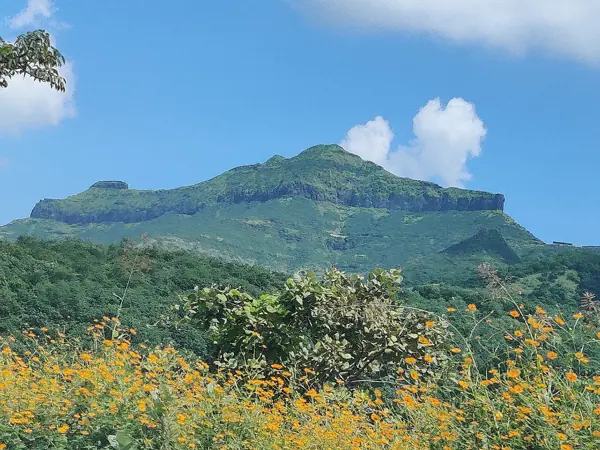
1490

The Deccan before Swarajya

Bijapur Sultanate

The Bijapur Sultanate was an early modern sultanate located in the southwestern Deccan, ruled by the Adil Shahi dynasty. One of the five Deccan sultanates, Bijapur had originally been a taraf of the Bahmani Sultanate prior to its independence in 1490 and before the kingdom's political decline in the last quarter of the 15th century. The Sultanate of Bijapur was one of the most powerful states in the Indian subcontinent at its peak, second to the Mughal Empire which conquered it in 1686 under Aurangzeb. After emigrating to the Bahmani Sultanate, Yusuf Adil Shah rose through the ranks to be appointed governor of the province of Bijapur. In 1490, he created a de facto independent Bijapur state which became formally independent with the Bahmani collapse in 1518. The Bijapur Sultanate's borders changed considerably throughout its history. Its northern boundary remained relatively stable, straddling contemporary southern Maharashtra and northern Karnataka. The sultanate expanded southward, its first major conquest the Raichur Doab after defeating the Vijayanagara Empire at the Battle of Talikota in 1565. Later campaigns in the Karnatak and Carnatic extended Bijapur's borders and nominal authority as far south as Tanjore. For most of its history, Bijapur was bounded on the west by the Portuguese state of Goa, on the east by the Golconda Sultanate, on the north by the Ahmednagar Sultanate and on the south by the Vijayanagara Empire and its succeeding Nayaka dynasties.

Read full story

Adapted source account from the linked Wikipedia article (CC BY-SA 4.0). Parenthetical material and citation markers have been omitted.

The Bijapur Sultanate was an early modern sultanate located in the southwestern Deccan, ruled by the Adil Shahi dynasty. One of the five Deccan sultanates, Bijapur had originally been a taraf of the Bahmani Sultanate prior to its independence in 1490 and before the kingdom's political decline in the last quarter of the 15th century. The Sultanate of Bijapur was one of the most powerful states in the Indian subcontinent at its peak, second to the Mughal Empire which conquered it in 1686 under Aurangzeb. After emigrating to the Bahmani Sultanate, Yusuf Adil Shah rose through the ranks to be appointed governor of the province of Bijapur. In 1490, he created a de facto independent Bijapur state which became formally independent with the Bahmani collapse in 1518. The Bijapur Sultanate's borders changed considerably throughout its history. Its northern boundary remained relatively stable, straddling contemporary southern Maharashtra and northern Karnataka. The sultanate expanded southward, its first major conquest the Raichur Doab after defeating the Vijayanagara Empire at the Battle of Talikota in 1565. Later campaigns in the Karnatak and Carnatic extended Bijapur's borders and nominal authority as far south as Tanjore.

For most of its history, Bijapur was bounded on the west by the Portuguese state of Goa, on the east by the Golconda Sultanate, on the north by the Ahmednagar Sultanate and on the south by the Vijayanagara Empire and its succeeding Nayaka dynasties. The sultanate clashed incessantly with its neighbours. After the allied victory against Vijayanagara at Talikota in 1565, the state expanded through its conquest of the neighbouring Bidar Sultanate in 1619. The sultanate was then relatively stable, although it was damaged by the revolt of Shivaji. From the late 16th century, the greatest threat to Bijapur's security was the expansion of the Mughal Empire into the Deccan. Agreements and treaties imposed Mughal suzerainty on the Adil Shahs, by stages, until Bijapur's formal recognition of Mughal authority in 1636. The influence of their Mughal overlords and continual strife with the Marathas sapped the state of prosperity until the Mughal conquest of Bijapur in 1686. The former Bahmani provincial capital of Bijapur remained the sultanate's capital throughout its existence. After modest earlier developments, Ibrahim Adil Shah I and Ali Adil Shah I remodelled Bijapur with a citadel, city walls, and a congregational mosque. Their successors, Ibrahim Adil Shah II, Mohammed Adil Shah and Ali Adil Shah II, added palaces, mosques, a mausoleum and other structures to the capital.

Consult the original article and its cited historical works for source evidence and differing interpretations. The timeline date identifies the event or beginning of the period; this account may cover a longer span.

Sources: Adil Shahi dynasty — historical account and references, Contributor history and attribution, CC BY-SA 4.0 — adapted source extract
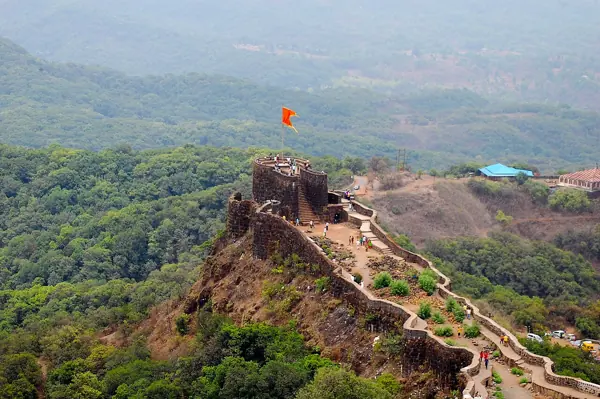
1594 · life and context

The Deccan before Swarajya

Shahaji Raje’s life and service

Shahaji Bhonsale was a 17th-century Indian military leader who served the Ahmadnagar Sultanate, the Bijapur Sultanate, and the Mughal Empire at various points in his career. As a member of the Bhonsle dynasty, Shahaji inherited the Pune and Supe jagirs from his father Maloji, who previously served the Ahmadnagar Sultanate. During the Mughal invasion of the Deccan, Shahaji joined the Mughal forces and served under Emperor Shah Jahan for a short period. After being deprived of his jagirs, he defected to the Bijapur Sultanate in 1632 and regained control over Pune and Supe. In 1638, he received the jagir of Bangalore after Bijapur's invasion of Kempe Gowda III's territories. Afterwards, he became the chief general of Bijapur and oversaw its expansion. He was the father of Shivaji, the founder of the Maratha Kingdom. Shahaji was born on 15 March 1594 to Maloji Bhosale, a Maratha warrior and nobleman who had been awarded the jagirs of Pune and Supe, Ellora, Dheradi, Kannrad and some more villages in the districts of Jafrabad, Daulatabad and Ahmadabad by Sultan Murtuza Nizamshah of Ahmadnagar. According to Shiva Digvijay, a text considered to be a modern forgery by historians such as Jadunath Sarkar and Surendra Nath Sen, Maloji's wife Umabai allegedly prayed in the tomb of Sufi Pir Shah Sharif of Ahmadnagar to be blessed with a son. Later when Maloji and Umabai settled in Devagiri, Umabai went on to give birth to two sons, first of whom was Shahaji and second one was Sharifji, born two years later.

Read full story

Adapted source account from the linked Wikipedia article (CC BY-SA 4.0). Parenthetical material and citation markers have been omitted.

Shahaji Bhonsale was a 17th-century Indian military leader who served the Ahmadnagar Sultanate, the Bijapur Sultanate, and the Mughal Empire at various points in his career. As a member of the Bhonsle dynasty, Shahaji inherited the Pune and Supe jagirs from his father Maloji, who previously served the Ahmadnagar Sultanate. During the Mughal invasion of the Deccan, Shahaji joined the Mughal forces and served under Emperor Shah Jahan for a short period. After being deprived of his jagirs, he defected to the Bijapur Sultanate in 1632 and regained control over Pune and Supe. In 1638, he received the jagir of Bangalore after Bijapur's invasion of Kempe Gowda III's territories. Afterwards, he became the chief general of Bijapur and oversaw its expansion. He was the father of Shivaji, the founder of the Maratha Kingdom. Shahaji was born on 15 March 1594 to Maloji Bhosale, a Maratha warrior and nobleman who had been awarded the jagirs of Pune and Supe, Ellora, Dheradi, Kannrad and some more villages in the districts of Jafrabad, Daulatabad and Ahmadabad by Sultan Murtuza Nizamshah of Ahmadnagar. According to Shiva Digvijay, a text considered to be a modern forgery by historians such as Jadunath Sarkar and Surendra Nath Sen, Maloji's wife Umabai allegedly prayed in the tomb of Sufi Pir Shah Sharif of Ahmadnagar to be blessed with a son. Later when Maloji and Umabai settled in Devagiri, Umabai went on to give birth to two sons, first of whom was Shahaji and second one was Sharifji, born two years later.

Both were named after the Pir's own titles.. Shahaji was betrothed to Jijabai, the daughter of Lakhuji Jadhav, the Maratha Deshmukh of Sindkhed in the service of Ahmadnagar's Nizamshahi Sultanate, when both of them were children. Shahaji served in the army of Malik Ambar, the prime minister of Ahmadnagar Sultanate. At the time of Maloji's death in 1622, 26-year old Shahaji was a minor commander in Malik Ambar's army. By 1625, he held the high military position of Sar Lashkar, as suggested by a letter sent from Pune on 28 July. Ahmadnagar was involved in conflicts against the northern Mughal Empire and other Deccan Sultanates, and Shahaji kept switching his loyalty between these states. For example, sometime before the Battle of Bhatvadi in 1624, Shahaji and some other Maratha leaders defected to the Mughals, but shortly before the battle they returned to Ahmadnagar. Malik Ambar's army defeated a combined Mughal-Bijapur force in the battle. Subsequently, a quarrel arose between Shahaji and his cousin Kheloji Bhonsle, and in 1625 Shahaji shifted his allegiance to Bijapur, likely because he was dissatisfied with Ahmadnagar rewarding his relatives more than him. He retained his jagir in the Pune region, which was disputed between Ahmadnagar and Bijapur. A letter dated 10 January 1626 indicates that he still held the position of Sar Lashkar.

Consult the original article and its cited historical works for source evidence and differing interpretations. The timeline date identifies the event or beginning of the period; this account may cover a longer span.

Sources: Shahaji — historical account and references, Contributor history and attribution, CC BY-SA 4.0 — adapted source extract
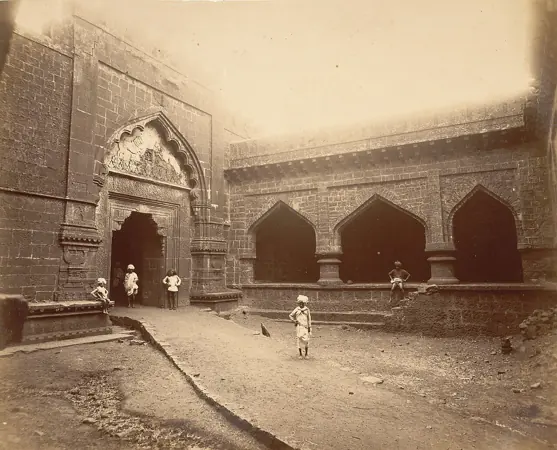
1598 · life and context
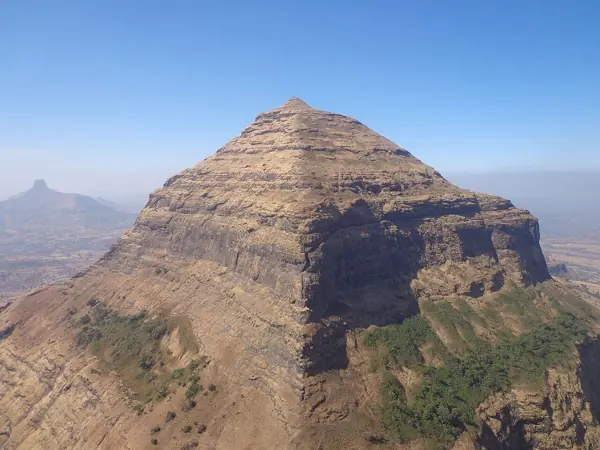
Shivneri — documentary photographExplore Shivneri ↗

The Deccan before Swarajya

Jijabai and the Bhonsle household

Jijabai, was the mother of Chhatrapati Shivaji Maharaj, founder of the Maratha Kingdom. She was a daughter of Lakhuji Jadhav of Sindkhed Raja. He belonged to the lineage of Devagiri Yadavas. Jijabai was born on 12 January 1598, to Mhalasabai Jadhav and Lakhuji Jadhav at Sindkhed Raja in present-day Buldhana district of Maharashtra. Jijabai was married at an early age to Shahaji, son of Maloji Bhosale of Verul village, a military commander serving under the Ahmadnagar Sultanate. She was a skilled horse rider, sword fighter, academician and administrator. Scholar James Laine states that Shivaji Maharaj was imbued with the dream of re-establishing a Hindu kingdom by his mother, Jijabai, whose ancestors the Yadavas held the sovereignty of the Deccan for 150 years pre Islamic invasions. She taught him the nuances of tactics, administration and politics right from an early age. She died on 17 June 1674 at Pachad village near Raigad Fort. This was only eleven days after the coronation of Chhatrapati Shivaji Maharaj.

Read full story

Adapted source account from the linked Wikipedia article (CC BY-SA 4.0). Parenthetical material and citation markers have been omitted.

Jijabai, was the mother of Chhatrapati Shivaji Maharaj, founder of the Maratha Kingdom. She was a daughter of Lakhuji Jadhav of Sindkhed Raja. He belonged to the lineage of Devagiri Yadavas. Jijabai was born on 12 January 1598, to Mhalasabai Jadhav and Lakhuji Jadhav at Sindkhed Raja in present-day Buldhana district of Maharashtra. Jijabai was married at an early age to Shahaji, son of Maloji Bhosale of Verul village, a military commander serving under the Ahmadnagar Sultanate.

She was a skilled horse rider, sword fighter, academician and administrator. Scholar James Laine states that Shivaji Maharaj was imbued with the dream of re-establishing a Hindu kingdom by his mother, Jijabai, whose ancestors the Yadavas held the sovereignty of the Deccan for 150 years pre Islamic invasions. She taught him the nuances of tactics, administration and politics right from an early age. She died on 17 June 1674 at Pachad village near Raigad Fort. This was only eleven days after the coronation of Chhatrapati Shivaji Maharaj.

Consult the original article and its cited historical works for source evidence and differing interpretations. The timeline date identifies the event or beginning of the period; this account may cover a longer span.

Shivneri ↗

Sources: Jijabai — historical account and references, Contributor history and attribution, CC BY-SA 4.0 — adapted source extract

1630 · life and context

Foundations of Swarajya

Birth and early life of Chhatrapati Shivaji Maharaj

Shivaji I was an Indian ruler and a member of the Bhonsle dynasty. Shivaji inherited a fiefdom from his father who served as a retainer for the Sultanate of Bijapur, which later formed the genesis of the Maratha Kingdom. In 1674, he was formally crowned the Chhatrapati of his realm at Raigad Fort. Shivaji offered passage and his service to the Mughal emperor Aurangzeb to invade the declining Sultanate of Bijapur. After Aurangzeb's departure for the north due to a war of succession, Shivaji conquered territories ceded by Bijapur in the name of the Mughals. Following his defeat at the hands of Jai Singh I in the Battle of Purandar, Shivaji entered into vassalage with the Mughal empire, assuming the role of a Mughal chief. During this time Shivaji also wrote a series of letters apologising to Mughal emperor Aurangzeb for his actions and requested additional honors for his services. He was later conferred with the title of Raja by the emperor. He undertook military expeditions on behalf of the Mughal Empire for a brief duration. In 1674, Shivaji was crowned as the king despite opposition from local Brahmins.

Read full story

Adapted source account from the linked Wikipedia article (CC BY-SA 4.0). Parenthetical material and citation markers have been omitted.

Shivaji I was an Indian ruler and a member of the Bhonsle dynasty. Shivaji inherited a fiefdom from his father who served as a retainer for the Sultanate of Bijapur, which later formed the genesis of the Maratha Kingdom. In 1674, he was formally crowned the Chhatrapati of his realm at Raigad Fort. Shivaji offered passage and his service to the Mughal emperor Aurangzeb to invade the declining Sultanate of Bijapur. After Aurangzeb's departure for the north due to a war of succession, Shivaji conquered territories ceded by Bijapur in the name of the Mughals. Following his defeat at the hands of Jai Singh I in the Battle of Purandar, Shivaji entered into vassalage with the Mughal empire, assuming the role of a Mughal chief. During this time Shivaji also wrote a series of letters apologising to Mughal emperor Aurangzeb for his actions and requested additional honors for his services. He was later conferred with the title of Raja by the emperor. He undertook military expeditions on behalf of the Mughal Empire for a brief duration.

In 1674, Shivaji was crowned as the king despite opposition from local Brahmins. Shivaji employed people of all castes and religions, including Muslims and Europeans, in his administration and armed forces. Over the course of his life, Shivaji engaged in both alliances and hostilities with the Mughal Empire, the Sultanate of Golconda, the Sultanate of Bijapur and the European colonial powers. Shivaji's military forces expanded the Maratha sphere of influence, capturing and building forts, and forming a Maratha navy. Shivaji's legacy was revived by Jyotirao Phule about two centuries after his death. Later on, he came to be glorified by Indian nationalists such as Bal Gangadhar Tilak, and appropriated by Hindutva activists. Shivaji was born in the hill-fort of Shivneri near Junnar, which is now in Pune district. Scholars disagree on his date of birth; the Government of Maharashtra lists 19 February as a holiday commemorating Shivaji's birth. Shivaji was named after a local deity, the Goddess Shivai Devi.

Consult the original article and its cited historical works for source evidence and differing interpretations. The timeline date identifies the event or beginning of the period; this account may cover a longer span.

Sources: Shivaji — historical account and references, Contributor history and attribution, CC BY-SA 4.0 — adapted source extract

1636

Foundations of Swarajya

The end of the Ahmadnagar sultanate

In 1636 the remaining Nizam Shahi resistance ended, and its territory was divided between the Mughal Empire and Bijapur. After the death of Malik Ambar in May 1626, his son Fath Khan surrendered to the Mughals in the siege of Daulatabad in 1633 and handed over the young Nizam Shahi ruler Hussain Shah, who was sent as a prisoner to the fort of Gwalior. But soon, Shahaji, a jagirdar and general of the sultanate at that time, with the assistance of Bijapur, placed an infant scion of the Nizam Shahi dynasty, Murtaza Nizam Shah III on the throne, and he became the regent of the sultanate. In 1636, Aurangzeb, then Mughal viceroy of the Deccan, finally defeated Shahaji and partitioned the sultanate between the Mughal Empire and the Sultanate of Bijapur.

Read full story

Adapted source account from the linked Wikipedia article (CC BY-SA 4.0). Parenthetical material and citation markers have been omitted.

In 1636 the remaining Nizam Shahi resistance ended, and its territory was divided between the Mughal Empire and Bijapur. After the death of Malik Ambar in May 1626, his son Fath Khan surrendered to the Mughals in the siege of Daulatabad in 1633 and handed over the young Nizam Shahi ruler Hussain Shah, who was sent as a prisoner to the fort of Gwalior.

But soon, Shahaji, a jagirdar and general of the sultanate at that time, with the assistance of Bijapur, placed an infant scion of the Nizam Shahi dynasty, Murtaza Nizam Shah III on the throne, and he became the regent of the sultanate. In 1636, Aurangzeb, then Mughal viceroy of the Deccan, finally defeated Shahaji and partitioned the sultanate between the Mughal Empire and the Sultanate of Bijapur.

Consult the original article and its cited historical works for source evidence and differing interpretations. The timeline date identifies the event or beginning of the period; this account may cover a longer span.

Sources: Ahmadnagar Sultanate — historical account and references, Contributor history and attribution, CC BY-SA 4.0 — adapted source extract
1645

Foundations of Swarajya

The idea of Hindavi Swarajya

Hindavi Swarajya is a term attributed to Shivaji, the founder of the Maratha Kingdom. The term Swaraj was later adopted by Bal Gangadhar Tilak, one of the early leaders of the Indian independence movement against the British Empire. Popular belief holds that the Maratha warrior Shivaji used the phrase Hindavi Swarajya in a letter to Dadaji Naras Prabhu Deshpande of Rohidkhore on 17 April 1645. The purported letter, in Marathi, states: It is God Rohireshvar that has given us victory; and that God would enable us to fulfil our wish of Hindavi Swarajya. It is God's will that this kingdom should be established. Scholars do not agree on the authenticity of the letter. Historian Setumadhavarao Pagadi states that a lot of the historical source material on Shivaji is spurious, contributed by various influential families of Maharashtra to show how close their ancestors were to Shivaji. J. V. Naik states that, irrespective of the authenticity of the letter, Shivaji's career itself amply demonstrates his conception of Swarajya.

Read full story

Adapted source account from the linked Wikipedia article (CC BY-SA 4.0). Parenthetical material and citation markers have been omitted.

Hindavi Swarajya is a term attributed to Shivaji, the founder of the Maratha Kingdom. The term Swaraj was later adopted by Bal Gangadhar Tilak, one of the early leaders of the Indian independence movement against the British Empire. Popular belief holds that the Maratha warrior Shivaji used the phrase Hindavi Swarajya in a letter to Dadaji Naras Prabhu Deshpande of Rohidkhore on 17 April 1645. The purported letter, in Marathi, states: It is God Rohireshvar that has given us victory; and that God would enable us to fulfil our wish of Hindavi Swarajya. It is God's will that this kingdom should be established. Scholars do not agree on the authenticity of the letter.

Historian Setumadhavarao Pagadi states that a lot of the historical source material on Shivaji is spurious, contributed by various influential families of Maharashtra to show how close their ancestors were to Shivaji. J. V. Naik states that, irrespective of the authenticity of the letter, Shivaji's career itself amply demonstrates his conception of Swarajya. Swarajya is a Sanskrit term, whose meaning is "independent dominion or sovereignty" according to the Monier Williams dictionary. Pagadi notes that Shivaji had referred to his jagir in Pune as a rajya. He takes Swarajya to have meant a "homeland", and Hindavi Swarajya a "state of the sons of the soil".

Consult the original article and its cited historical works for source evidence and differing interpretations. The timeline date identifies the event or beginning of the period; this account may cover a longer span.

Sources: Hindavi Swarajya — historical account and references, Contributor history and attribution, CC BY-SA 4.0 — adapted source extract
1646
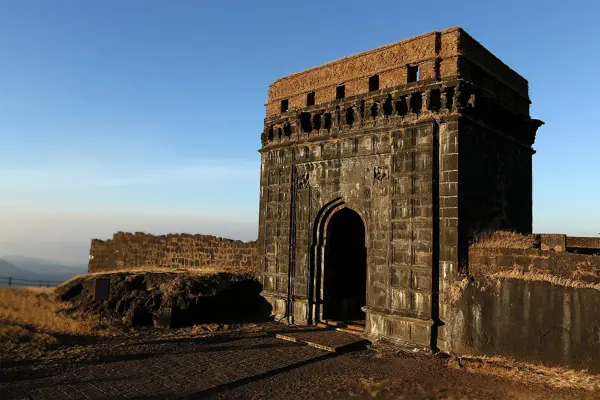
Torna Fort — documentary photographExplore Torna Fort ↗

Foundations of Swarajya

Torna and the beginnings of Swarajya

Chhatrapati Shivaji Maharaj took Torna in 1646. It was one of the earliest foundations of his independent power. The hill is also known as Prachandagad. Its commanding position offered a strong defensive base. Torna connected the emerging state to the surrounding Maval landscape. Nearby Murumbdev developed into the capital fort of Rajgad. These strongholds supported administration as well as military operations. Their gateways, water stores and defended spurs reveal practical planning. The early acquisitions preceded the coronation of 1674 by decades. Torna remains an important place for understanding how Swarajya began.

Read full story

The acquisition of Torna in 1646 belongs to the formative phase of Chhatrapati Shivaji Maharaj’s career. Before there was a coronation or an established royal capital at Raigad, control of a defensible hill could provide a secure centre from which to organise territory. Torna, also called Prachandagad, became one of the first major strongholds associated with the emerging Swarajya. Its importance is therefore political as well as military: it marks an early assertion of authority within a region where larger Deccan powers already competed.

The fort should be understood with its surrounding valleys and neighbouring strongholds. A hilltop did not function alone. Supplies, people and information had to move between settlements, agricultural land, passes and the defended summit. Nearby Rajgad, previously Murumbdev, developed as a headquarters and later a capital. Looking at the two forts together helps explain why the early Maratha state invested in a connected landscape rather than a single isolated monument.

The surviving shape of Torna also makes its historical role easier to imagine. Long spurs, steep approaches and a large summit required decisions about where to place defences and how to maintain water and provisions. These are features to study alongside accounts of conquest. They show the continuing labour of building, repairing and provisioning that followed a change of control.

Later traditions tell stories of treasure found at Torna and used at Rajgad. Such traditions are part of the fort’s cultural memory, but they should not replace dated evidence for the early acquisitions. Nor should the events of 1646 be described as a coronation: the formal royal ceremony at Raigad came in 1674. Torna’s enduring significance lies in the earlier process of establishing a durable territorial base.

Torna Fort ↗Rajgad ↗

Sources: Maharashtra Tourism — Torna, Poona Gazetteer — early Maratha history, Torna Fort — source article and references

1657 · life and context
Purandar fort — documentary photographExplore Purandar fort ↗

Foundations of Swarajya

Early life of Chhatrapati Sambhaji Maharaj

Sambhaji, also known as Shambhuraje, ruled from 1681 to 1689 as the second king of the Maratha Empire, a prominent state in early modern India. He was the eldest son of Shivaji, the founder of the Maratha Empire. At the age of nine, Sambhaji was taken as a political hostage of the Mughal Empire, to guarantee his father's compliance with the treaty of Purandar. He later accompanied his father to Agra where both were placed under house arrest by the Mughal Emperor Aurangzeb; they subsequently escaped. He was later confined by his father at Panhala Fort, with some theories suggesting that it was due to his addiction to "sensual pleasures" or for violating a Brahmin woman. He subsequently defected to the Mughal Empire and served under Diler Khan in the Battle of Bhupalgarh against his father. He ascended the throne following his father's death, with his rule being largely shaped by the ongoing wars between the Marathas and the Mughal Empire, as well as other neighbouring powers such as the Siddi of Janjira, the Wadiyars of Mysore and the Portuguese Empire in Goa. Early in his rule, Marathas under Sambhaji attacked and disrupted supply lines and raided into the Mughal territory, although they were unsuccessful in taking over main forts. In 1683, Sambhaji executed 24 members of influential families including top government ministers after discovering a plot to poison him. By 1685, Mughals had gradually pushed back Sambhaji's forces by taking over their strongholds.

Read full story

Adapted source account from the linked Wikipedia article (CC BY-SA 4.0). Parenthetical material and citation markers have been omitted.

Sambhaji, also known as Shambhuraje, ruled from 1681 to 1689 as the second king of the Maratha Empire, a prominent state in early modern India. He was the eldest son of Shivaji, the founder of the Maratha Empire. At the age of nine, Sambhaji was taken as a political hostage of the Mughal Empire, to guarantee his father's compliance with the treaty of Purandar. He later accompanied his father to Agra where both were placed under house arrest by the Mughal Emperor Aurangzeb; they subsequently escaped. He was later confined by his father at Panhala Fort, with some theories suggesting that it was due to his addiction to "sensual pleasures" or for violating a Brahmin woman. He subsequently defected to the Mughal Empire and served under Diler Khan in the Battle of Bhupalgarh against his father. He ascended the throne following his father's death, with his rule being largely shaped by the ongoing wars between the Marathas and the Mughal Empire, as well as other neighbouring powers such as the Siddi of Janjira, the Wadiyars of Mysore and the Portuguese Empire in Goa. Early in his rule, Marathas under Sambhaji attacked and disrupted supply lines and raided into the Mughal territory, although they were unsuccessful in taking over main forts. In 1683, Sambhaji executed 24 members of influential families including top government ministers after discovering a plot to poison him. By 1685, Mughals had gradually pushed back Sambhaji's forces by taking over their strongholds. Desertions became common by the end of his reign, and he had alienated Maratha deshmukhs by burning villages to deny supplies to the Portuguese. In 1689, he was captured by Mughal forces and executed.

His brother Rajaram I succeeded him as king and continued the Mughal–Maratha Wars. Sambhaji is viewed poorly by historians, who note that his personal problems—and war crimes committed by his soldiers—overshadowed his moderate military and administrative successes. Maratha soldiers under Sambhaji's command during his campaigns committed atrocities against civilians including massacres and mass rape. As a ruler, Sambhaji implemented drought relief measures and encouraged agricultural development while continuing his father's administrative systems. He was also a scholar who authored several works in Sanskrit and Hindustani, including the political treatise Budhbhushanam. His torture and death at the hands of the Mughal Empire elevated him to the status of a martyr. He remains popular in modern India among many Hindu nationalists. Sambhaji was born at Purandar fort to the Maratha Chhtrapati, Shivaji, and his first wife, Saibai, who died when he was two years old. He was then raised by his paternal grandmother Jijabai. At the age of nine, Sambhaji was sent to live with Raja Jai Singh I of Amber as a political hostage to ensure compliance with the Treaty of Purandar that Shivaji had signed with the Mughals on 11 June 1665. As a result of the treaty, Sambhaji became a Mughal mansabdar. He and his father Shivaji attended the Mughal emperor Aurangzeb's court at Agra on 12 May 1666. Aurangzeb put both of them under house arrest but they escaped on 22 July 1666.

Consult the original article and its cited historical works for source evidence and differing interpretations. The timeline date identifies the event or beginning of the period; this account may cover a longer span.

Purandar fort ↗

Sources: Sambhaji — historical account and references, Contributor history and attribution, CC BY-SA 4.0 — adapted source extract

10 November 1659
Pratapgad — documentary photographExplore Pratapgad ↗

Foundations of Swarajya

Pratapgad: a decisive encounter

Chhatrapati Shivaji Maharaj commissioned Pratapgad in 1656. The fort guarded a strategic mountain landscape near the Par pass. Bijapur sent the commander Afzal Khan against the growing Maratha power. The two leaders met below the fort on 10 November 1659. Afzal Khan died during their violent confrontation. Fighting between the opposing forces followed the encounter. The Maratha victory strengthened Chhatrapati Shivaji Maharaj’s position. The episode made Pratapgad central to the memory of Swarajya. Its significance includes preparation, terrain and organised command. The fort preserves a history larger than the famous meeting alone.

Read full story

Pratapgad was completed in 1656 under Chhatrapati Shivaji Maharaj’s direction, with Moropant Pingle overseeing its construction. Its location helped secure access between the uplands and the Konkan, including the approaches around the Par pass. The choice of position matters: the fort occupied a landscape of wooded slopes, narrow routes and commanding heights. Three years later this newly established stronghold became the setting for one of the best-known episodes in early Maratha history.

Afzal Khan, a senior commander of the Bijapur sultanate, advanced against Chhatrapati Shivaji Maharaj. A meeting was arranged below Pratapgad on 10 November 1659. The encounter turned violent and Afzal Khan was killed. Subsequent fighting ended in a Maratha victory. Accounts differ in their detailed presentation of the meeting, so a visitor guide should separate these well-established events from dramatic dialogue and reconstructed gestures that cannot be independently checked.

The result increased the standing of Chhatrapati Shivaji Maharaj and altered the balance of the campaign. It also illustrates how a fort, its approaches and forces outside its walls could work together. The engagement cannot be explained only by the height of the masonry. Preparation, the placement of troops and knowledge of local terrain were equally important parts of the wider military setting.

Today the fort, its Bhavani temple and the commemorative landscape invite several kinds of attention. Visitors can honour the achievements of Chhatrapati Shivaji Maharaj while also studying the physical organisation of the site and the different historical sources. Respect for the past is strengthened by that distinction: the human decisions and strategic setting are compelling without invented speeches, unsupported casualty totals or claims that every surviving structure dates to the same year.

Pratapgad ↗

Sources: Satara District — Pratapgad, Satara Gazetteer — Pratapgad history and defences, Satara Gazetteer — seventeenth-century history

1659

Foundations of Swarajya

Expansion after Pratapgad: Kolhapur

Having defeated the Bijapuri forces sent against him, Shivaji and his army marched towards the Konkan coast and Kolhapur, seizing Panhala fort, and defeating Bijapuri forces sent against them, under Rustam Zaman and Fazl Khan, in 1659. In 1660, Adilshah sent his general Siddi Jauhar to attack Shivaji's southern border, in alliance with the Mughals who planned to attack from the north. At that time, Shivaji was encamped at Panhala fort with his forces. Siddi Jauhar's army besieged Panhala in mid-1660, cutting off supply routes to the fort. During the bombardment of Panhala, Siddi Jauhar purchased grenades from the English East India Company factory at Rajapur. He also hired several English artillerymen to assist in his bombardment of the fort, conspicuously flying the flag of the East India Company. This perceived betrayal angered Shivaji, who in retaliation plundered the factory in December and detained four of its employees, imprisoning them until mid-1663.

Read full story

Adapted source account from the linked Wikipedia article (CC BY-SA 4.0). Parenthetical material and citation markers have been omitted.

Having defeated the Bijapuri forces sent against him, Shivaji and his army marched towards the Konkan coast and Kolhapur, seizing Panhala fort, and defeating Bijapuri forces sent against them, under Rustam Zaman and Fazl Khan, in 1659. In 1660, Adilshah sent his general Siddi Jauhar to attack Shivaji's southern border, in alliance with the Mughals who planned to attack from the north. At that time, Shivaji was encamped at Panhala fort with his forces.

Siddi Jauhar's army besieged Panhala in mid-1660, cutting off supply routes to the fort. During the bombardment of Panhala, Siddi Jauhar purchased grenades from the English East India Company factory at Rajapur. He also hired several English artillerymen to assist in his bombardment of the fort, conspicuously flying the flag of the East India Company. This perceived betrayal angered Shivaji, who in retaliation plundered the factory in December and detained four of its employees, imprisoning them until mid-1663.

Consult the original article and its cited historical works for source evidence and differing interpretations. The timeline date identifies the event or beginning of the period; this account may cover a longer span.

Sources: Battle of Kolhapur — historical account and references, Contributor history and attribution, CC BY-SA 4.0 — adapted source extract
1660
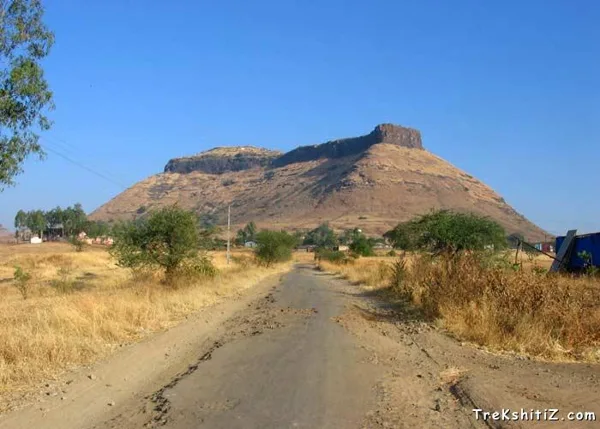
Panhala Fort — documentary photographExplore Panhala Fort ↗

The kingdom takes shape

From Panhala to Vishalgad

Chhatrapati Shivaji Maharaj held Panhala after the campaign of 1659. In 1660, Bijapur forces under Siddi Jauhar besieged the fort. The prolonged siege restricted movement and threatened his position. He escaped from Panhala and made for Vishalgad. The withdrawal depended on the efforts of accompanying Maratha troops. Baji Prabhu Deshpande helped hold back the pursuing forces. He died in the fighting associated with the pass now called Pavan Khind. Chhatrapati Shivaji Maharaj reached the refuge of Vishalgad. Panhala later returned to Maratha control in 1673. The episode is remembered for leadership, loyalty and sacrifice.

Read full story

Panhala was a major stronghold in the southern Deccan before it entered Maratha history. Its broad summit, stores and position above routes connecting the inland plateau with the Konkan made it a valuable possession. Chhatrapati Shivaji Maharaj acquired it after the successes of 1659. In the following year, the Bijapur commander Siddi Jauhar brought a large force against him and established a prolonged siege.

The central problem was movement. A defended fort could protect its occupants, but a close siege also limited their ability to act elsewhere. Chhatrapati Shivaji Maharaj escaped and moved towards Vishalgad. During the pursuit, Baji Prabhu Deshpande and the men with him resisted the pursuing troops at a narrow pass. Baji Prabhu died in that fighting, which is remembered through the name Pavan Khind. The withdrawal allowed Chhatrapati Shivaji Maharaj to reach another stronghold and continue directing the struggle.

This episode is especially useful for understanding a network of forts. Panhala and Vishalgad were not interchangeable buildings; their value depended on routes between them, the condition of those routes and the people able to defend them. The memory of Baji Prabhu and the accompanying soldiers also reminds visitors that royal history depended on collective effort. Individual leadership and the service of commanders, garrisons and local supporters were closely connected.

The escape did not mean that Panhala had become permanently secure. It passed out of Maratha possession and was recovered in 1673. That later recovery belongs to a separate campaign, not to the escape itself. Dates and details in popular retellings vary, so the site presents the established sequence without treating every dramatic tradition as a contemporary record. The lasting importance of the event is the survival of leadership through a difficult military situation and the sacrifice remembered along the route.

Panhala Fort ↗Vishalgad ↗

Sources: Kolhapur Gazetteer — Panhala siege and recovery, Maharashtra Tourism — Panhala, Incredible India — Panhala Fort

1663

The kingdom takes shape

The raid on Shaista Khan’s camp

On the evening of 5 April 1663, a wedding reception had obtained special permission for holding a procession. Shivaji and many of his men disguised as the bridegroom's procession members and some as Mughal soldiers entered Pune where in the Lal Mahal Shaista Khan was residing. Others entered in small parties dressed as labourers and soldiers of Maratha generals serving under Shaista Khan. After midnight, they raided the Nawab's compound and then entered the palace in an attempt to assassinate him. Maharaj Shivaji himself faced Shaista Khan directly, Shaista Khan in fear to save his life jumped out of a window in an attempt to escape but during this Shivaji Maharaj cut off 3 fingers of Shaista Khan. Though Shaista escaped this event, it heavily damaged his reputation and was humiliating for him

Read full story

Adapted source account from the linked Wikipedia article (CC BY-SA 4.0). Parenthetical material and citation markers have been omitted.

On the evening of 5 April 1663, a wedding reception had obtained special permission for holding a procession. Shivaji and many of his men disguised as the bridegroom's procession members and some as Mughal soldiers entered Pune where in the Lal Mahal Shaista Khan was residing. Others entered in small parties dressed as labourers and soldiers of Maratha generals serving under Shaista Khan.

After midnight, they raided the Nawab's compound and then entered the palace in an attempt to assassinate him. Maharaj Shivaji himself faced Shaista Khan directly, Shaista Khan in fear to save his life jumped out of a window in an attempt to escape but during this Shivaji Maharaj cut off 3 fingers of Shaista Khan. Though Shaista escaped this event, it heavily damaged his reputation and was humiliating for him

Consult the original article and its cited historical works for source evidence and differing interpretations. The timeline date identifies the event or beginning of the period; this account may cover a longer span.

Sources: Shaista Khan — historical account and references, Contributor history and attribution, CC BY-SA 4.0 — adapted source extract
1664–1667
Sindhudurg Fort — documentary photographExplore Sindhudurg Fort ↗

The kingdom takes shape

Sindhudurg and the maritime vision of Swarajya

Chhatrapati Shivaji Maharaj recognised the strategic importance of the coast. Sindhudurg was built on an island off Malvan. Construction began in 1664 and continued until 1667. Hiroji Indulkar is associated with the work’s supervision. The island position made sea access part of its defence. Its walls and gateways were designed for a maritime setting. Coastal strongholds supported naval activity and the protection of shore routes. Vijaydurg, Suvarnadurg and Kolaba belonged to the wider maritime story. Later Maratha naval leaders continued to use and develop coastal bases. Sindhudurg shows that Swarajya’s strategic vision extended beyond the mountains.

Read full story

Sindhudurg stands off Malvan on an island chosen for a major new coastal fortification under Chhatrapati Shivaji Maharaj. Construction began in 1664 and was completed in 1667. The undertaking is associated with the supervision of Hiroji Indulkar. Its scale and setting show the importance assigned to the western seaboard: the Maratha state sought to maintain a presence in a maritime world where local powers and European trading companies contested influence.

An island fort presented different problems from a hilltop stronghold. Materials and labour had to reach the site by water, and its garrison needed dependable supplies. The approaches from the sea, the placement of gateways and the relationship between the walls and surrounding rocks all formed part of the defensive setting. Sindhudurg therefore provides an opportunity to study engineering and logistics alongside the history of kings and campaigns.

The fort should also be read as one part of a longer coastline. Vijaydurg, Suvarnadurg and Kolaba had their own histories and did not all begin in the same construction programme. Together, however, these places reveal the development of bases from which coastal authority and naval activity could be maintained. Later Maratha naval leaders, including Kanhoji Angre and his successors, added another important chapter to that story.

The maritime vision did not remove rivalry or make every expedition successful. Coastal warfare involved changing alliances, difficult navigation and competing control of harbours and shipping. Recognising those complexities makes the achievement of building and maintaining Sindhudurg more understandable. For a visitor today, the fort’s importance lies in the connection it makes between Swarajya, the labour of coastal communities and the technical demands of defence at sea. Its heritage deserves the same care as the better-known mountain capitals.

Sindhudurg Fort ↗Vijaydurg Fort ↗Suvarnadurg ↗Kolaba Fort ↗

Sources: Maharashtra Tourism — Sindhudurg, Sindhudurg District — historical background, UNESCO — Maratha Military Landscapes, Sindhudurg Fort — references

1664

The kingdom takes shape

The first Surat campaign

The Battle of Surat, also known as the Sack of Surat, was a land battle that took place on 5 January 1664 and ended on 13 January 1664, near the city of Surat, in present-day Gujarat, India, between Shivaji, leader of the fledgling Maratha State and Inayat Khan, a Mughal commander. The Marathas defeated the Mughal military unit posted at Surat. Surat was a wealthy port city used by the Mughals for maritime trade in the Arabian Sea. The city was populated mostly by Hindus, but there were Muslims and others as well, including the officials of the Mughal administration at the city. According to historian James Grant Duff, Surat was attacked by Shivaji on 5 January 1664; the attack was so sudden that the population had no chance to flee, the violent plunder of the Maratha forces continued for six days and two-thirds of the city was burnt down. The loot was then transferred to Rajgad hidden in the Western Ghats near Poona. Shaista Khan, the Mughal nawab, was in the Deccan for more than three years fighting the Marathas, and their financial condition was dire. So to improve his finances, Shivaji planned to attack Surat, a key Mughal administrative center and a wealthy port town that generated a million rupees in taxes. His aim was to capture and loot the wealthy port city and bring all the loot to his Raigad Fort. In the rainy season of 1663, he focused on targeting Surat, Shivaji's spies and agents meticulously observed the northern Mughal territories between Pune and Burhanpur, seeking out the weakest point for a new assault as open war between them had commenced.

Read full story

Adapted source account from the linked Wikipedia article (CC BY-SA 4.0). Parenthetical material and citation markers have been omitted.

The Battle of Surat, also known as the Sack of Surat, was a land battle that took place on 5 January 1664 and ended on 13 January 1664, near the city of Surat, in present-day Gujarat, India, between Shivaji, leader of the fledgling Maratha State and Inayat Khan, a Mughal commander. The Marathas defeated the Mughal military unit posted at Surat. Surat was a wealthy port city used by the Mughals for maritime trade in the Arabian Sea. The city was populated mostly by Hindus, but there were Muslims and others as well, including the officials of the Mughal administration at the city. According to historian James Grant Duff, Surat was attacked by Shivaji on 5 January 1664; the attack was so sudden that the population had no chance to flee, the violent plunder of the Maratha forces continued for six days and two-thirds of the city was burnt down. The loot was then transferred to Rajgad hidden in the Western Ghats near Poona. Shaista Khan, the Mughal nawab, was in the Deccan for more than three years fighting the Marathas, and their financial condition was dire. So to improve his finances, Shivaji planned to attack Surat, a key Mughal administrative center and a wealthy port town that generated a million rupees in taxes. His aim was to capture and loot the wealthy port city and bring all the loot to his Raigad Fort. In the rainy season of 1663, he focused on targeting Surat, Shivaji's spies and agents meticulously observed the northern Mughal territories between Pune and Burhanpur, seeking out the weakest point for a new assault as open war between them had commenced.

With accurate intelligence in hand, Shivaji planned to strike Surat, intending to tarnish the Emperor's reputation by raising a significant disturbance. While Surat had a castle on the river Tapti, the city as a whole had poor defenses. Despite the distance of over two hundred miles and the lack of good roads, Shivaji was undeterred. He strategically positioned military camps in the vicinity of Danda Rajpuri, Pen, and Nashik, with troops totaling about four thousand. Under the guise of suppressing the Siddi and the Portuguese, these troops mobilized from their stations towards Surat in early January 1664. Shivaji himself departed from Nashik and led his forces through a circuitous route, uniting all detachments near Gandevi, about 28 miles south of Surat. The news of Shivaji's approach struck Surat with fear and anxiety, prompting many to flee the town. Surat's Governor, Inayat Khan, failed to take adequate measures to protect the town, leaving it vulnerable to Shivaji's impending arrival. Shivaji, through special agents, conveyed his intention to the Governor and local merchants, emphasizing his need for funds due to his conflict with the Emperor. He demanded a substantial amount from Surat's wealthy merchants, warning of dire consequences for refusal. However, Inayat Khan, his nobles, and elite citizens fled to the Surat castle and ordinary townsfolk fled the city.

Consult the original article and its cited historical works for source evidence and differing interpretations. The timeline date identifies the event or beginning of the period; this account may cover a longer span.

Sources: Battle of Surat — historical account and references, Contributor history and attribution, CC BY-SA 4.0 — adapted source extract
1665
Purandar fort — documentary photographExplore Purandar fort ↗

The kingdom takes shape

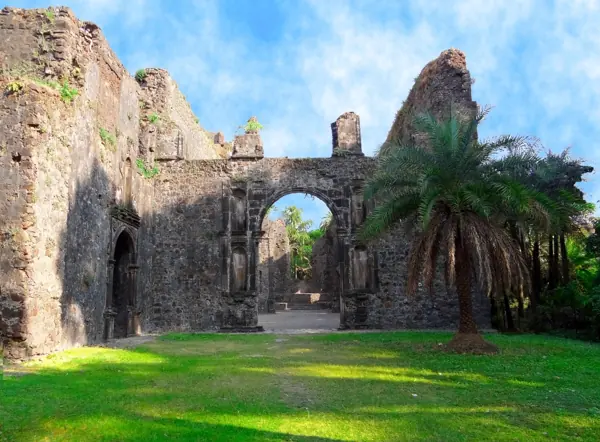
Purandar: resistance and diplomacy

Mughal forces campaigned against Chhatrapati Shivaji Maharaj in 1665. Mirza Raja Jai Singh directed the campaign, with Diler Khan at Purandar. Murarbaji Deshpande is remembered for his defence of the fort. He lost his life during the fighting. Pressure on Purandar contributed to negotiations. The Treaty of Purandar required the transfer of twenty-three forts. Chhatrapati Shivaji Maharaj retained twelve forts, including Rajgad. Several surrendered strongholds were recovered in later campaigns. Purandar therefore represents diplomacy as well as armed resistance. Its history shows that Swarajya developed through changing circumstances.

Read full story

The campaign of 1665 placed serious pressure on the territories held by Chhatrapati Shivaji Maharaj. Mirza Raja Jai Singh led the Mughal expedition, while Diler Khan took a prominent part in the operations against Purandar. The fort and its companion stronghold of Vajragad formed a defensive setting in which the loss of an adjacent height could affect the security of the larger position. Purandar’s history makes the relationship between neighbouring forts particularly clear.

Murarbaji Deshpande led a determined defence and died in the fighting. He is remembered with respect as a commander whose service became central to the fort’s historical identity. The military pressure nevertheless led to negotiations. Under the Treaty of Purandar, Chhatrapati Shivaji Maharaj agreed to surrender twenty-three forts while retaining twelve, among them Rajgad. A treaty of this kind affected revenue and territorial authority as well as the possession of masonry walls.

The agreement should be read as a decision made under particular constraints, rather than as the end of the Maratha political project. Strongholds changed hands again as relations and campaigns changed. Purandar itself returned to Maratha control in 1670. Lohagad and other forts also re-entered the Maratha network in that period. The five years between treaty and recovery help visitors see that the history of a fort often consists of several distinct phases of possession.

Purandar carries another important association: it is the birthplace of Chhatrapati Sambhaji Maharaj. That connection gives the site significance beyond the siege alone. A visit can therefore bring together family history, the service of Murarbaji, the geography of the defences and the choices made through negotiation. This fuller view honours the people involved without reducing a complex campaign to a single slogan or treating temporary concessions as permanent outcomes.

Purandar fort ↗Lohagad ↗Rajgad ↗Tikona ↗

Sources: Maharashtra Tourism — Purandar, Purandar Fort — source article and references, Treaty of Purandar (1665) — terms and references

1666–1668

The kingdom takes shape

Maratha–Mughal relations after Agra

After Shivaji's escape, hostilities with the Mughals ebbed, with the Mughal Sardar Jaswant Singh acting as an intermediary between Shivaji and Aurangzeb for new peace proposals. Between 1666 and 1668, Aurangzeb also conferred the title of Raja on Shivaji, although he did not restore his right over the forts. Sambhaji was also restored as a Mughal mansabdar with 5,000 horses. At this time Shivaji sent Sambhaji and General Prataprao Gujar to serve with Prince Mu'azzam, the Mughal viceroy in Aurangabad. Sambhaji was also granted territory in Berar for revenue collection. Aurangzeb also permitted Shivaji to attack Bijapur, ruled by the decaying Adil Shahi dynasty; the weakened Sultan Ali Adil Shah II sued for peace and granted the rights of sardeshmukhi and chauthai to Shivaji.

Read full story

Adapted source account from the linked Wikipedia article (CC BY-SA 4.0). Parenthetical material and citation markers have been omitted.

After Shivaji's escape, hostilities with the Mughals ebbed, with the Mughal Sardar Jaswant Singh acting as an intermediary between Shivaji and Aurangzeb for new peace proposals. Between 1666 and 1668, Aurangzeb also conferred the title of Raja on Shivaji, although he did not restore his right over the forts. Sambhaji was also restored as a Mughal mansabdar with 5,000 horses.

At this time Shivaji sent Sambhaji and General Prataprao Gujar to serve with Prince Mu'azzam, the Mughal viceroy in Aurangabad. Sambhaji was also granted territory in Berar for revenue collection. Aurangzeb also permitted Shivaji to attack Bijapur, ruled by the decaying Adil Shahi dynasty; the weakened Sultan Ali Adil Shah II sued for peace and granted the rights of sardeshmukhi and chauthai to Shivaji.

Consult the original article and its cited historical works for source evidence and differing interpretations. The timeline date identifies the event or beginning of the period; this account may cover a longer span.

Sources: Shivaji — historical account and references, Contributor history and attribution, CC BY-SA 4.0 — adapted source extract
1670
Sinhagad — documentary photographExplore Sinhagad ↗

The kingdom takes shape

Sinhagad and the service of Tanaji Malusare

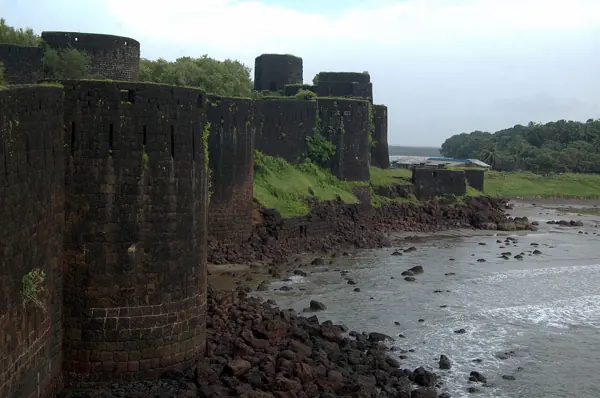
Sinhagad was historically known as Kondhana. The fort passed to the Mughals under the settlement of 1665. Maratha forces sought to recover it in 1670. Tanaji Malusare led the best-known assault on the stronghold. He died during the battle. The Maratha forces secured the fort. Suryaji Malusare is also associated with the successful operation. The episode became an enduring part of Maharashtra’s historical memory. The memorials on the fort honour service and sacrifice. Sinhagad also has a long history before and after this battle.

Read full story

Kondhana, now widely known as Sinhagad, occupies a prominent height southwest of Pune. Its position made it a valuable stronghold for controlling the surrounding approaches. The fort had a history under several powers before the events for which it is most familiar today. Following the settlement at Purandar in 1665, it came into Mughal possession. The Maratha attempt to recover it in 1670 formed part of a wider renewal of operations to regain strategic forts.

Tanaji Malusare led the assault and died in the fighting. The Maratha forces nevertheless captured the fort, with Suryaji Malusare also associated with the operation. These are the central historical points behind a story that has since been retold in poetry, performance, film and local memory. The courage remembered at Sinhagad is inseparable from the cost borne by its participants and their families.

Popular versions often include a trained monitor lizard and memorable words attributed to Chhatrapati Shivaji Maharaj. Such elements belong to the history of the story’s transmission and should be identified as tradition when discussed. A source-based visitor account does not need to present every later detail as independently established fact. The documented capture and Tanaji’s death already explain why the event carries such emotional importance.

The fort offers more than a battlefield narrative. Its gates, water features and memorials allow visitors to consider daily survival and the changing uses of a defended hill. The memorial of Chhatrapati Rajaram Maharaj connects Sinhagad to the later Maratha struggle as well. Reading these layers together prevents the entire site from being compressed into one night in 1670. It also gives appropriate space to the many people who maintained, defended and lived around the fort across different periods.

Sinhagad ↗

Sources: Pune District — Sinhagad, Poona Gazetteer — Sinhagad and its historical remains, Sinhagad — historical account and references

1672
Salher — documentary photographExplore Salher ↗

The kingdom takes shape

Salher and a major field victory

Salher stands in the Baglan region of present-day Nashik district. Maratha forces captured the fort in 1671. Mughal forces subsequently attempted to recover it. The campaign led to a major battle in 1672. Moropant Pingle and Prataprao Gujar are associated with the Maratha relief effort. The Maratha victory lifted the pressure on the besieged stronghold. It demonstrated capacity in open campaigning as well as fort defence. Baglan’s routes made the surrounding region strategically important. Salher’s story belongs to a network that includes neighbouring Mulher. Its importance does not depend on exaggerated troop or casualty figures.

Read full story

Salher’s commanding position in Baglan gave it a place in the contest for routes linking the northern Deccan and western India. Maratha forces captured the fort in 1671. Mughal attempts to recover it brought a siege and then a major confrontation in 1672. The successful Maratha relief is associated with the leadership of Moropant Pingle and Prataprao Gujar. The result secured the position at a significant moment in the expansion of Chhatrapati Shivaji Maharaj’s power.

The campaign is important because it broadens the familiar picture of Maratha warfare. Fortified heights and rapid movement were important, but the victory at Salher also involved substantial forces operating outside the fort. A garrison’s ability to hold a position and a relief army’s ability to reach it were related parts of the same operation. Reading only the walls would miss that wider battlefield and the routes through which supplies and troops moved.

Neighbouring strongholds, including Mulher, help place Salher within a regional system. Control of one hill did not automatically guarantee control of every valley or road. Garrisons, provisions and the ability to respond to an opposing army all mattered. This is why the region remained contested after individual victories and why possession dates must be distinguished from the date of a single battle.

Accounts of Salher sometimes offer very large totals for troops, prisoners or casualties. This guide does not repeat figures that have not been carefully reconciled across sources. The strategic result is clear without them: the Maratha forces overcame the besiegers and reinforced their position in Baglan. For visitors, the historical importance lies in the coordination required to turn a threatened stronghold into a successful regional operation, as well as in the exceptional landscape of the fort itself.

Salher ↗

Sources: Nashik Gazetteer — seventeenth-century campaigns, Nasik Presidency Gazetteer — Salher and Baglan, Battle of Salher — references and overview

1673
Panhala Fort — documentary photographExplore Panhala Fort ↗

The kingdom takes shape

The recovery of Panhala

Chhatrapati Shivaji Maharaj recovered Panhala in 1673, after the fort had passed to Bijapur following the siege of 1660. Under these circumstances, Chhatrapati Shivaji Maharaj decided that escape was the only option. He gathered a small number of soldiers along with his trusted commander Baji Prabhu Deshpande and, on 13 July 1660, they escaped in the dead of night to flee to Vishalgad. Baji Prabhu and a barber, Shiva Kashid, who looked like Shivaji, kept the enemy engaged, giving them an impression that Shiva Kashid was actually Chhatrapati Shivaji Maharaj. In the ensuing battle, almost three quarters of the one thousand strong force died, including Baji Prabhu himself. The fort went to Adil Shah. It was not until 1673 that Chhatrapati Shivaji Maharaj could occupy it permanently.

Read full story

Adapted source account from the linked Wikipedia article (CC BY-SA 4.0). Parenthetical material and citation markers have been omitted.

Chhatrapati Shivaji Maharaj recovered Panhala in 1673, after the fort had passed to Bijapur following the siege of 1660. Under these circumstances, Chhatrapati Shivaji Maharaj decided that escape was the only option. He gathered a small number of soldiers along with his trusted commander Baji Prabhu Deshpande and, on 13 July 1660, they escaped in the dead of night to flee to Vishalgad.

Baji Prabhu and a barber, Shiva Kashid, who looked like Shivaji, kept the enemy engaged, giving them an impression that Shiva Kashid was actually Chhatrapati Shivaji Maharaj. In the ensuing battle, almost three quarters of the one thousand strong force died, including Baji Prabhu himself. The fort went to Adil Shah. It was not until 1673 that Chhatrapati Shivaji Maharaj could occupy it permanently.

Consult the original article and its cited historical works for source evidence and differing interpretations. The timeline date identifies the event or beginning of the period; this account may cover a longer span.

Panhala Fort ↗

Sources: Panhala Fort — historical account and references, Contributor history and attribution, CC BY-SA 4.0 — adapted source extract

6 June 1674
Raigad — documentary photographExplore Raigad ↗

Kingship and administration

Raigad and the coronation of Chhatrapati Shivaji Maharaj

Raigad developed from the earlier stronghold of Rairi. Chhatrapati Shivaji Maharaj acquired it in 1656. It became a carefully developed royal and administrative centre. His coronation took place here on 6 June 1674. The ceremony formally expressed sovereign kingship. Raigad brought court, administration and defence together. The capital connected the Sahyadri uplands with the Konkan. Chhatrapati Shivaji Maharaj died at the fort in 1680. Chhatrapati Sambhaji Maharaj continued the royal association with Raigad. The site remains central to the memory of Swarajya and public service.

Read full story

Raigad’s importance grew from the conversion of an existing stronghold into a royal capital. Formerly known as Rairi, it entered Chhatrapati Shivaji Maharaj’s possession in 1656 and was developed over the following years. The move from the earlier headquarters at Rajgad was part of the growth of the Maratha state. A capital needed secure approaches, space for a court and administration, and practical arrangements for the people and supplies required to sustain it.

On 6 June 1674, Chhatrapati Shivaji Maharaj was crowned at Raigad. The coronation gave formal expression to sovereignty after decades of political organisation and military campaigning. It was not the beginning of every aspect of Swarajya: much of the work of building authority, securing territory and organising government had already taken place. The ceremony marked a new constitutional and ceremonial standing for that established achievement.

The fort’s surviving royal and public spaces help visitors move beyond the image of a solitary mountain fortress. Court, market, religious and residential areas belonged to a functioning capital. The landscape also linked the defended summit to settlements and routes below. These relationships explain why the history of Raigad includes administration and everyday labour alongside the most famous royal events.

Chhatrapati Shivaji Maharaj died here in 1680, and his memorial remains one of the fort’s most significant places. Raigad continued to be associated with Chhatrapati Sambhaji Maharaj and the subsequent struggle for the state. Its legacy therefore includes both the founding generation and those who carried responsibility afterwards. Visiting with respect means attending to these connected histories, preserving the fabric and treating memorial and sacred areas with care.

Raigad ↗Rajgad ↗

Sources: Press Information Bureau — Raigad and the coronation, Maharashtra Ahead — Raigad history, Raigad Fort — source article and references

1674

Kingship and administration

The Ashta Pradhan council

Ashta Pradhan was the cabinet of the Maratha Empire. They are credited with having implemented good governance practices in the Maratha heartland, as well as for the success of the military campaigns against the Mughal Empire. The coronation of Shivaji was held in 1674, at the Raigad Fort in the present-day Indian state of Maharashtra. On that occasion, Shivaji formalized the institution of a council of eight ministers to guide the administration of his nascent state. This council came to be known as the Ashta Pradhan. Each of the ministers was placed in charge of an administrative department; thus, the council heralded the birth of a bureaucracy. The formalization of an administrative mechanism was of a piece with other measures, indicative of the formalization of a sovereign state, which were implemented on the occasion of Shivaji's coronation: coinage bearing his insignia were issued, and a new era, the Rajyabhishek era, was proclaimed on the occasion. The Ashta Pradhan was designed to encompass all primary administrative functions of the state, with each minister being given charge of a role in the administration. Ministerial designations were drawn from Sanskrit; the eight ministerial roles were as follows: Continued conflict with the Mughal Empire meant that military matters remained exceedingly important to the affairs of the nascent state. Hence, with the notable exception of the Panditrao and the Nyayadhish, the other pradhans held full-time military commands, and their deputies performed their civil duties in their absence.

Read full story

Adapted source account from the linked Wikipedia article (CC BY-SA 4.0). Parenthetical material and citation markers have been omitted.

Ashta Pradhan was the cabinet of the Maratha Empire. They are credited with having implemented good governance practices in the Maratha heartland, as well as for the success of the military campaigns against the Mughal Empire. The coronation of Shivaji was held in 1674, at the Raigad Fort in the present-day Indian state of Maharashtra. On that occasion, Shivaji formalized the institution of a council of eight ministers to guide the administration of his nascent state. This council came to be known as the Ashta Pradhan.

Each of the ministers was placed in charge of an administrative department; thus, the council heralded the birth of a bureaucracy. The formalization of an administrative mechanism was of a piece with other measures, indicative of the formalization of a sovereign state, which were implemented on the occasion of Shivaji's coronation: coinage bearing his insignia were issued, and a new era, the Rajyabhishek era, was proclaimed on the occasion. The Ashta Pradhan was designed to encompass all primary administrative functions of the state, with each minister being given charge of a role in the administration. Ministerial designations were drawn from Sanskrit; the eight ministerial roles were as follows: Continued conflict with the Mughal Empire meant that military matters remained exceedingly important to the affairs of the nascent state. Hence, with the notable exception of the Panditrao and the Nyayadhish, the other pradhans held full-time military commands, and their deputies performed their civil duties in their absence. During the later era of the Maratha Empire, these deputies and their staff constituted the core of the Peshwa's bureaucracy.

Consult the original article and its cited historical works for source evidence and differing interpretations. The timeline date identifies the event or beginning of the period; this account may cover a longer span.

Sources: Ashta Pradhan — historical account and references, Contributor history and attribution, CC BY-SA 4.0 — adapted source extract

1675

Kingship and administration

The campaign at Ponda

Ponda at that time, was under the Bijapur Sultanate for nearly two centuries, which was at odds with the neighboring Portuguese Empire in Goa and the newly emerging rebel force of the Marathas. In his surprise attack on the west coast of India, the forces of the Maratha king Shivaji encircled the fortress of Ponda, held by Bijapur and stormed it in an all out open siege. According to legend, he commissioned 500 ladders for this mission made 500 golden bracelets for the first climbers. A Bijapuri commander Bahlol Khan started with a relief force but could not advance further than Miraj as the Marathas had blocked the ghat route by felling trees. The fortress' commander, Muhammad Khan, was one of the few to survive the massacre of the garrison. The capture of Ponda resulted in the Maratha kingdom capturing some of the western parts of the Konkan region. Shivaji also appointed an agent, Umaji Pundit in the court of Rani Chellama of Keladi, on her own request. She was harassed by her commander Timanna. On 18 April 1675, Shivaji commenced the siege of Ponda Fort, which was under the command of Muhammad Khan, with a large invading force of 2,000 horsemen and 7,000 infantrymen. Concerned about potential Portuguese interference, Shivaji tried to secure a pledge of neutrality from them to prevent a repeat of their aid to the fort's defenders during a previous siege in 1666, while also secretly planning a raid into Portuguese territory.

Read full story

Adapted source account from the linked Wikipedia article (CC BY-SA 4.0). Parenthetical material and citation markers have been omitted.

Ponda at that time, was under the Bijapur Sultanate for nearly two centuries, which was at odds with the neighboring Portuguese Empire in Goa and the newly emerging rebel force of the Marathas. In his surprise attack on the west coast of India, the forces of the Maratha king Shivaji encircled the fortress of Ponda, held by Bijapur and stormed it in an all out open siege. According to legend, he commissioned 500 ladders for this mission made 500 golden bracelets for the first climbers. A Bijapuri commander Bahlol Khan started with a relief force but could not advance further than Miraj as the Marathas had blocked the ghat route by felling trees. The fortress' commander, Muhammad Khan, was one of the few to survive the massacre of the garrison.

The capture of Ponda resulted in the Maratha kingdom capturing some of the western parts of the Konkan region. Shivaji also appointed an agent, Umaji Pundit in the court of Rani Chellama of Keladi, on her own request. She was harassed by her commander Timanna. On 18 April 1675, Shivaji commenced the siege of Ponda Fort, which was under the command of Muhammad Khan, with a large invading force of 2,000 horsemen and 7,000 infantrymen. Concerned about potential Portuguese interference, Shivaji tried to secure a pledge of neutrality from them to prevent a repeat of their aid to the fort's defenders during a previous siege in 1666, while also secretly planning a raid into Portuguese territory. However, Shivaji's attempt to maintain a Portuguese envoy within the fortress was foiled when his men intercepted and arrested some Goan merchants along with supplies destined for Ponda.

Consult the original article and its cited historical works for source evidence and differing interpretations. The timeline date identifies the event or beginning of the period; this account may cover a longer span.

Sources: Siege of Ponda (1675) — historical account and references, Contributor history and attribution, CC BY-SA 4.0 — adapted source extract

1677

Kingship and administration

The southern expedition

In the run-up to his expedition, Shivaji appealed to a sense of Deccani patriotism, that Southern India was a homeland that should be protected from outsiders. His appeal was somewhat successful, and in 1677 Shivaji visited Hyderabad for a month and entered into a treaty with the Qutubshah of the Golkonda sultanate, who agreed to renounce his alliance with Bijapur and jointly oppose the Mughals.

Read full story

Adapted source account from the linked Wikipedia article (CC BY-SA 4.0). Parenthetical material and citation markers have been omitted.

In the run-up to his expedition, Shivaji appealed to a sense of Deccani patriotism, that Southern India was a homeland that should be protected from outsiders.

His appeal was somewhat successful, and in 1677 Shivaji visited Hyderabad for a month and entered into a treaty with the Qutubshah of the Golkonda sultanate, who agreed to renounce his alliance with Bijapur and jointly oppose the Mughals.

Consult the original article and its cited historical works for source evidence and differing interpretations. The timeline date identifies the event or beginning of the period; this account may cover a longer span.

Sources: Shivaji — historical account and references, Contributor history and attribution, CC BY-SA 4.0 — adapted source extract

1679
Khanderi — documentary photographExplore Khanderi ↗

Kingship and administration

Khanderi and the contest for coastal waters

Khanderi lies off the coast south of Mumbai. Chhatrapati Shivaji Maharaj’s forces occupied the island in 1679. Maynak Bhandari is associated with its early fortification. The position mattered to movement along the northern Konkan coast. Its occupation drew opposition from nearby maritime powers. Maratha defenders had to bring men and supplies across open water. The island became a lasting Maratha naval stronghold. Later confrontations included an East India Company attack in 1718. The lighthouse belongs to a later British phase of the island’s history. Khanderi reveals how a small island could carry large strategic importance.

Read full story

Khanderi is a small island whose position gave it significance beyond its size. In 1679, forces of Chhatrapati Shivaji Maharaj occupied and fortified it, with Maynak Bhandari associated with the undertaking. The island lay within a coastal world influenced by the Siddis, the English at Bombay and other regional powers. Establishing a Maratha position there therefore affected more than the island itself: it altered the balance around nearby sea routes.

The practical challenge was to maintain a garrison in a place reached only by water. Fortifying an island required the movement of workers, provisions and building material while opponents sought to prevent the position from becoming secure. Khanderi’s history consequently joins construction to naval operations. Its defensive value came from the combination of location, walls, boats and the people able to operate between shore and island.

Khanderi remained important after the lifetime of Chhatrapati Shivaji Maharaj. An East India Company expedition against it in 1718 failed, demonstrating the continued importance of Maratha coastal bases in the eighteenth century. That later event belongs to a different political moment and should not be merged into the original campaign of 1679. The fort’s long history includes changing commanders and arrangements of authority, not a single uninterrupted episode under one individual.

The lighthouse visible today is a later addition from the British period. Distinguishing it from the earlier fortifications helps visitors read the island’s successive layers accurately. The modern name Kanhoji Angre Island commemorates the Maratha admiral, while the foundation of the fort is linked to Chhatrapati Shivaji Maharaj’s maritime policy. The site is an especially clear example of how strategic geography could make a modest area of rock an important part of a much larger system of coastal defence.

Khanderi ↗

Sources: Kolaba Gazetteer — Khanderi, Khanderi — historical account and references

1680
Raigad — documentary photographExplore Raigad ↗

Kingship and administration

Death of Chhatrapati Shivaji Maharaj

In late March 1680, Shivaji fell ill with fever and dysentery, dying around 3–5 April 1680 at the age of 50, at Raigad Fort, on the eve of Hanuman Jayanti. The cause of Shivaji's death is disputed. British records state Shivaji died of bloody flux, after being sick for 12 days. In a contemporary work in Portuguese, in the Biblioteca Nacional de Lisboa, the recorded cause of death of Shivaji is anthrax. However, Krishnaji Anant Sabhasad, author of the Sabhasad Bakhar, a biography of Shivaji has mentioned fever as the cause of death. Putalabai, the childless eldest of the surviving wives of Shivaji committed sati by jumping into his funeral pyre. Another surviving spouse, Sakwarbai, was not allowed to follow suit because she had a young daughter. There were also allegations, though doubted by later scholars, that his second wife Soyarabai had poisoned him in order to put her 10-year-old son Rajaram on the throne. After Shivaji's death, Soyarabai made plans, with various ministers, to crown her son Rajaram rather than her stepson Sambhaji. On 21 April 1680, ten-year-old Rajaram was installed on the throne.

Read full story

Adapted source account from the linked Wikipedia article (CC BY-SA 4.0). Parenthetical material and citation markers have been omitted.

In late March 1680, Shivaji fell ill with fever and dysentery, dying around 3–5 April 1680 at the age of 50, at Raigad Fort, on the eve of Hanuman Jayanti. The cause of Shivaji's death is disputed. British records state Shivaji died of bloody flux, after being sick for 12 days. In a contemporary work in Portuguese, in the Biblioteca Nacional de Lisboa, the recorded cause of death of Shivaji is anthrax. However, Krishnaji Anant Sabhasad, author of the Sabhasad Bakhar, a biography of Shivaji has mentioned fever as the cause of death. Putalabai, the childless eldest of the surviving wives of Shivaji committed sati by jumping into his funeral pyre.

Another surviving spouse, Sakwarbai, was not allowed to follow suit because she had a young daughter. There were also allegations, though doubted by later scholars, that his second wife Soyarabai had poisoned him in order to put her 10-year-old son Rajaram on the throne. After Shivaji's death, Soyarabai made plans, with various ministers, to crown her son Rajaram rather than her stepson Sambhaji. On 21 April 1680, ten-year-old Rajaram was installed on the throne. However, Sambhaji took possession of Raigad Fort after killing the commander, and on 18 June acquired control of Raigad, and formally ascended the throne on 20 July. Rajaram, his mother Soyarabai and wife Janki Bai were imprisoned, and Soyrabai was executed on charges of conspiracy that October.

Consult the original article and its cited historical works for source evidence and differing interpretations. The timeline date identifies the event or beginning of the period; this account may cover a longer span.

Raigad ↗

Sources: Shivaji — historical account and references, Contributor history and attribution, CC BY-SA 4.0 — adapted source extract

1681–1689
Raigad — documentary photographExplore Raigad ↗

Resistance and endurance

Chhatrapati Sambhaji Maharaj: kingship and resistance

Chhatrapati Sambhaji Maharaj was born at Purandar in 1657. He succeeded Chhatrapati Shivaji Maharaj after the crisis of 1680. His formal coronation at Raigad took place in January 1681. He carried responsibility for the Maratha state during intense warfare. Aurangzeb’s arrival in the Deccan brought sustained Mughal pressure. The kingdom also faced challenges along its western coast. Forts, commanders and supply systems sustained resistance across several fronts. His reign cannot be understood through battles alone. He was captured and executed in 1689. His life remains an enduring part of Maharashtra’s memory of courage and duty.

Read full story

Chhatrapati Sambhaji Maharaj inherited a substantial but contested state. Born at Purandar in 1657, he had grown up within the political world created by Chhatrapati Shivaji Maharaj. After his father’s death in 1680, a succession struggle preceded his establishment as ruler. The formal coronation at Raigad took place in January 1681. Some accounts give different day dates, so the month and year are used here rather than presenting that disagreement as settled.

His reign coincided with a particularly demanding phase of the Mughal–Maratha conflict. Aurangzeb brought the imperial court and army into the Deccan, making warfare prolonged and geographically extensive. The Maratha state also dealt with the Siddis and Portuguese on the coast. Decisions about armies, supplies, diplomacy and the protection of territory were therefore connected across several fronts. A ruler could not be physically present at every fort that resisted an attack.

The forts mattered as places for garrisons, stores, administration and communication. Their survival depended on commanders and communities as well as royal direction. Remembering Chhatrapati Sambhaji Maharaj’s contribution should include that work of maintaining a state under pressure, rather than relying on unsupported claims that no fort was ever lost or that every campaign ended in victory. Historical respect is compatible with recognising the difficulty and complexity of the circumstances.

He was captured at Sangameshwar in 1689 and executed by order of Aurangzeb. The Maratha struggle continued under Chhatrapati Rajaram Maharaj and later under Maharani Tarabai’s leadership. His death was therefore a profound rupture, but not the end of Maratha resistance. Raigad, Purandar and Panhala provide different points of entry into his life: royal capital, birthplace and a stronghold associated with the succession. Together they give his memory a fuller historical setting.

Raigad ↗Purandar fort ↗Panhala Fort ↗

Sources: Kolhapur Gazetteer — succession and January 1681 coronation, University of Mumbai — History of Medieval India, Sambhaji — biographical account and references, Sangli Gazetteer — capture and execution in 1689

1682
Ramshej — documentary photographExplore Ramshej ↗

Resistance and endurance

The defence of Ramshej

The Sieges of Ramsej were a series of military confrontations between the Maratha Kingdom headed by Sambhaji and the Mughal Empire led by Aurangzeb regarding the control of Ramsej Fort in the Nashik region. Aurangzeb arrived in the Deccan in late 1681 with a strong army to destroy the Maratha Kingdom and the Deccan Sultanates of Bijapur and Golconda. He wanted to capture the forts held by the Marathas in the Nashik and Baglana regions. Hence he decided to begin his Deccan campaign with an attack on Ramsej Fort which is near Nashik. The Mughal forces under Kasim Khan Kirmani captured Ramsej from the Marathas. The defending Maratha forces evacuated the fort. Shivaji's general Peshwa Moropant Pingle had captured Ramsej in the year 1671–72. Since then, it had been a part of the Maratha Kingdom. Ramsej was a fort lying in open lands without excessive forest cover. So, Aurangzeb decided that it would be a good idea to capture an easy fort like Ramsej right at the beginning to increase the morale of his troops.

Read full story

Adapted source account from the linked Wikipedia article (CC BY-SA 4.0). Parenthetical material and citation markers have been omitted.

The Sieges of Ramsej were a series of military confrontations between the Maratha Kingdom headed by Sambhaji and the Mughal Empire led by Aurangzeb regarding the control of Ramsej Fort in the Nashik region. Aurangzeb arrived in the Deccan in late 1681 with a strong army to destroy the Maratha Kingdom and the Deccan Sultanates of Bijapur and Golconda. He wanted to capture the forts held by the Marathas in the Nashik and Baglana regions. Hence he decided to begin his Deccan campaign with an attack on Ramsej Fort which is near Nashik. The Mughal forces under Kasim Khan Kirmani captured Ramsej from the Marathas. The defending Maratha forces evacuated the fort. Shivaji's general Peshwa Moropant Pingle had captured Ramsej in the year 1671–72. Since then, it had been a part of the Maratha Kingdom. Ramsej was a fort lying in open lands without excessive forest cover. So, Aurangzeb decided that it would be a good idea to capture an easy fort like Ramsej right at the beginning to increase the morale of his troops. Ramsej Fort saw the war against the Mughal Empire for six and a half years. The first killedar was Suryaji Jedhe, but after six and a half years, he was transferred and a new killedar was appointed as per the rotation of posts policy of the Maratha Kingdom. In April of 1682, Aurangzeb sent Shahabuddin Khan who attacked the fort with an army of 40,000.

Shahbuddin Khan had vowed to capture the fort with his 40,000 army and strong artillery within a few hours. The Marathas did not succumb to this onslaught. The 600 Maratha soldiers on the fort kept his forces at bay for many months by fierce array of slingshots, lit haystack and huge stones even though they did not have cannons on the fort. Once the Mughal artillery managed to break the fort walls in the evening and they assumed that the fort will be captured easily. But all 600 Marathas on the fort worked for a full night and rebuilt the entire broken section of the wall, much to the despair and awe of the Mughals. Such fierce resistance made the Mughal soldiers believed that the Marathas on the fort knew black magic. The inability of the Mughal Sardar to capture the fort started frustrating Aurangzeb. He raised a wooden platform to storm the fort. Shivaji and his son Sambhaji had a policy of keeping enough ammunition even on the forts having no cannons or guns. Ramshej was no exception and even though it did not have cannons it had sufficient ammunition. The fort commander had an idea and utilised amply available animal skin and wood on the fort to make wooden cannons. Coupled with the ammunition already present on the fort, these wooden cannons started inflicting heavy losses on the Mughal Army. The retaliation from the Marathas was so strong that he left the responsibility to Bahadur Khan Kokaltash and went to Junnar.

Consult the original article and its cited historical works for source evidence and differing interpretations. The timeline date identifies the event or beginning of the period; this account may cover a longer span.

Ramshej ↗

Sources: Siege of Ramsej — historical account and references, Contributor history and attribution, CC BY-SA 4.0 — adapted source extract

1683

Resistance and endurance

The Maratha–Portuguese conflict

The Portuguese colony of Goa at that time provided supplies to the Mughals, allowed them to use the Portuguese ports in India and pass through their territory. In order to deny this support to the Mughals, Sambhaji invaded the Portuguese territories of Bardez and Salcette with 20,000 Maratha soldiers. According to an account by Padre Francisco de Souza, Marathas looted, destroyed Churches and raped Christian women. After they had completed sacking, they carried off with themselves many men, women and children whom they later sold to Arabs and Dutch. Jadunath Sarkar notes that the Marathas were notorious for gang-raping women during invasions, including the invasion of Goa under Sambhaji. He elaborates on this by quoting a contemporary account of the event.

Read full story

Adapted source account from the linked Wikipedia article (CC BY-SA 4.0). Parenthetical material and citation markers have been omitted.

The Portuguese colony of Goa at that time provided supplies to the Mughals, allowed them to use the Portuguese ports in India and pass through their territory. In order to deny this support to the Mughals, Sambhaji invaded the Portuguese territories of Bardez and Salcette with 20,000 Maratha soldiers. According to an account by Padre Francisco de Souza, Marathas looted, destroyed Churches and raped Christian women.

After they had completed sacking, they carried off with themselves many men, women and children whom they later sold to Arabs and Dutch. Jadunath Sarkar notes that the Marathas were notorious for gang-raping women during invasions, including the invasion of Goa under Sambhaji. He elaborates on this by quoting a contemporary account of the event.

Consult the original article and its cited historical works for source evidence and differing interpretations. The timeline date identifies the event or beginning of the period; this account may cover a longer span.

Sources: Sambhaji — historical account and references, Contributor history and attribution, CC BY-SA 4.0 — adapted source extract

1686

Resistance and endurance

Mughal annexation of Bijapur

The siege of Bijapur was a military conflict between the Mughal Empire and the Bijapur Sultanate, over the latter's fortified capital city of Bijapur. It was the culmination of previous Mughal attempts to invade the Sultanate earlier that century, and took place during the reigns of Mughal emperor Aurangzeb and sultan Sikandar Adil Shah. Lasting 15 months, the siege was initially carried out by Mughal officers such as prince Azam Shah and Ghaziuddin Khan Feroze Jung, before Aurangzeb arrived in Bijapur midway to conduct the siege personally. The conflict ended in Mughal victory, resulting in the imprisonment of Sikandar Adil Shah and incorporation of the Bijapur Sultanate as a Mughal province. During the reign of the fifth Mughal emperor Shah Jahan, the Mughals had managed to stabilise the empire's southern frontier in the Deccan region. The Ahmadnagar Sultanate was extinguished around 1633, and Shah Jahan negotiated tributary relationships with the last two independent polities of the Deccan, the Bijapur and Golconda Sultanates, by 1636. Aurangzeb had long supported annexing the sultanates outright, and in 1656 while he served as the Mughal viceroy of the Deccan, found the pretext to do so when Bijapur sultan Muhammad Adil Shah died, succeeded by the eighteen-year-old Ali Adil Shah II. With his father's order, Aurangzeb invaded the Bijapur Sultanate's frontier and captured several key territories such as Bidar, but soon after Shah Jahan changed his mind and the offensive was concluded with peace treaties. The tributary relationship between the Mughals and the Deccan Sultanates would be maintained for thirty years after Aurangzeb's accession to the throne. After Aurangzeb's accession, the Deccan saw the rise of Maratha chieftain Shivaji, who raided both Bijapuri and Mughal holdings in the Deccan.

Read full story

Adapted source account from the linked Wikipedia article (CC BY-SA 4.0). Parenthetical material and citation markers have been omitted.

The siege of Bijapur was a military conflict between the Mughal Empire and the Bijapur Sultanate, over the latter's fortified capital city of Bijapur. It was the culmination of previous Mughal attempts to invade the Sultanate earlier that century, and took place during the reigns of Mughal emperor Aurangzeb and sultan Sikandar Adil Shah. Lasting 15 months, the siege was initially carried out by Mughal officers such as prince Azam Shah and Ghaziuddin Khan Feroze Jung, before Aurangzeb arrived in Bijapur midway to conduct the siege personally. The conflict ended in Mughal victory, resulting in the imprisonment of Sikandar Adil Shah and incorporation of the Bijapur Sultanate as a Mughal province. During the reign of the fifth Mughal emperor Shah Jahan, the Mughals had managed to stabilise the empire's southern frontier in the Deccan region. The Ahmadnagar Sultanate was extinguished around 1633, and Shah Jahan negotiated tributary relationships with the last two independent polities of the Deccan, the Bijapur and Golconda Sultanates, by 1636. Aurangzeb had long supported annexing the sultanates outright, and in 1656 while he served as the Mughal viceroy of the Deccan, found the pretext to do so when Bijapur sultan Muhammad Adil Shah died, succeeded by the eighteen-year-old Ali Adil Shah II. With his father's order, Aurangzeb invaded the Bijapur Sultanate's frontier and captured several key territories such as Bidar, but soon after Shah Jahan changed his mind and the offensive was concluded with peace treaties. The tributary relationship between the Mughals and the Deccan Sultanates would be maintained for thirty years after Aurangzeb's accession to the throne. After Aurangzeb's accession, the Deccan saw the rise of Maratha chieftain Shivaji, who raided both Bijapuri and Mughal holdings in the Deccan.

Aurangzeb appointed Jai Singh I in March 1665 to put down this threat and then annex Bijapur. In June of the same year, Shivaji capitulated under the Treaty of Purandhar, becoming a Mughal vassal. In November, Jai Singh launched an invasion of the Bijapur Sultanate, which Shivaji took part in. The invasion was ultimately unsuccessful; Jai Singh's army was forced to halt 6 kos from the Bijapur fort, because the defendants employed a scorched-earth policy as they withdrew to the fort. The 1670s saw the Bijapur Sultanate's central administration deteriorate significantly. Ali Adil Shah II died and was succeeded by his young son Sikandar Adil Shah in 1672. This triggered severe factionalism in the Bijapuri court between Afghani and Deccani nobles. Moreover, by this time Shivaji had seceded from Mughal service and established a powerful independent polity that served as an attractive alternative for officials of the Sultanate. The political stability from Shah Jahan's rule in the Deccan was hence eroding. In 1682, emperor Aurangzeb himself arrived in the Deccan to counter the rebellion of his son, prince Muhammad Akbar. After this threat was neutralised, Aurangzeb turned his attention to annexing Bijapur, believing conquest of the Deccan sultanates to be the lasting solution to the political instability in the region.

Consult the original article and its cited historical works for source evidence and differing interpretations. The timeline date identifies the event or beginning of the period; this account may cover a longer span.

Sources: Siege of Bijapur — historical account and references, Contributor history and attribution, CC BY-SA 4.0 — adapted source extract

1687

Resistance and endurance

Mughal annexation of Golconda

The siege of Golconda was an eight-month military siege of the Golconda Fort. This siege was personally directed by the Mughal emperor Aurangzeb against the Golconda Sultanate, ruled by king Abul Hasan Qutb Shah. It was the second Mughal siege of the fort, following an aborted attempt by Aurangzeb in 1656 as a prince of emperor Shah Jahan. The event served as the climax of the Golconda Sultanate, which was annexed into the Mughal Empire as a result of the victory of the siege. The military confrontation was one of the final stages in the Mughal Empire's expansion southwards in the Indian subcontinent. The siege was lengthy and laborious, hampered by the strength of the fort, environmental conditions, and dissent within the Mughal administration. The siege was won only through treachery. It exacerbated drought, famine and epidemic in the region. During the reign of the fifth Mughal emperor Shah Jahan, the Mughals had managed to stabilise the empire's southern frontier in the Deccan region. The Ahmadnagar Sultanate was extinguished around 1633, and Shah Jahan negotiated tributary relationships with the last two independent polities of the Deccan, the Bijapur and Golconda Sultanates, by 1636.

Read full story

Adapted source account from the linked Wikipedia article (CC BY-SA 4.0). Parenthetical material and citation markers have been omitted.

The siege of Golconda was an eight-month military siege of the Golconda Fort. This siege was personally directed by the Mughal emperor Aurangzeb against the Golconda Sultanate, ruled by king Abul Hasan Qutb Shah. It was the second Mughal siege of the fort, following an aborted attempt by Aurangzeb in 1656 as a prince of emperor Shah Jahan. The event served as the climax of the Golconda Sultanate, which was annexed into the Mughal Empire as a result of the victory of the siege. The military confrontation was one of the final stages in the Mughal Empire's expansion southwards in the Indian subcontinent. The siege was lengthy and laborious, hampered by the strength of the fort, environmental conditions, and dissent within the Mughal administration. The siege was won only through treachery. It exacerbated drought, famine and epidemic in the region. During the reign of the fifth Mughal emperor Shah Jahan, the Mughals had managed to stabilise the empire's southern frontier in the Deccan region. The Ahmadnagar Sultanate was extinguished around 1633, and Shah Jahan negotiated tributary relationships with the last two independent polities of the Deccan, the Bijapur and Golconda Sultanates, by 1636. As a prince and commander of Shah Jahan, Aurangzeb was an advocate of annexing these remaining sultanates outright, and to this end besieged Golconda in 1656; the siege was withdrawn and a peace treaty established by Shah Jahan with Golconda's ruler, Abdullah Qutb Shah.

This prompted the latter to extend the citadel's fortifications. Abdullah Qutb Shah was succeeded by Abul Hasan Qutb Shah in 1672. In 1682, Aurangzeb moved his camp to the Deccan to counter the rebellion of his son, prince Muhammad Akbar. After the danger was neutralised, Aurangzeb set out to fulfill his ambition of annexing the Deccan Sultanates, and successfully besieged Bijapur in 1685–1686. Golconda was a nucleus of power and wealth in the Deccan region, with control over important agricultural tracts, diamond mines, and trade routes; such factors may have influenced Aurangzeb's continued determination to conquer the Sultanate. The Maasir-i-Alamgiri, a contemporary chronicle of Aurangzeb's reign, provides other accusations against the ruler Abul Hasan, including the Sultanate's Shi'i faith, its support of Hindu practices, and support of Maratha depredations in Mughal territory. During the siege of Bijapur in 1685, Aurangzeb intercepted a message from Abul Hasan, stating his intention to send a large armed force to combat the Mughals alongside a Maratha force. Outraged, Aurangzeb deputed his son, prince Muazzam, against the Qutb Shahi city of Hyderabad. Shah Alam's army defeated a Qutb Shahi force at Malkhed, a border town of the Sultanate, and Golconda's commander-in-chief consequently defected to the Mughal side with this followers, weakening the kingdom's defences. The Mughal army led by Shah Alam entered Hyderabad with no significant resistance, freely plundering the royal palaces. The Sultan fled, barricading himself in the Golconda Fort. Muazzam preferred a negotiated settlement with the Sultan over direct conquest; this was viewed by Aurangzeb as treason, causing him to temporarily bar Muazzam from the imperial court.

Consult the original article and its cited historical works for source evidence and differing interpretations. The timeline date identifies the event or beginning of the period; this account may cover a longer span.

Sources: Siege of Golconda — historical account and references, Contributor history and attribution, CC BY-SA 4.0 — adapted source extract

1689

Resistance and endurance

Capture and death of Chhatrapati Sambhaji Maharaj

Mughal forces captured Chhatrapati Sambhaji Maharaj at Sangameshwar in February 1689; he was subsequently executed on Aurangzeb’s orders. In the 1687 Battle of Wai, the key Maratha commander Hambirrao Mohite was killed and troops began to desert the Maratha armies. Sambhaji and 25 of his advisors were captured by the Mughal forces of Muqarrab Khan in a skirmish at Sangameshwar in February 1689. Sambhaji's positions were spied upon by the Maratha officials close to him, who conveyed this information to Muqarrab Khan. Accounts of Sambhaji's confrontation with the Mughal ruler and his following torture and execution and the disposal of his body vary widely depending on the source, though all broadly agree that he was tortured and executed on the emperor's orders. The captured Sambhaji and Kavi Kalash were taken to the fort of Bahadurgad at Pedgaon in-present-day Ahmednagar district, where Aurangzeb humiliated them by parading them wearing clown's clothes and they were subjected to insults by Mughal soldiers.

Read full story

Adapted source account from the linked Wikipedia article (CC BY-SA 4.0). Parenthetical material and citation markers have been omitted.

Mughal forces captured Chhatrapati Sambhaji Maharaj at Sangameshwar in February 1689; he was subsequently executed on Aurangzeb’s orders. In the 1687 Battle of Wai, the key Maratha commander Hambirrao Mohite was killed and troops began to desert the Maratha armies. Sambhaji and 25 of his advisors were captured by the Mughal forces of Muqarrab Khan in a skirmish at Sangameshwar in February 1689.

Sambhaji's positions were spied upon by the Maratha officials close to him, who conveyed this information to Muqarrab Khan. Accounts of Sambhaji's confrontation with the Mughal ruler and his following torture and execution and the disposal of his body vary widely depending on the source, though all broadly agree that he was tortured and executed on the emperor's orders. The captured Sambhaji and Kavi Kalash were taken to the fort of Bahadurgad at Pedgaon in-present-day Ahmednagar district, where Aurangzeb humiliated them by parading them wearing clown's clothes and they were subjected to insults by Mughal soldiers.

Consult the original article and its cited historical works for source evidence and differing interpretations. The timeline date identifies the event or beginning of the period; this account may cover a longer span.

Sources: Sambhaji — historical account and references, Contributor history and attribution, CC BY-SA 4.0 — adapted source extract

1689

Resistance and endurance

Chhatrapati Rajaram Maharaj and Jinji

Rajaram I, also known as Ram Raaje, was the third king of the Maratha Kingdom, who ruled from 1689 to his death in 1700. He was the second son of Chhatrapati Shivaji Maharaj, the founder of the kingdom, and younger paternal half-brother of Chhatrapati Sambhaji Maharaj, whom he succeeded. His eleven-year reign was marked with a constant struggle against the Mughals. He was succeeded by his infant son Shivaji II under the regentship of his wife Maharani Tarabai. Rajaram was born in the Bhonsle dynasty to Chhatrapati Shivaji Maharaj and his second wife, Soyarabai, on 24 February 1670. He was thirteen years younger than his brother, Sambhaji. Given the ambitious nature of Soyarabai, Rajaram was installed on the Maratha throne upon the death of his father in 1680 at the age of 10. However, the Maratha generals wanted Sambhaji as the king and thus Sambhaji claimed the throne. Upon Sambhaji's death at the hands of the Mughals in 1689, Rajaram was informally crowned as Chhatrapati of as a regent for his nephew Shahu I. He vowed to avenge his brother's execution.

Read full story

Adapted source account from the linked Wikipedia article (CC BY-SA 4.0). Parenthetical material and citation markers have been omitted.

Rajaram I, also known as Ram Raaje, was the third king of the Maratha Kingdom, who ruled from 1689 to his death in 1700. He was the second son of Chhatrapati Shivaji Maharaj, the founder of the kingdom, and younger paternal half-brother of Chhatrapati Sambhaji Maharaj, whom he succeeded. His eleven-year reign was marked with a constant struggle against the Mughals. He was succeeded by his infant son Shivaji II under the regentship of his wife Maharani Tarabai. Rajaram was born in the Bhonsle dynasty to Chhatrapati Shivaji Maharaj and his second wife, Soyarabai, on 24 February 1670. He was thirteen years younger than his brother, Sambhaji. Given the ambitious nature of Soyarabai, Rajaram was installed on the Maratha throne upon the death of his father in 1680 at the age of 10. However, the Maratha generals wanted Sambhaji as the king and thus Sambhaji claimed the throne. Upon Sambhaji's death at the hands of the Mughals in 1689, Rajaram was informally crowned as Chhatrapati of as a regent for his nephew Shahu I. He vowed to avenge his brother's execution.

Rajaram married three times. His first marriage was at the age of ten to Jankibai, the five -year-old daughter of Shivaji's army chief, Prataprao Gujar. His other wives were Tarabai, the daughter of Sarsenapati Hambirrao Mohite, the Maratha army general who succeeded Prataprao, and Rajasbai from the influential Ghatge family of Kagal. Rajaram had three sons, After the execution of Sambhaji by the Mughals, Rajaram was informally crowned at Raigad on 12 March 1689. Rajaram then moved towards to the Bhavani temple at Pratapgad. As he went inspecting the fortresses that lay along the route, he had them provisioned and armed. As the Mughals under Itikad Khan started laying siege to the region around Raigad on 25 March 1689, Rajaram's general Santaji Ghorpade organized a counter offensive. Santaji's plan was for the Maratha army to entrench itself at Phaltan and from that base draw the attention of Mughal generals while Santaji and a small cavalry contingent would raid the main Mughal camp at Tulapur, and if possible kill Aurangzeb in the middle of his army. Santaji and Vithoji Chavan, his second in command, led a two thousand strong contingent for this purpose towards Tulapur. On stealthily reaching the Mughal camp they rushed at Aurangzeb's pavilion, cut down the supporting ropes and the huge cloth edifice came down in a crash, killing everyone inside. Afterwards it was discovered that Aurangzeb by chance was passing that night in his daughter's tent, thus escaping death.

Consult the original article and its cited historical works for source evidence and differing interpretations. The timeline date identifies the event or beginning of the period; this account may cover a longer span.

Sources: Rajaram I — historical account and references, Contributor history and attribution, CC BY-SA 4.0 — adapted source extract

1690

Resistance and endurance

The siege of Jinji

The siege of Jinji was a protracted conflict between the Mughal Empire and the Maratha kingdom, wherein the triple-hill fortress of Jinji was besieged by a large Mughal force in order to capture the embedded Maratha king Rajaram I. Led by Mughal general Zulfiqar Khan under the orders of Mughal emperor Aurangzeb, the siege was the focal point of the Mughal-Maratha wars during this decade; lasting almost eight years, it represented the lengthiest of any siege mounted in Mughal history. The strength of the hill-fort, constant disruption of Mughal supply lines by Maratha forces, and dissent within Mughal ranks contributed to the length of the siege. Though the fortress finally capitulated, Rajaram evaded capture, establishing himself instead at the hill-fort of Satara. The conquest of Jinji gave the Mughals control over the south-eastern Coromandel districts. The ongoing war between the Mughals and Marathas reached an inflection point in the late 1680s. Mughal forces captured the Maratha king Sambhaji in February 1689 while he was en route from Panhala to the Maratha capital Raigad. He was brought to Mughal emperor Aurangzeb's imperial camp and executed. Sambhaji's younger brother Rajaram was hastily crowned at Raigad. Raigad was besieged and captured in 1689 by Mughal general Zulfiqar Khan, son of Aurangzeb's wazir, but Rajaram fled to the extreme south in the guise of a yogi, with the help of Maratha chieftains Dhanaji Jadhav and Santaji Ghorpade.

Read full story

Adapted source account from the linked Wikipedia article (CC BY-SA 4.0). Parenthetical material and citation markers have been omitted.

The siege of Jinji was a protracted conflict between the Mughal Empire and the Maratha kingdom, wherein the triple-hill fortress of Jinji was besieged by a large Mughal force in order to capture the embedded Maratha king Rajaram I. Led by Mughal general Zulfiqar Khan under the orders of Mughal emperor Aurangzeb, the siege was the focal point of the Mughal-Maratha wars during this decade; lasting almost eight years, it represented the lengthiest of any siege mounted in Mughal history. The strength of the hill-fort, constant disruption of Mughal supply lines by Maratha forces, and dissent within Mughal ranks contributed to the length of the siege. Though the fortress finally capitulated, Rajaram evaded capture, establishing himself instead at the hill-fort of Satara. The conquest of Jinji gave the Mughals control over the south-eastern Coromandel districts. The ongoing war between the Mughals and Marathas reached an inflection point in the late 1680s. Mughal forces captured the Maratha king Sambhaji in February 1689 while he was en route from Panhala to the Maratha capital Raigad. He was brought to Mughal emperor Aurangzeb's imperial camp and executed. Sambhaji's younger brother Rajaram was hastily crowned at Raigad. Raigad was besieged and captured in 1689 by Mughal general Zulfiqar Khan, son of Aurangzeb's wazir, but Rajaram fled to the extreme south in the guise of a yogi, with the help of Maratha chieftains Dhanaji Jadhav and Santaji Ghorpade. He found refuge in Jinji fortress, controlled by his half-brother the Raja of Thanjavur. Here he was crowned and set up court with nobles that had accompanied him.

By this point, the Mughals had annexed most of the Maratha kingdom and seized its treasure, and the Maratha state seemed to be deteriorating. In addition, earlier that same decade the Mughals had annexed the last remaining Deccan sultanates, the Bijapur and Golconda sultanates, adding vast tracts of land, resources, and treasure to the Mughal polity. At this point it seemed to many in the Mughal administration that Mughal authority in the Deccan had been consolidated. However, Maratha chiefs continued to harass Mughal holdings in the north, making it difficult for Mughal governors to protect their districts and collect taxes. Instead of concluding the empire's Deccan conquests, Aurangzeb chose to launch a campaign against Rajaram, both in order to quell the rebellions of Maratha chiefs definitively, as well as to annex the Carnatic region. The fortress of Jinji lay between Arcot and Tiruchirappalli. It was notable for its size, impregnability, and domineering position. The fortress formed a triangle out of three hills, each hosting a rock fort. Each of these three forts was made up of granite walls measuring nearly 5 kilometres in circumference and at heights of 50-150 metres. The entire fortress of Jinji was also surrounded by mountains, making it difficult to reach for any army. In addition to its impregnability, the fortress was also well-supplied; it contained several granaries, two steady springs of freshwater, and three reservoirs. Therefore, the fortress of Jinji was well-suited to withstand a lengthy siege.

Consult the original article and its cited historical works for source evidence and differing interpretations. The timeline date identifies the event or beginning of the period; this account may cover a longer span.

Sources: Siege of Jinji — historical account and references, Contributor history and attribution, CC BY-SA 4.0 — adapted source extract

1690

Resistance and endurance

Santaji Ghorpade’s campaigns

Santaji Mahaloji Ghorpade was a Maratha general and statesman who served as the 7th Senapati of the Maratha Empire during the reign of Chattrapati Rajaram I. He is widely regarded as one of the foremost experts in Guerrilla warfare. Santaji Ghorpade, in collaboration with Dhanaji Jadhav, conducted a series of successful campaigns against the Mughals from 1689 to 1696. His strategic acumen was demonstrated through the adept utilization of tactics such as guerrilla warfare, ambushes, and swift mobility, ultimately resulting in effective defeats of the Mughal Army. In recognition of his valor, Rajaram bestowed upon him the title of Mamlakat-Madar in 1690. Santaji belonged to the Ghorpade clan, a senior branch of the Bhosale clan. The Ghorpades were initially known as Bhosales. Santaji was the eldest son of Mhaloji Ghorpade of Bhalavani, who served as the Senapati during the reign of Chhatrapati Sambhaji for a brief period following the unexpected demise of Hambirrao Mohite. Santaji had two younger brothers named Bahirji and Maloji. His father was the half-brother of Baji Ghorpade of Mudhol, who was executed by Chhatrapati Shivaji for betraying Shahaji when Afzal Khan imprisoned him.

Read full story

Adapted source account from the linked Wikipedia article (CC BY-SA 4.0). Parenthetical material and citation markers have been omitted.

Santaji Mahaloji Ghorpade was a Maratha general and statesman who served as the 7th Senapati of the Maratha Empire during the reign of Chattrapati Rajaram I. He is widely regarded as one of the foremost experts in Guerrilla warfare. Santaji Ghorpade, in collaboration with Dhanaji Jadhav, conducted a series of successful campaigns against the Mughals from 1689 to 1696. His strategic acumen was demonstrated through the adept utilization of tactics such as guerrilla warfare, ambushes, and swift mobility, ultimately resulting in effective defeats of the Mughal Army. In recognition of his valor, Rajaram bestowed upon him the title of Mamlakat-Madar in 1690. Santaji belonged to the Ghorpade clan, a senior branch of the Bhosale clan. The Ghorpades were initially known as Bhosales. Santaji was the eldest son of Mhaloji Ghorpade of Bhalavani, who served as the Senapati during the reign of Chhatrapati Sambhaji for a brief period following the unexpected demise of Hambirrao Mohite. Santaji had two younger brothers named Bahirji and Maloji. His father was the half-brother of Baji Ghorpade of Mudhol, who was executed by Chhatrapati Shivaji for betraying Shahaji when Afzal Khan imprisoned him. In the initial stages of his career, Santaji ascended through the ranks under the guidance of Hambirrao Mohite. Santaji and his younger brother Bahirji accompanied Shivaji Maharaj in his campaign of Jalna in 1679.

Subsequently, Santaji assumed a prominent role as a commander during the reign of Sambhaji Maharaj. In 1686, Sambhaji raje dispatched Santaji and Keshav Pingale with an army of 12,000 cavalry to procure food supplies from the Gingee region. In 1689, Santaji found himself in the company of his father when Sambhaji raje was captured by the Mughal Empire. Instead of making an escape, Mhaloji met his demise while protecting Sambhaji Raje at Sangameshwar. Santaji received orders to proceed ahead, while Sambhaji raje devised a plan to divert the invading Army of the Mughal Empire. Following the untimely and unceremonious demise of Mhaloji, his sons and brothers steadfastly remained loyal to Chhatrapati Rajaram I, ultimately securing the future of the Maratha Empire. In the beginning of the Rajaram's reign in 1689, Santaji had attained the rank of Pancha Hajari officer i.e. commander of 5,000 soldiers. In September 1689, along with Dhanaji, Santaji attacked Aurangzeb's General Sheikh Nizam who had placed a siege around the Panhala Fort. Nizam's army was severely beaten and his treasure, horses and elephants were captured. Then during 1689–1690 period, Santaji and Dhanaji were directed to prevent Mughal army in Maharashtra from chasing and entering Karnataka after Rajaram's flight to Gingee. They succeeded in this task and were able to slow down and engage the Mughals in harassing skirmishes. In December 1690, Santaji and Dhanaji were promoted as leading Maratha generals, and were placed respectively under the supervision of Ramchandra Pant Amatya and Shankaraji Narayan Gandekar. On 25 May 1690, Sarza Khan Alias Rustam Khan, a Mughal nobleman and commander, was soundly defeated and captured near Satara jointly by Ramchandra Pant Amatya, Shankraji Narayan, Santaji and Dhanaji in and this proved to be a major setback to emperor Aurangzeb.

Consult the original article and its cited historical works for source evidence and differing interpretations. The timeline date identifies the event or beginning of the period; this account may cover a longer span.

Sources: Santaji Ghorpade — historical account and references, Contributor history and attribution, CC BY-SA 4.0 — adapted source extract

1690

Resistance and endurance

Dhanaji Jadhav’s campaigns

Dhanaji Jadhav also known as Dhanaji Jadhav Rao, was a prominent Maratha general and served as the Senapati of the Maratha Empire during the reigns of Rajaram I, Tarabai, and Shahu I. Alongside Santaji Ghorpade, he conducted highly successful campaigns against the Mughals from 1689 to 1696, contributing significantly to the Maratha cause. Furthermore, he played a pivotal role in the initial expansion of the Gujarat Subah while consistently defeating Mughal forces. Dhanaji was a member of the Jadhav clan of Sindkhed Raja. He was the descendant of Lakhuji Jadhav. Dhanaji was raised by Shivaji's mother, Jijabai, following the assassination of Dhanaji's great-grandfather, Achloji, who was Jijabai's brother. Achloji's son, Santaji, perished in the Battle of Kanakagiri. Santaji's son and Dhanaji's father, Shambhu Singh, was also nurtured by Jijabai. Shambhu Singh met his demise at the Battle of Pavan Khind. At a young age, Dhanaji joined the Maratha Army under the leadership of Shivaji's commander-in-chief, Prataprao Gujar.

Read full story

Adapted source account from the linked Wikipedia article (CC BY-SA 4.0). Parenthetical material and citation markers have been omitted.

Dhanaji Jadhav also known as Dhanaji Jadhav Rao, was a prominent Maratha general and served as the Senapati of the Maratha Empire during the reigns of Rajaram I, Tarabai, and Shahu I. Alongside Santaji Ghorpade, he conducted highly successful campaigns against the Mughals from 1689 to 1696, contributing significantly to the Maratha cause. Furthermore, he played a pivotal role in the initial expansion of the Gujarat Subah while consistently defeating Mughal forces. Dhanaji was a member of the Jadhav clan of Sindkhed Raja. He was the descendant of Lakhuji Jadhav. Dhanaji was raised by Shivaji's mother, Jijabai, following the assassination of Dhanaji's great-grandfather, Achloji, who was Jijabai's brother. Achloji's son, Santaji, perished in the Battle of Kanakagiri. Santaji's son and Dhanaji's father, Shambhu Singh, was also nurtured by Jijabai. Shambhu Singh met his demise at the Battle of Pavan Khind. At a young age, Dhanaji joined the Maratha Army under the leadership of Shivaji's commander-in-chief, Prataprao Gujar.

During the battles at Umbrani and Nesari, Dhanaji's exceptional performance drew the attention of Shivaji for the first time. He was subsequently appointed by Shivaji, even on his deathbed, as one of the six pillars of the Maratha Empire who would safeguard the kingdom during challenging times. Their unwavering struggle and continued resistance against the Army of the Mughal Empire played a crucial role in ensuring the survival and success of the Marathas in the 27-Year war between the forces of Aurangzeb and the Marathas. Dhanaji and his fellow general, Santaji Ghorpade, are acknowledged for their pivotal role in combating the Mughal forces during the reign of Rajaram I. Their dedicated service to the Maratha cause effectively thwarted the advances of Aurangzeb's Army of the Mughal Empire for a quarter of a century. With the demise of Aurangzeb, Mughal influence in Maharashtra ultimately waned, never to regain prominence. During the conflict, the Marathas utilized both infantry and cavalry to effectively engage and disrupt the Mughal forces. Following the fall of Bijapur and Golconda, a significant number of horsemen found themselves unemployed. As a result, they sought employment with the Maratha forces under the leadership of Santaji Ghorpade and Dhanaji Jadhav. In the absence of central authority, these two commanders acted on their own initiative and swiftly developed expertise in coordinating cavalry movements over extended distances.

Consult the original article and its cited historical works for source evidence and differing interpretations. The timeline date identifies the event or beginning of the period; this account may cover a longer span.

Sources: Dhanaji Jadhav — historical account and references, Contributor history and attribution, CC BY-SA 4.0 — adapted source extract

1700

Resistance and endurance

Maharani Tarabai leads the resistance

Maharani Tarabai Bhonsle was the regent of the Maratha Empire from 1700 until 1708. She was the queen of Rajaram I, and daughter-in-law of the kingdom's founder Shivaji I. She is acclaimed for her role in keeping alive the resistance against Mughal rule in Konkan, and acting as the regent of the Maratha Kingdom during the minority of her son, Shivaji II. She defeated Mughal forces of Aurangzeb in several battles and expanded the Maratha Kingdom. Tarabai came from Mohite clan. She was the daughter of Hambirrao Mohite, Commander-in-Chief of Chhatrapati Shivaji Maharaj, the founder of the Maratha kingdom. Hambirrao's sister Soyarabai was the queen of Shivaji and the mother of his younger son Rajaram I. Tarabai married Rajaram Raje at the age of 8 in 1682, becoming his second wife. After the death of his half-brother and predecessor Chhatrapati Sambhaji Maharaj, Rajaram ruled the Maratha Kingdom from 1689 to 1700, when his first wife Jankibai was the queen consort. On Rajaram's death in March 1700, Tarabai proclaimed her infant son, Shivaji II as Rajaram's successor and herself as the regent.

Read full story

Adapted source account from the linked Wikipedia article (CC BY-SA 4.0). Parenthetical material and citation markers have been omitted.

Maharani Tarabai Bhonsle was the regent of the Maratha Empire from 1700 until 1708. She was the queen of Rajaram I, and daughter-in-law of the kingdom's founder Shivaji I. She is acclaimed for her role in keeping alive the resistance against Mughal rule in Konkan, and acting as the regent of the Maratha Kingdom during the minority of her son, Shivaji II. She defeated Mughal forces of Aurangzeb in several battles and expanded the Maratha Kingdom. Tarabai came from Mohite clan. She was the daughter of Hambirrao Mohite, Commander-in-Chief of Chhatrapati Shivaji Maharaj, the founder of the Maratha kingdom. Hambirrao's sister Soyarabai was the queen of Shivaji and the mother of his younger son Rajaram I. Tarabai married Rajaram Raje at the age of 8 in 1682, becoming his second wife.

After the death of his half-brother and predecessor Chhatrapati Sambhaji Maharaj, Rajaram ruled the Maratha Kingdom from 1689 to 1700, when his first wife Jankibai was the queen consort. On Rajaram's death in March 1700, Tarabai proclaimed her infant son, Shivaji II as Rajaram's successor and herself as the regent. As the regent, Tarabai took charge of the war against the Mughal emperor Aurangzeb's forces. Tarabai was skilled in cavalry movement and made strategic movements herself during wars. She personally led the war and continued the fight against the Mughals. A truce was offered to the Mughals in such a way that the Mughal emperor promptly rejected it, and Tarabai continued the Maratha resistance. After the Battle of Satara, Aurangzeb contested for every inch of Deccan region at great cost of life and money. Aurangzeb drove west, deep into Maratha territory notably conquering Satara the Marathas expanded eastwards into Mughal lands of the Hyderabad province. Aurangzeb waged continuous war in the Deccan for more than two decades with no resolution and thus lost about a fifth of his army.

Consult the original article and its cited historical works for source evidence and differing interpretations. The timeline date identifies the event or beginning of the period; this account may cover a longer span.

Sources: Tarabai — historical account and references, Contributor history and attribution, CC BY-SA 4.0 — adapted source extract

1707

A changing political order

The death of Aurangzeb

Even when ill and dying, Aurangzeb made sure that the populace knew he was still alive, for if they had thought otherwise then the turmoil of another war of succession was likely. He died at his military camp in Bhingar near Ahmednagar on 3 March 1707 at the age of 88 at approximately 8:00 a.m., shortly after performing his morning prayer. He outlived many of his children and had only 300 rupees with him which were later given to charity as per his instructions. Prior to his death, he requested not to spend extravagantly on his funeral but to keep it simple. His modest open-air grave in Khuldabad, Aurangabad, Maharashtra expresses his deep devotion to his Islamic beliefs. It is sited in the courtyard of the shrine of the Sufi saint Shaikh Burhan-u'd-din Gharib, who was a disciple of Nizamuddin Auliya of Delhi.

Read full story

Adapted source account from the linked Wikipedia article (CC BY-SA 4.0). Parenthetical material and citation markers have been omitted.

Even when ill and dying, Aurangzeb made sure that the populace knew he was still alive, for if they had thought otherwise then the turmoil of another war of succession was likely. He died at his military camp in Bhingar near Ahmednagar on 3 March 1707 at the age of 88 at approximately 8:00 a.m., shortly after performing his morning prayer. He outlived many of his children and had only 300 rupees with him which were later given to charity as per his instructions.

Prior to his death, he requested not to spend extravagantly on his funeral but to keep it simple. His modest open-air grave in Khuldabad, Aurangabad, Maharashtra expresses his deep devotion to his Islamic beliefs. It is sited in the courtyard of the shrine of the Sufi saint Shaikh Burhan-u'd-din Gharib, who was a disciple of Nizamuddin Auliya of Delhi.

Consult the original article and its cited historical works for source evidence and differing interpretations. The timeline date identifies the event or beginning of the period; this account may cover a longer span.

Sources: Aurangzeb — historical account and references, Contributor history and attribution, CC BY-SA 4.0 — adapted source extract

1707

A changing political order

The contest at Khed

The Battle of Khed took place on 12 October 1707, between Shahu I and the forces of Tarabai led by Dhanaji Jadhav. The battle occurred at Khed, situated near the Bhima river to the north of Pune.

Read full story

Adapted source account from the linked Wikipedia article (CC BY-SA 4.0). Parenthetical material and citation markers have been omitted.

The Battle of Khed took place on 12 October 1707, between Shahu I and the forces of Tarabai led by Dhanaji Jadhav.

The battle occurred at Khed, situated near the Bhima river to the north of Pune.

Consult the original article and its cited historical works for source evidence and differing interpretations. The timeline date identifies the event or beginning of the period; this account may cover a longer span.

Sources: Battle of Khed — historical account and references, Contributor history and attribution, CC BY-SA 4.0 — adapted source extract

1708

A changing political order

Chhatrapati Shahu Maharaj at Satara

Shahu I was the fifth Chhatrapati of Maratha Empire from 1708 to 1749, the longest reign among the Maratha rulers. He was also the last subahdar of the Bijapur Subah, before being annexed by the Maratha Empire. During Shahu's reign, driven largely by the strategic vision and military leadership of his Peshwas, the Maratha Empire expanded across much of the Indian subcontinent and emerged as the leading power in South Asia. Shahu, his father Sambhaji I and his grandfather Shivaji Maharaj, all belonged to the Bhonsle dynasty. He, along with his mother Yesubai Bhonsle, was under the capture of Aurangzeb during the Deccan Wars. For nearly 18 years, Shahu was under captive but was treated with royal courtesy and he was often involved in Mughal politics. By 1707, Shahu was released by Aurangzeb's son Bahadur Shah I, in order to strengthen Mughal relations with the Marathas. Shahu held military and administrative posts during his captive days in the Mughal Empire eventually becoming the governor of the Bijapur Subah. Shahu succeeded his cousin Shivaji II by 1708 at the age of 26, shortly after Aurangzeb's death and his release. Then, Shahu launched military campaigns on the regions of Khed, Adilabad, Konkan, Bengal, Bihar and western Indian subcontinent.

Read full story

Adapted source account from the linked Wikipedia article (CC BY-SA 4.0). Parenthetical material and citation markers have been omitted.

Shahu I was the fifth Chhatrapati of Maratha Empire from 1708 to 1749, the longest reign among the Maratha rulers. He was also the last subahdar of the Bijapur Subah, before being annexed by the Maratha Empire. During Shahu's reign, driven largely by the strategic vision and military leadership of his Peshwas, the Maratha Empire expanded across much of the Indian subcontinent and emerged as the leading power in South Asia. Shahu, his father Sambhaji I and his grandfather Shivaji Maharaj, all belonged to the Bhonsle dynasty. He, along with his mother Yesubai Bhonsle, was under the capture of Aurangzeb during the Deccan Wars. For nearly 18 years, Shahu was under captive but was treated with royal courtesy and he was often involved in Mughal politics. By 1707, Shahu was released by Aurangzeb's son Bahadur Shah I, in order to strengthen Mughal relations with the Marathas. Shahu held military and administrative posts during his captive days in the Mughal Empire eventually becoming the governor of the Bijapur Subah. Shahu succeeded his cousin Shivaji II by 1708 at the age of 26, shortly after Aurangzeb's death and his release. Then, Shahu launched military campaigns on the regions of Khed, Adilabad, Konkan, Bengal, Bihar and western Indian subcontinent. He also successfully brought them under control of the Marathas, with the exception of Bengal which was only partly incorporated into the empire.

One of his most successful and famous campaigns were during at the Afsharid invasion of India in which the Afsharid Empire, under the rule of Nader Shah, occupied Delhi and the remaining western territories of an insignificant Mughal Empire. Marathas, under the rule of Shahu, helped the Mughals against the Persian Afsharid dynasty. By 1740, the combined forces of the Marathas and Mughals and other smaller regional powers defeated the Persians in the subcontinent and thereby, forcing Nader Shah's huge army to retreat from Lahore and western Indian subcontinent and ceded all their territories in India to the Marathas. Thus, the Maratha Empire eventually captured Delhi and became the sole dominant power in South Asia, replacing the Mughals which had been the dominant power in the region for over three centuries, and making them puppets of the Marathas. Shahu also introduced Mughal and western-styled form of administration into the Maratha Empire. He divided his empire into subahs, a system which was introduced by Akbar in the Mughal Empire. During Shahu's reign, the central authority of the empire became much stronger and the empire was highly centralized, with the Chhatrapati being the head of the state. Shahu was a great patron of many Indian languages, such as Marathi, Hindustani, Persian, Sanskrit, Prakrit and Tamil. He also made Hindustani as the dominant language in the empire's court, alongside his dynastic language, Marathi. He also issued coins in Persian, Prakrit, Sanskrit and French languages. The empire, under Shahu, started making trade contacts and strong relations with powers outside South Asia such as Britain, France, Iran and others.

Consult the original article and its cited historical works for source evidence and differing interpretations. The timeline date identifies the event or beginning of the period; this account may cover a longer span.

Sources: Shahu I — historical account and references, Contributor history and attribution, CC BY-SA 4.0 — adapted source extract

1713

A changing political order

Balaji Vishwanath becomes Peshwa

Chhatrapati Shahu Maharaj appointed Balaji Vishwanath as Peshwa in November 1713, following negotiations with Kanhoji Angre. Next Shahu turned to subdue the Angre clan. Tukoji Angre had commanded Chattrapati Shivaji's navy, and was succeeded in 1690 by his son Kanhoji Angre. Kanhoji received from Tarabai the title of "Sarkhel" Admiral of the Maratha fleet. The conflict between Tarabai and Shahu offered Kanhoji an opportunity to effectively free himself of the suzerainty of either. He captured the major trading center of Kalyan and the neighboring forts of Rajmachi and Lohgad. Shahu sent a large force under his Peshwa or Prime Minister, Bahiroji Pingale. Kanhoji defeated Pingale and imprisoned him at Lohagad, and started to advance towards Shahu's capital Satara. Shahu commanded Balaji again to raise another army to subdue Kanhoji. Balaji preferred the path of negotiation and was appointed as Shahu's plenipotentiary to negotiate with the admiral.

Read full story

Adapted source account from the linked Wikipedia article (CC BY-SA 4.0). Parenthetical material and citation markers have been omitted.

Chhatrapati Shahu Maharaj appointed Balaji Vishwanath as Peshwa in November 1713, following negotiations with Kanhoji Angre. Next Shahu turned to subdue the Angre clan. Tukoji Angre had commanded Chattrapati Shivaji's navy, and was succeeded in 1690 by his son Kanhoji Angre. Kanhoji received from Tarabai the title of "Sarkhel" Admiral of the Maratha fleet. The conflict between Tarabai and Shahu offered Kanhoji an opportunity to effectively free himself of the suzerainty of either. He captured the major trading center of Kalyan and the neighboring forts of Rajmachi and Lohgad. Shahu sent a large force under his Peshwa or Prime Minister, Bahiroji Pingale. Kanhoji defeated Pingale and imprisoned him at Lohagad, and started to advance towards Shahu's capital Satara.

Shahu commanded Balaji again to raise another army to subdue Kanhoji. Balaji preferred the path of negotiation and was appointed as Shahu's plenipotentiary to negotiate with the admiral. Balaji and Kanhoji met at Lonavala. The newly appointed Peshwa appealed to the old sailor's patriotism for the Maratha cause. Angre agreed to become the Sarkhel of Shahu's navy with control of the Konkan. Balaji and Angre then jointly attacked the Muslim Siddis of Janjira. Their combined forces captured most of the Konkan coast, including Balaji's birthplace of Shrivardhan, which became part of the Angre fiefdom. Delighted with Balaji's success, Shahu dismissed Bahiroji Pingale and appointed Balaji Vishwanath as Peshwa on 16 November 1713.

Consult the original article and its cited historical works for source evidence and differing interpretations. The timeline date identifies the event or beginning of the period; this account may cover a longer span.

Sources: Balaji Vishwanath — historical account and references, Contributor history and attribution, CC BY-SA 4.0 — adapted source extract

1719

A changing political order

Imperial recognition and Maratha claims

Farrukhsiyar was dethroned, blinded and imprisoned by the Sayyid's, who substituted in his place a more pliable puppet, Rafi-ul-darjat in February 1719. This hapless prince was dying of tuberculosis and was in turn replaced after a reign of only three months by his older brother Rafi Ud-Daulah.) Rafi-ul-Darjat duly ratified the Maratha treaty. Shahu and his successors were recognized by the Mughal Emperors as the rightful heirs to Chattrapati Shivaji.

Read full story

Adapted source account from the linked Wikipedia article (CC BY-SA 4.0). Parenthetical material and citation markers have been omitted.

Farrukhsiyar was dethroned, blinded and imprisoned by the Sayyid's, who substituted in his place a more pliable puppet, Rafi-ul-darjat in February 1719.

This hapless prince was dying of tuberculosis and was in turn replaced after a reign of only three months by his older brother Rafi Ud-Daulah.) Rafi-ul-Darjat duly ratified the Maratha treaty. Shahu and his successors were recognized by the Mughal Emperors as the rightful heirs to Chattrapati Shivaji.

Consult the original article and its cited historical works for source evidence and differing interpretations. The timeline date identifies the event or beginning of the period; this account may cover a longer span.

Sources: Balaji Vishwanath — historical account and references, Contributor history and attribution, CC BY-SA 4.0 — adapted source extract

1720

Expansion across India

Bajirao I becomes Peshwa

After Balaji Vishwanath died in 1720, Chhatrapati Shahu Maharaj appointed the young Bajirao as Peshwa. Being born in a Brahmin family, his education included reading, writing and learning Sanskrit however, he did not remain confined to his books. Bajirao displayed a passion for the military at an early age and often accompanied his father on military campaigns. He was with his father when his father was imprisoned by Damaji Thorat before being released for a ransom. Bajirao had been on the expedition to Delhi in 1719 with his father and was convinced the Mughal Empire was disintegrating and would be unable to resist northward Maratha expansion. When Balaji Vishwanath died in 1720, Shahu appointed the 20-year-old Bajirao as Peshwa despite opposition from other chieftains.

Read full story

Adapted source account from the linked Wikipedia article (CC BY-SA 4.0). Parenthetical material and citation markers have been omitted.

After Balaji Vishwanath died in 1720, Chhatrapati Shahu Maharaj appointed the young Bajirao as Peshwa. Being born in a Brahmin family, his education included reading, writing and learning Sanskrit however, he did not remain confined to his books. Bajirao displayed a passion for the military at an early age and often accompanied his father on military campaigns.

He was with his father when his father was imprisoned by Damaji Thorat before being released for a ransom. Bajirao had been on the expedition to Delhi in 1719 with his father and was convinced the Mughal Empire was disintegrating and would be unable to resist northward Maratha expansion. When Balaji Vishwanath died in 1720, Shahu appointed the 20-year-old Bajirao as Peshwa despite opposition from other chieftains.

Consult the original article and its cited historical works for source evidence and differing interpretations. The timeline date identifies the event or beginning of the period; this account may cover a longer span.

Sources: Bajirao I — historical account and references, Contributor history and attribution, CC BY-SA 4.0 — adapted source extract

1729

Expansion across India

Maratha intervention in Bundelkhand

In March 1729, the Peshwa responded to Chhatrasal's request and marched towards Bundelkhand with 25,000 horsemen and his lieutenants Pilaji Jadhav, Tukoji Pawar, Naro Shankar, and Davalji Somwanshi. Bangash was later forced to leave, signing an agreement that "he would never attack Bundelkhand again". Chhatrasal's position as ruler of Bundelkhand was restored. He granted a large jagir to Bajirao, and gave him his daughter Mastani. Before Chhatrasal's death in December 1731, he ceded one-third of his territories to the Marathas.

Read full story

Adapted source account from the linked Wikipedia article (CC BY-SA 4.0). Parenthetical material and citation markers have been omitted.

In March 1729, the Peshwa responded to Chhatrasal's request and marched towards Bundelkhand with 25,000 horsemen and his lieutenants Pilaji Jadhav, Tukoji Pawar, Naro Shankar, and Davalji Somwanshi. Bangash was later forced to leave, signing an agreement that "he would never attack Bundelkhand again".

Chhatrasal's position as ruler of Bundelkhand was restored. He granted a large jagir to Bajirao, and gave him his daughter Mastani. Before Chhatrasal's death in December 1731, he ceded one-third of his territories to the Marathas.

Consult the original article and its cited historical works for source evidence and differing interpretations. The timeline date identifies the event or beginning of the period; this account may cover a longer span.

Sources: Bajirao I — historical account and references, Contributor history and attribution, CC BY-SA 4.0 — adapted source extract

1732
Shaniwar Wada — documentary photographExplore Shaniwar Wada ↗

Expansion across India

Shaniwar Wada and Pune’s political role

Shaniwar Wada is a historical fortification in the city of Pune, India. Built in 1732, it was the seat of the Peshwas of the Maratha Confederacy until 1818. The fort itself was largely destroyed in 1828 by an unexplained fire, but the surviving structures are now maintained as a tourist site. The Shaniwar Wada was normally the seven-story capital building of the Peshwas of the Maratha Empire. It was supposed to be made entirely of stone. However, after the completion of the base floor or the first story, the people of Satara complained to the Chhatrapati Shahu saying that a stone monument can be sanctioned and built only by the Chhatrapati himself and not the Peshwas. Following this, an official letter was written to the Peshwas stating that the remaining building had to be made of brick and not stone. By 1758, at least a thousand people lived in the fort. In 1773, Narayanrao, who was the tenth and ruling Peshwa then, was murdered by guards on orders of his uncle Raghunathrao and aunt Anandibai. A popular legend has it that Narayanrao's ghost still calls for help on full moon nights.

Read full story

Adapted source account from the linked Wikipedia article (CC BY-SA 4.0). Parenthetical material and citation markers have been omitted.

Shaniwar Wada is a historical fortification in the city of Pune, India. Built in 1732, it was the seat of the Peshwas of the Maratha Confederacy until 1818. The fort itself was largely destroyed in 1828 by an unexplained fire, but the surviving structures are now maintained as a tourist site. The Shaniwar Wada was normally the seven-story capital building of the Peshwas of the Maratha Empire. It was supposed to be made entirely of stone. However, after the completion of the base floor or the first story, the people of Satara complained to the Chhatrapati Shahu saying that a stone monument can be sanctioned and built only by the Chhatrapati himself and not the Peshwas. Following this, an official letter was written to the Peshwas stating that the remaining building had to be made of brick and not stone. By 1758, at least a thousand people lived in the fort.

In 1773, Narayanrao, who was the tenth and ruling Peshwa then, was murdered by guards on orders of his uncle Raghunathrao and aunt Anandibai. A popular legend has it that Narayanrao's ghost still calls for help on full moon nights. Various people, working around the area, have allegedly reported the cries of "Kaka mala vachava" by Narayanrao Peshwa after his death. The book, Assassination of the Peshwa, written in English and Marathi, covers this incident in detail. In June 1818, the Peshwa, Bajirao II, abdicated his Gaadi to Sir John Malcolm of the British East India Company and went into political exile at Bithoor, near Kanpur in present-day Uttar Pradesh, India. On 27 February 1828, a great fire started inside the palace complex. The conflagration raged for seven days. Only the heavy granite ramparts, strong teak gateways and deep foundations and ruins of the buildings within the fort survived. According to Haricharitramrutsagar, a biographical text of Bhagwan Swaminarayan, he had visited Shaniwarwada on the insistence of Bajirao II in 1799.

Consult the original article and its cited historical works for source evidence and differing interpretations. The timeline date identifies the event or beginning of the period; this account may cover a longer span.

Shaniwar Wada ↗

Sources: Shaniwar Wada — historical account and references, Contributor history and attribution, CC BY-SA 4.0 — adapted source extract

1738

Expansion across India

The settlement after Bhopal

The Battle of Bhopal was fought on 24 December 1737 in Bhopal between the Maratha Empire and the combined army of the Nizam and several Mughal generals. As the Mughal empire continued to weaken after Aurangzeb's death, the Maratha Peshwa Bajirao I invaded Mughal territories such as Malwa and Gujarat. The Mughal emperor was alarmed by Marathas conquest. In 1737, the Marathas invaded the northern frontiers of the Mughal empire, reaching as far as the outskirts of Delhi, Bajirao defeated a Mughal army there and was marching back to Pune. The Mughal emperor asked for support from the Nizam. The Nizam intercepted the Marathas during the latter's return journey. The two armies clashed near Bhopal. The battle was fought between the Maratha Empire and Mughal forces led by Nizam of Hyderabad near Bhopal in India in December 1737. The Marathas poisoned the water and the replenishment supplies of the besieged Mughal forces. Chimaji was sent with an army of 10,000 men to stop any reinforcements while Bajirao blockaded the city instead of directly attacking the Nizam.

Read full story

Adapted source account from the linked Wikipedia article (CC BY-SA 4.0). Parenthetical material and citation markers have been omitted.

The Battle of Bhopal was fought on 24 December 1737 in Bhopal between the Maratha Empire and the combined army of the Nizam and several Mughal generals. As the Mughal empire continued to weaken after Aurangzeb's death, the Maratha Peshwa Bajirao I invaded Mughal territories such as Malwa and Gujarat. The Mughal emperor was alarmed by Marathas conquest. In 1737, the Marathas invaded the northern frontiers of the Mughal empire, reaching as far as the outskirts of Delhi, Bajirao defeated a Mughal army there and was marching back to Pune. The Mughal emperor asked for support from the Nizam. The Nizam intercepted the Marathas during the latter's return journey. The two armies clashed near Bhopal.

The battle was fought between the Maratha Empire and Mughal forces led by Nizam of Hyderabad near Bhopal in India in December 1737. The Marathas poisoned the water and the replenishment supplies of the besieged Mughal forces. Chimaji was sent with an army of 10,000 men to stop any reinforcements while Bajirao blockaded the city instead of directly attacking the Nizam. The Nizam was forced to sue for peace after he was denied reinforcements from Delhi. The battle resulted in Maratha victory mainly because of the swift tactics of Maratha Peshwa Baji Rao. Later, on 7 January 1738, a peace treaty was signed between Peshwa Bajirao and Jai Singh II, in Doraha near Bhopal. The Marathas were given the territory of Malwa.

Consult the original article and its cited historical works for source evidence and differing interpretations. The timeline date identifies the event or beginning of the period; this account may cover a longer span.

Sources: Battle of Bhopal — historical account and references, Contributor history and attribution, CC BY-SA 4.0 — adapted source extract

1739
Vasai Fort — documentary photographExplore Vasai Fort ↗

Expansion across India

The capture of Vasai

The Battle of Vasai or the Battle of Bassein was fought between the Maratha Empire and the Portuguese rulers of Vasai, a town near Mumbai in the Konkan region of the present-day state of Maharashtra, India. The Marathas were led by Chimaji Appa, a brother of Peshwa Baji Rao I. By 1736, the Portuguese had been at work for four years constructing the fortress of Thana, and aside from the long delays, the workers were unpaid and unfed. Bhavangad Fort was built by Shrimant Chimaji Appa Peshave to capture the Fort Bassein by Maratha Army, and most of the secret activities were done at Bhavangad fort. After the war of 1737-39, Chimaji Appa and his Maratha soldiers took the church bells from Vasai as memorabilia and installed them in various Hindu temples of Maharashtra; some of the bells they installed in the Khandoba Temple of Jejuri and the Tulja Bhavani Temple of Osmanabad. These church bells are still present in these temples. The garrison of Baçaim, thanks to the reinforcements received from Goa, was of about 1,200 soldiers, among Portuguese and Indian auxiliaries. The siege of Baçaim began on 17 February 1739. All the Portuguese outposts around the major fort at Baçaim had been taken. Their supply routes from the north and south had been blocked, and with the English manning the seas, even that route was unreliable.

Read full story

Adapted source account from the linked Wikipedia article (CC BY-SA 4.0). Parenthetical material and citation markers have been omitted.

The Battle of Vasai or the Battle of Bassein was fought between the Maratha Empire and the Portuguese rulers of Vasai, a town near Mumbai in the Konkan region of the present-day state of Maharashtra, India. The Marathas were led by Chimaji Appa, a brother of Peshwa Baji Rao I. By 1736, the Portuguese had been at work for four years constructing the fortress of Thana, and aside from the long delays, the workers were unpaid and unfed. Bhavangad Fort was built by Shrimant Chimaji Appa Peshave to capture the Fort Bassein by Maratha Army, and most of the secret activities were done at Bhavangad fort. After the war of 1737-39, Chimaji Appa and his Maratha soldiers took the church bells from Vasai as memorabilia and installed them in various Hindu temples of Maharashtra; some of the bells they installed in the Khandoba Temple of Jejuri and the Tulja Bhavani Temple of Osmanabad. These church bells are still present in these temples. The garrison of Baçaim, thanks to the reinforcements received from Goa, was of about 1,200 soldiers, among Portuguese and Indian auxiliaries. The siege of Baçaim began on 17 February 1739. All the Portuguese outposts around the major fort at Baçaim had been taken. Their supply routes from the north and south had been blocked, and with the English manning the seas, even that route was unreliable. Chimaji Appa arrived at Bhadrapur near Baçaim in February 1739. According to a Portuguese account, his forces numbered 40,000 infantry, 25,000 cavalry, and around 4,000 soldiers trained in laying mines. Furthermore, he had 5,000 camels and 50 elephants. More joined from Salsette in the following days, increasing the total Maratha troops amassed to take Baçaim to close to 100,000.

The Portuguese, alarmed at this threat, decided to vacate Bandra, Versova, and Dongri so as to better defend Baçaim. As per the orders of the Portuguese Viceroy, the Count of Sandomil, only Baçaim, Damão, Diu, and Karanja were to be defended. These were duly fortified. In March 1739, Manaji Angre attacked Uran and captured it from the Portuguese. This was followed by easy Maratha victories at Bandra, Versova and Dharavi, which the Portuguese garrison had vacated. Manaji Angre joined Chimaji Appa at Vasai after this. Thus, by April 1739, the noose around Baçaim had further tightened. Within the fort, the towers of São Sebastião and Nossa Senhora dos Remédios faced the Marathas at Bhadrapur. The barracks and everything else were inside, with the main gate facing the Vasai Creek. Appa began the siege on 1 May 1739 by laying 10 mines next to the walls near the tower of Remédios. Maratha soldiers charged into the breach caused by exploding four of them. Almost immediately, they came under fire from Portuguese guns and muskets. Appa, Malhar Rao Holkar, Ranoji Shinde and Manaji Angre goaded their contingents to scale the walls throughout the day. Next day, on 2 May, the towers of São Sebastião and Remédios were repeatedly attacked. More mines were set off during the day, causing large breaches in the walls between the two towers.

Consult the original article and its cited historical works for source evidence and differing interpretations. The timeline date identifies the event or beginning of the period; this account may cover a longer span.

Vasai Fort ↗

Sources: Battle of Vasai — historical account and references, Contributor history and attribution, CC BY-SA 4.0 — adapted source extract

1740

Expansion across India

Balaji Bajirao succeeds as Peshwa

Balaji Baji Rao, commonly known as Nana Saheb I, was the eighth Peshwa of the Maratha Empire. He succeeded his father, Bajirao I, as Peshwa in 1740. During his tenure, the Chhatrapati served largely as a titular head, while effective power remained with the Peshwa. Under Balaji Baji Rao’s administration, the Maratha Empire evolved into a confederation, with prominent chiefs such as the Holkars, the Scindias, and the Bhonsles of Nagpur gaining semi-autonomous authority. The Maratha domains reached their greatest territorial extent during his period. Balaji Baji Rao’s administration, assisted by his paternal cousin Sadashivrao Bhau, introduced several fiscal and administrative reforms. Under his leadership, the boundaries of the Maratha Empire extended from Peshawar in the northwest to Srirangapatna in Karnataka, and to Midnapore in West Bengal. Balaji Baji Rao sponsored public works across the empire, including the construction of canals, bridges, temples, and travellers’ rest houses, particularly in Pune, the imperial capital. During his twenty-year reign, he brought under Maratha dominance several major powers of the Indian subcontinent—subduing the Mughals in the north, the Nizam of Hyderabad in the south, and the Nawab of Bengal in the east. He also weakened Afghan control over Punjab, curtailed their incursions toward Delhi, subdued the Rajput and Rohilla states, and effectively neutralized the State of Oudh.

Read full story

Adapted source account from the linked Wikipedia article (CC BY-SA 4.0). Parenthetical material and citation markers have been omitted.

Balaji Baji Rao, commonly known as Nana Saheb I, was the eighth Peshwa of the Maratha Empire. He succeeded his father, Bajirao I, as Peshwa in 1740. During his tenure, the Chhatrapati served largely as a titular head, while effective power remained with the Peshwa. Under Balaji Baji Rao’s administration, the Maratha Empire evolved into a confederation, with prominent chiefs such as the Holkars, the Scindias, and the Bhonsles of Nagpur gaining semi-autonomous authority. The Maratha domains reached their greatest territorial extent during his period.

Balaji Baji Rao’s administration, assisted by his paternal cousin Sadashivrao Bhau, introduced several fiscal and administrative reforms. Under his leadership, the boundaries of the Maratha Empire extended from Peshawar in the northwest to Srirangapatna in Karnataka, and to Midnapore in West Bengal. Balaji Baji Rao sponsored public works across the empire, including the construction of canals, bridges, temples, and travellers’ rest houses, particularly in Pune, the imperial capital. During his twenty-year reign, he brought under Maratha dominance several major powers of the Indian subcontinent—subduing the Mughals in the north, the Nizam of Hyderabad in the south, and the Nawab of Bengal in the east. He also weakened Afghan control over Punjab, curtailed their incursions toward Delhi, subdued the Rajput and Rohilla states, and effectively neutralized the State of Oudh. Balaji Rao, later known as Balaji Baji Rao or Nanasaheb, was born on 8 December 1720 into the Bhat family to Peshwa Baj Rao I and Kashibai.

Consult the original article and its cited historical works for source evidence and differing interpretations. The timeline date identifies the event or beginning of the period; this account may cover a longer span.

Sources: Balaji Baji Rao — historical account and references, Contributor history and attribution, CC BY-SA 4.0 — adapted source extract

1756
Vijaydurg Fort — documentary photographExplore Vijaydurg Fort ↗

Expansion across India

The attack on Vijaydurg

The Battle of Vijaydurg was fought between Tulaji Angre, the Admiral of the Maratha Navy and the combined forces of the British East India Company and the Maratha Empire led by Peshwa Balaji Baji Rao in early 1756. After the death of Kanhoji Angre, there were two short tenures of Sarkhoji and Sambhaji Angre. Following it, the two brothers Manaji and Tulaji started fighting for the post of Sarkhel. The Peshwa had intervened in the disputes between Manaji and Tulaji. This created two spheres of influence, Manaji in the north at Kulaba and Tulaji in the south at Vijaydurg. Tulaji was brave and a much more skillful seaman than Manaji. In a brief span, he had surpassed the record of his predecessors in the number of English ships captured: Charlotte of Madras, William of Bombay, Svern of Bengal and, Darby, Restoration, Pilot, Augusta and Dadabhoi of Surat. He had also captured Anjanvel from the Siddis of Janjira. Tulaji Angre's tenure was marked by frequent raids into the territories under the Chhatrapatis of Kolhapur and Maratha nobles like the Peshwa, the Pratinidhi, the Sawants of Wadi, etc. These raids led to a feeling of insecurity among the common people and traders of Maharashtra.

Read full story

Adapted source account from the linked Wikipedia article (CC BY-SA 4.0). Parenthetical material and citation markers have been omitted.

The Battle of Vijaydurg was fought between Tulaji Angre, the Admiral of the Maratha Navy and the combined forces of the British East India Company and the Maratha Empire led by Peshwa Balaji Baji Rao in early 1756. After the death of Kanhoji Angre, there were two short tenures of Sarkhoji and Sambhaji Angre. Following it, the two brothers Manaji and Tulaji started fighting for the post of Sarkhel. The Peshwa had intervened in the disputes between Manaji and Tulaji. This created two spheres of influence, Manaji in the north at Kulaba and Tulaji in the south at Vijaydurg. Tulaji was brave and a much more skillful seaman than Manaji. In a brief span, he had surpassed the record of his predecessors in the number of English ships captured: Charlotte of Madras, William of Bombay, Svern of Bengal and, Darby, Restoration, Pilot, Augusta and Dadabhoi of Surat. He had also captured Anjanvel from the Siddis of Janjira. Tulaji Angre's tenure was marked by frequent raids into the territories under the Chhatrapatis of Kolhapur and Maratha nobles like the Peshwa, the Pratinidhi, the Sawants of Wadi, etc. These raids led to a feeling of insecurity among the common people and traders of Maharashtra. Tulaji also allied with the Portuguese against the Marathas. Due to Tulaji's actions, the Peshwa, Balaji Baji Rao, was allied with the British to defeat Tulaji Angre. A treaty was signed according to which a ground force under command of the Peshwa and a naval force under command of the company would attack and destroy Tulaji. Among other articles, the treaty provided that Fort Vijaydurg, when captured, would be given to the Peshwa.

In 1755, Commodore William James of the Bombay Marine attacked the fort Suvarnadurg while the Peshwa's army started capturing land and other coastal forts of Angre. This isolated Suvarnadurg from landward. James first bombarded the fort from the west. 800 shots and shells were expended at a range of 100 yards, but the walls did not collapse. He then entered the channel between the fort and the coast and fired on the eastern face as well as the main gate. Both gave way. Some of the garrison tried to escape from the fort by a tunnel running into the sea, but were discovered and killed. Considerable damage had been caused inside the fort by the bombardment and the garrison, finding no hope of relief or reinforcements, surrendered. James' squadron returned to Bombay for the monsoons. After the fall of Suvarnadurg and all other forts of the Angre, Vijaydurg was the only fort left under the command of Tulaji. In 1756, a large force under Admiral Watson converged on Vijaydurg. Watson had arrived at Bombay from eastern waters and had with him Colonel Clive with 500 topasses and other troops. The English ships took station with Watson flying his flag on HMS Protector. Two bomb vessels were in the extreme east. The Maratha ships were anchored at the mouth of the creek, close to the fort and bunched up, almost hull to hull. Amongst these was the company's ship Restoration, which caught fire.

Consult the original article and its cited historical works for source evidence and differing interpretations. The timeline date identifies the event or beginning of the period; this account may cover a longer span.

Vijaydurg Fort ↗

Sources: Battle of Vijaydurg — historical account and references, Contributor history and attribution, CC BY-SA 4.0 — adapted source extract

1761

Recovery and conflict

The Third Battle of Panipat

The Third Battle of Panipat took place on 14 January 1761 between the Maratha Empire and the invading army of the Durrani Empire. The battle took place in and around the city of Panipat, approximately 97 kilometres north of Delhi. The Afghans were supported by three key allies in India: Najib-ud-Daula who persuaded the support of the Rohilla chiefs, elements of the declining Mughal Empire, and most prized the Oudh State under Shuja-ud-Daula. The Maratha army was led by Sadashivrao Bhau, who was third-highest authority of the Maratha Confederacy after the Chhatrapati and the Peshwa. The bulk of the Maratha army was stationed in the Deccan Plateau with the Peshwa. Militarily, the battle pitted the artillery, musketry, and cavalry of the Marathas against the heavy cavalry, musketry and mounted artillery of the Afghans and the Rohillas led by Ahmad Shah Durrani and Najib ud-Daula. The battle is considered to have been the largest and one of the most eventful fought in the 18th century, and it had perhaps the largest number of fatalities in a single day reported in a classic formation battle between two armies. The battle lasted for several days and involved over 125,000 troops; protracted skirmishes occurred, with losses and gains on both sides. The Afghan army ultimately emerged victorious from the battle after successfully destroying several Maratha flanks. The extent of the losses on both sides is heavily disputed by historians, but it is believed that between 60,000 and 70,000 troops were killed in the fighting, while the numbers of injured and prisoners taken vary considerably.

Read full story

Adapted source account from the linked Wikipedia article (CC BY-SA 4.0). Parenthetical material and citation markers have been omitted.

The Third Battle of Panipat took place on 14 January 1761 between the Maratha Empire and the invading army of the Durrani Empire. The battle took place in and around the city of Panipat, approximately 97 kilometres north of Delhi. The Afghans were supported by three key allies in India: Najib-ud-Daula who persuaded the support of the Rohilla chiefs, elements of the declining Mughal Empire, and most prized the Oudh State under Shuja-ud-Daula. The Maratha army was led by Sadashivrao Bhau, who was third-highest authority of the Maratha Confederacy after the Chhatrapati and the Peshwa. The bulk of the Maratha army was stationed in the Deccan Plateau with the Peshwa. Militarily, the battle pitted the artillery, musketry, and cavalry of the Marathas against the heavy cavalry, musketry and mounted artillery of the Afghans and the Rohillas led by Ahmad Shah Durrani and Najib ud-Daula. The battle is considered to have been the largest and one of the most eventful fought in the 18th century, and it had perhaps the largest number of fatalities in a single day reported in a classic formation battle between two armies. The battle lasted for several days and involved over 125,000 troops; protracted skirmishes occurred, with losses and gains on both sides. The Afghan army ultimately emerged victorious from the battle after successfully destroying several Maratha flanks. The extent of the losses on both sides is heavily disputed by historians, but it is believed that between 60,000 and 70,000 troops were killed in the fighting, while the numbers of injured and prisoners taken vary considerably. According to the single-best eyewitness chronicle—the bakhar by Shuja-ud-Daula's Diwan Kashi Raja—about 40,000 Maratha prisoners were collectively massacred on the day after the battle.

British historian Grant Duff includes an interview of a survivor of these massacres in his History of the Marathas and generally corroborates this number. Shejwalkar, whose monograph Panipat 1761 is often regarded as the single-best secondary source on the battle, says that "not less than 100,000 Marathas perished during and after the battle". In 1757, Ahmad Shah Durrani appointed his son, Timur Shah, as the governor of Punjab. Since Timur Shah was a minor, the Durrani commander-in-chief, Jahan Khan, assumed control of the administration. Jahan Khan's rule was harsh—he forced Adina Beg Khan, the governor of Jalandhar Doab, to retreat to the hills and persecuted Sodhi Wadbhag Singh of Kartarpur. Determined to retaliate, Adina Beg Khan allied with Jassa Singh Ahluwalia by paying a large tribute and permitting the Sikhs to plunder the Jalandhar Doab and defeated the Afghans at Battle of Mahilpur. By March 1758, Adina Beg Khan became uneasy with the growing influence of the Sikhs. He sought help from the Marathas, who had gained control of Delhi after defeating the Mughals in the Battle of Delhi. Adina Beg offered the Marathas a large daily payment to assist him in capturing Lahore. Additionally, he persuaded the Sikhs to join forces with the Marathas against the Afghans. Adina Beg also gained the support of Raghunathrao and together they drove the Afghans out of Lahore.

Consult the original article and its cited historical works for source evidence and differing interpretations. The timeline date identifies the event or beginning of the period; this account may cover a longer span.

Sources: Third Battle of Panipat — historical account and references, Contributor history and attribution, CC BY-SA 4.0 — adapted source extract

1761

Recovery and conflict

Madhavrao I and recovery

Madhavrao I, also known as Madhavrao Ballal Bhat, was the ninth Peshwa of the Maratha Empire, ruling from 1761 until his death in 1772. He was the second son of Balaji Baji Rao and the grandson of Bajirao I. Madhavrao assumed the office of Peshwa at the age of sixteen following the Marathas' defeat in the Third Battle of Panipat in 1761. His reign included a period of political and administrative recovery known as the "Maratha Resurrection", during which the empire reasserted authority over territories lost following the Third Battle of Panipat. Madhavrao restructured the administration, reduced corruption, and revived the empire's finances. Under his leadership, the Marathas reasserted their authority over several regions of the western and southern Indian subcontinent, notably the Carnatic region, Mysore, and Hyderabad through administrative reforms and military campaigns. Madhavrao worked to maintain unity within the Maratha Confederacy through diplomacy and political negotiation. He promoted trade, sought to improve revenue collection, and introduced measures aimed at supporting agricultural stability during his time as prime minister. Madhavrao I was the second son of Peshwa Balaji Bajirao, also known as Nanasaheb, and his wife Gopikabai. He was born in Savnur on 15 February 1745.

Read full story

Adapted source account from the linked Wikipedia article (CC BY-SA 4.0). Parenthetical material and citation markers have been omitted.

Madhavrao I, also known as Madhavrao Ballal Bhat, was the ninth Peshwa of the Maratha Empire, ruling from 1761 until his death in 1772. He was the second son of Balaji Baji Rao and the grandson of Bajirao I. Madhavrao assumed the office of Peshwa at the age of sixteen following the Marathas' defeat in the Third Battle of Panipat in 1761. His reign included a period of political and administrative recovery known as the "Maratha Resurrection", during which the empire reasserted authority over territories lost following the Third Battle of Panipat. Madhavrao restructured the administration, reduced corruption, and revived the empire's finances. Under his leadership, the Marathas reasserted their authority over several regions of the western and southern Indian subcontinent, notably the Carnatic region, Mysore, and Hyderabad through administrative reforms and military campaigns. Madhavrao worked to maintain unity within the Maratha Confederacy through diplomacy and political negotiation.

He promoted trade, sought to improve revenue collection, and introduced measures aimed at supporting agricultural stability during his time as prime minister. Madhavrao I was the second son of Peshwa Balaji Bajirao, also known as Nanasaheb, and his wife Gopikabai. He was born in Savnur on 15 February 1745. He was the grandson of Bajirao I and Kashibai, the younger brother of Vishwasrao, and the elder brother of Narayanrao. Following the Third Battle of Panipat in 1761, Madhavrao's early years were marked by political turbulence. During the battle, his elder brother Vishwasrao and uncle Sadashivrao Bhau were killed. His father Balaji Baji Rao died shortly afterward.

Consult the original article and its cited historical works for source evidence and differing interpretations. The timeline date identifies the event or beginning of the period; this account may cover a longer span.

Sources: Madhavrao I — historical account and references, Contributor history and attribution, CC BY-SA 4.0 — adapted source extract

1771

Recovery and conflict

Maratha restoration of Shah Alam II

Shah Alam II spent six years in the Allahabad fort and after the capture of Delhi in 1771 by the Marathas, left for his capital under their protection. He was escorted to Delhi by Mahadaji Shinde and left Allahabad in May 1771. During their short stay, Marathas constructed two temples in the Allahabad city, one of them being the famous Alopi Devi Mandir. After reaching Delhi in January 1772 and realizing the Maratha intent of territorial encroachment, Shah Alam ordered his general Najaf Khan to drive them out. In retaliation, Tukoji Rao Holkar and Visaji Krushna Biniwale attacked Delhi and defeated Mughal forces in 1772.

Read full story

Adapted source account from the linked Wikipedia article (CC BY-SA 4.0). Parenthetical material and citation markers have been omitted.

Shah Alam II spent six years in the Allahabad fort and after the capture of Delhi in 1771 by the Marathas, left for his capital under their protection. He was escorted to Delhi by Mahadaji Shinde and left Allahabad in May 1771.

During their short stay, Marathas constructed two temples in the Allahabad city, one of them being the famous Alopi Devi Mandir. After reaching Delhi in January 1772 and realizing the Maratha intent of territorial encroachment, Shah Alam ordered his general Najaf Khan to drive them out. In retaliation, Tukoji Rao Holkar and Visaji Krushna Biniwale attacked Delhi and defeated Mughal forces in 1772.

Consult the original article and its cited historical works for source evidence and differing interpretations. The timeline date identifies the event or beginning of the period; this account may cover a longer span.

Sources: Mahadaji Shinde — historical account and references, Contributor history and attribution, CC BY-SA 4.0 — adapted source extract

1775

Recovery and conflict

The First Anglo-Maratha War begins

The First Anglo-Maratha War was the first conflict fought between the British East India Company and Maratha Empire in India. The war, fought in between Surat and Poona, began with the 1775 Treaty of Surat after the East India Company agreed to support the recently deposed Raghunathrao's claim as Peshwa of the Maratha Empire. Several years of intermittent and largely inconclusive campaigning followed, in which the East India Company failed to decisively defeat the highly mobile Marathas. The war ended in 1782 following the Treaty of Salbai. As per the treaty, both sides returned each other's captured territory, and the British withdrew their support for Raghunathrao. The British and Marathas would not fight against each other again until the Second Anglo-Maratha War 20 years later. After the death of Madhavrao Peshwa in 1772, his brother Narayanrao became peshwa of the Maratha Empire. Narayanrao's palace guards murdered him in August 1773, and his uncle Raghunathrao became the Peshwa. However, Narayanrao's wife, Gangabai, gave birth to a posthumous son, who was the legal heir to the throne. The newborn infant was named 'Sawai' Madhavrao.

Read full story

Adapted source account from the linked Wikipedia article (CC BY-SA 4.0). Parenthetical material and citation markers have been omitted.

The First Anglo-Maratha War was the first conflict fought between the British East India Company and Maratha Empire in India. The war, fought in between Surat and Poona, began with the 1775 Treaty of Surat after the East India Company agreed to support the recently deposed Raghunathrao's claim as Peshwa of the Maratha Empire. Several years of intermittent and largely inconclusive campaigning followed, in which the East India Company failed to decisively defeat the highly mobile Marathas. The war ended in 1782 following the Treaty of Salbai. As per the treaty, both sides returned each other's captured territory, and the British withdrew their support for Raghunathrao. The British and Marathas would not fight against each other again until the Second Anglo-Maratha War 20 years later. After the death of Madhavrao Peshwa in 1772, his brother Narayanrao became peshwa of the Maratha Empire. Narayanrao's palace guards murdered him in August 1773, and his uncle Raghunathrao became the Peshwa. However, Narayanrao's wife, Gangabai, gave birth to a posthumous son, who was the legal heir to the throne. The newborn infant was named 'Sawai' Madhavrao. Twelve Maratha chiefs, known as the Baarbhai and led by Nana Phadnavis, directed an effort to install the infant as the new Peshwa and to rule in his name as regents.

Raghunathrao, unwilling to give up his position of power, sought help from the British at Bombay and signed the Treaty of Surat on 6 March 1775. According to the treaty, Raghunathrao ceded the territories of Salsette and Bassein to the British, along with part of the revenues from Surat and Bharuch districts. In return, the British promised to provide Raghunathrao with 2,500 soldiers. At the same time, the Marathas tried to form a military alliance with the French. Two Frenchmen, Saint-Lubin and M. Montigny acted as intermediaries between France and the Poona Regency. Although the alliance proposals went nowhere, British suspicions of a global anti-British front increased in the midst of the concurrent American War of Independence. The British Calcutta Council condemned the Treaty of Surat, sending Colonel Upton to Pune to annul it and make a new treaty with the regency. The Treaty of Purandhar annulled that of Surat, Raghunathrao was pensioned and his cause abandoned, but the revenues of Salsette and Bharuch districts were retained by the British. The Bombay government rejected this new treaty and gave refuge to Raghunathrao. In 1777, Nana Phadnavis violated his treaty with the Calcutta Council by granting the French a port on the West coast. The British retaliated by sending a force towards Pune.

Consult the original article and its cited historical works for source evidence and differing interpretations. The timeline date identifies the event or beginning of the period; this account may cover a longer span.

Sources: First Anglo-Maratha War — historical account and references, Contributor history and attribution, CC BY-SA 4.0 — adapted source extract

1779

Recovery and conflict

The convention of Wadgaon

The Battle of Wadgaon was fought between the Maratha Confederacy and the British East India Company near Vadgaon Maval village in Maharashtra and was part of the First Anglo-Maratha War. A British force of over 3,000 troops, supported by 19,000 bullocks, had run out of supplies during a slow march over the Ghats which was aimed at joining with another force coming from Bengal. Mahadaji Shinde's men attacked and surrounded the British at Wadgoan as they retreated from their exposed position. The British were forced to surrender and agreed a treaty in February 1779 before being allowed to return to Bombay. In 2003, a group named 'Express Nagrik Vadgaon Vijaystambh Pratishthan' installed a victory pillar to commemorate the victory in the Battle of Wadgaon. The victory at the Battle of Wadgaon is still celebrated in the region every year.

Read full story

Adapted source account from the linked Wikipedia article (CC BY-SA 4.0). Parenthetical material and citation markers have been omitted.

The Battle of Wadgaon was fought between the Maratha Confederacy and the British East India Company near Vadgaon Maval village in Maharashtra and was part of the First Anglo-Maratha War. A British force of over 3,000 troops, supported by 19,000 bullocks, had run out of supplies during a slow march over the Ghats which was aimed at joining with another force coming from Bengal. Mahadaji Shinde's men attacked and surrounded the British at Wadgoan as they retreated from their exposed position.

The British were forced to surrender and agreed a treaty in February 1779 before being allowed to return to Bombay. In 2003, a group named 'Express Nagrik Vadgaon Vijaystambh Pratishthan' installed a victory pillar to commemorate the victory in the Battle of Wadgaon. The victory at the Battle of Wadgaon is still celebrated in the region every year.

Consult the original article and its cited historical works for source evidence and differing interpretations. The timeline date identifies the event or beginning of the period; this account may cover a longer span.

Sources: Battle of Wadgaon — historical account and references, Contributor history and attribution, CC BY-SA 4.0 — adapted source extract

1782

Recovery and conflict

The Treaty of Salbai

The Treaty of Salbai was signed on 17 May 1782, by representatives of the Maratha Confederacy and the British East India Company after long negotiations to settle the outcome of the First Anglo-Maratha War it was signed between Warren Hastings and Mahadaji Shinde. Under its terms, the Company retained control of Salsette and Broach and acquired guarantees that the Marathas would defeat Hyder Ali of Mysore and retake territories in the Carnatic. The Marathas also guaranteed that the French would be prohibited from establishing settlements on their territories. In return, the British agreed to pension off their protégé, Raghunath Rao, and acknowledge Madhavrao II as peshwa of the Maratha Empire. The British also recognised the territorial claims of the Mahadji Shinde west of the Jumna River and all the territories occupied by the British after the Treaty of Purandar were given back to the Marathas. Haider Ali was required to restore all the territories he had seized from the English and the Nawab of Arcot. The Peshwa was prohibited from offering support to any European power and was required to ensure that the English retained their prior trading privileges. Mahadji Scindia was designated as the mutual guarantor, responsible for overseeing the treaty's proper implementation. The Treaty of Salbai resulted in a period of relative peace between the Maratha Confederacy and the British East India Company until outbreak of the Second Anglo-Maratha War in 1802. David Anderson concluded the Treaty of Salbai on behalf of the East India Company.

Read full story

Adapted source account from the linked Wikipedia article (CC BY-SA 4.0). Parenthetical material and citation markers have been omitted.

The Treaty of Salbai was signed on 17 May 1782, by representatives of the Maratha Confederacy and the British East India Company after long negotiations to settle the outcome of the First Anglo-Maratha War it was signed between Warren Hastings and Mahadaji Shinde. Under its terms, the Company retained control of Salsette and Broach and acquired guarantees that the Marathas would defeat Hyder Ali of Mysore and retake territories in the Carnatic. The Marathas also guaranteed that the French would be prohibited from establishing settlements on their territories. In return, the British agreed to pension off their protégé, Raghunath Rao, and acknowledge Madhavrao II as peshwa of the Maratha Empire. The British also recognised the territorial claims of the Mahadji Shinde west of the Jumna River and all the territories occupied by the British after the Treaty of Purandar were given back to the Marathas. Haider Ali was required to restore all the territories he had seized from the English and the Nawab of Arcot. The Peshwa was prohibited from offering support to any European power and was required to ensure that the English retained their prior trading privileges. Mahadji Scindia was designated as the mutual guarantor, responsible for overseeing the treaty's proper implementation. The Treaty of Salbai resulted in a period of relative peace between the Maratha Confederacy and the British East India Company until outbreak of the Second Anglo-Maratha War in 1802. David Anderson concluded the Treaty of Salbai on behalf of the East India Company.

The treaty of peace between the two parties lasted for 20 years until the Second Anglo-Maratha War. The treaty brought a 20-year peace between Marathas and British, but in the long term it was a blunder by the Marathas. The British did not get any substantial territorial gains, war indemnities promised by Marathas in 1776 were written off, and they gave up backing Raghunath Rao and recognized Madhavrao II. But in the long run the diplomacy paid off for the British. Hastings managed to break off the Triple Alliance of Marathas, Mysore and Nizam through this treaty. At a time when its resources were drained, administrative challenges from London mounted, and no aid from London forthcoming due to Britain's engagement with the American War of Independence, East India Company, against all odds, succeeded in securing peace. The last chance for the Indian powers to eradicate the British power in India was lost with this treaty. Eager to assert his leadership over the Maratha Confederacy, avoid further conflict and become a British ally, Mahadji Scindia independently brokered the treaty in a small village called Salbai near Gwalior, despite the Peshwa's camp, led by Nana Fadnavis, expressing reservations. Nana Fadnavis hesitated because the British Bombay Council had previously undermined the Treaty of Purandar by sheltering Raghunathrao. In retaliation, he explicitly violated the above treaty by granting the French a port on the west coast. He had originally negotiated the Treaty of Purandar with the British Calcutta Council under Hastings, ensuring Raghunathrao was marginalized and pensioned off.

Consult the original article and its cited historical works for source evidence and differing interpretations. The timeline date identifies the event or beginning of the period; this account may cover a longer span.

Sources: Treaty of Salbai — historical account and references, Contributor history and attribution, CC BY-SA 4.0 — adapted source extract

1802

The final conflicts

The Treaty of Bassein

The Treaty of Bassein was a pact between the British East India Company and Baji Rao II, the peshwa of the Maratha Confederacy. It was signed on 31 December 1802 after the Battle of Poona, in present-day Bassein. The treaty was a decisive step in the dissolution of the Maratha Empire, which led to the East India Company's annexation of the empire's territories in western India in 1818. On 13 May 1803, Baji Rao II was restored as peshwa under the protection of the East India Company and so had become a British client ruler. The treaty led to the expansion of Company rule over the Indian subcontinent. However, the treaty was not acceptable to all Maratha chieftains and resulted in the Second Anglo-Maratha War.

Read full story

Adapted source account from the linked Wikipedia article (CC BY-SA 4.0). Parenthetical material and citation markers have been omitted.

The Treaty of Bassein was a pact between the British East India Company and Baji Rao II, the peshwa of the Maratha Confederacy. It was signed on 31 December 1802 after the Battle of Poona, in present-day Bassein. The treaty was a decisive step in the dissolution of the Maratha Empire, which led to the East India Company's annexation of the empire's territories in western India in 1818.

On 13 May 1803, Baji Rao II was restored as peshwa under the protection of the East India Company and so had become a British client ruler. The treaty led to the expansion of Company rule over the Indian subcontinent. However, the treaty was not acceptable to all Maratha chieftains and resulted in the Second Anglo-Maratha War.

Consult the original article and its cited historical works for source evidence and differing interpretations. The timeline date identifies the event or beginning of the period; this account may cover a longer span.

Sources: Treaty of Bassein (1802) — historical account and references, Contributor history and attribution, CC BY-SA 4.0 — adapted source extract

1803

The final conflicts

The Second Anglo-Maratha War

Second Anglo-Maratha War was a large conflict within the Maratha Empire involving the East India Company. It resulted in a major loss of territory for the Marathas, including regions around Delhi and in present-day Gujarat falling into direct Company rule. The British had supported the Peshwa Raghunathrao in the First Anglo-Maratha War, and they continued with his son, Baji Rao II. Though not as martial in his courage as his father, the son was "a past master in deceit and intrigue". Coupled with his "cruel streak", Baji Rao II soon provoked the enmity of Yashwant Rao Holkar when he had one of Holkar's relatives killed. The Maratha Empire at that time consisted of a confederacy of five major chiefs: the Peshwa at the capital city of Poona, the Gaekwad chief of Baroda, the Scindia chief of Gwalior, the Holkar chief of Indore, and the Bhonsle chief of Nagpur. The Maratha chiefs were engaged in internal quarrels among themselves. Lord Mornington, the Governor-General of British India had repeatedly offered a subsidiary treaty to the Peshwa and Scindia, but Nana Fadnavis refused strongly. In October 1802, the combined armies of Peshwa Baji Rao II and Scindia were defeated by Yashwantrao Holkar, ruler of Indore, at the Battle of Poona. Baji Rao II fled to British protection, and in December the same year concluded the Treaty of Bassein with the British East India Company, ceding territory for the maintenance of a subsidiary force and agreeing to treaty with no other power.

Read full story

Adapted source account from the linked Wikipedia article (CC BY-SA 4.0). Parenthetical material and citation markers have been omitted.

Second Anglo-Maratha War was a large conflict within the Maratha Empire involving the East India Company. It resulted in a major loss of territory for the Marathas, including regions around Delhi and in present-day Gujarat falling into direct Company rule. The British had supported the Peshwa Raghunathrao in the First Anglo-Maratha War, and they continued with his son, Baji Rao II. Though not as martial in his courage as his father, the son was "a past master in deceit and intrigue". Coupled with his "cruel streak", Baji Rao II soon provoked the enmity of Yashwant Rao Holkar when he had one of Holkar's relatives killed. The Maratha Empire at that time consisted of a confederacy of five major chiefs: the Peshwa at the capital city of Poona, the Gaekwad chief of Baroda, the Scindia chief of Gwalior, the Holkar chief of Indore, and the Bhonsle chief of Nagpur.

The Maratha chiefs were engaged in internal quarrels among themselves. Lord Mornington, the Governor-General of British India had repeatedly offered a subsidiary treaty to the Peshwa and Scindia, but Nana Fadnavis refused strongly. In October 1802, the combined armies of Peshwa Baji Rao II and Scindia were defeated by Yashwantrao Holkar, ruler of Indore, at the Battle of Poona. Baji Rao II fled to British protection, and in December the same year concluded the Treaty of Bassein with the British East India Company, ceding territory for the maintenance of a subsidiary force and agreeing to treaty with no other power. The treaty would become the "death knell of the Maratha Empire". This act on the part of the Peshwa, their nominal overlord, horrified and disgusted the Maratha chieftains; in particular, the Scindia rulers of Gwalior and the Bhonsale rulers of Nagpur and Berar contested the agreement.

Consult the original article and its cited historical works for source evidence and differing interpretations. The timeline date identifies the event or beginning of the period; this account may cover a longer span.

Sources: Second Anglo-Maratha War — historical account and references, Contributor history and attribution, CC BY-SA 4.0 — adapted source extract

1817

The final conflicts

The Third Anglo-Maratha War

The Third Anglo-Maratha War was the final and decisive conflict between the British East India Company and the Maratha Empire. The war left the Company in control of most of India. It began with an invasion of Maratha territory by East India Company troops, and although the British were outnumbered, the Maratha army was decimated. The troops were led by Governor General Hastings, supported by a force under General Thomas Hislop. Operations began against the Pindaris, a band of local mercenaries and Marathas from central India. Peshwa Baji Rao II's forces, supported by those of Mudhoji II Bhonsle of Nagpur and Malharrao Holkar III of Indore, rose against the East India Company. They attempted to regain the power that was taken away by the British due to the Treaty of Bassein. Pressure and diplomacy convinced the fourth major Maratha leader, Daulatrao Scindia of Gwalior, to remain neutral even though he lost control of Rajputana. British victories were swift, resulting in the breakup of the Maratha Empire and the end of Maratha power. Several minor battles were fought by the Peshwa's forces to prevent his capture.

Read full story

Adapted source account from the linked Wikipedia article (CC BY-SA 4.0). Parenthetical material and citation markers have been omitted.

The Third Anglo-Maratha War was the final and decisive conflict between the British East India Company and the Maratha Empire. The war left the Company in control of most of India. It began with an invasion of Maratha territory by East India Company troops, and although the British were outnumbered, the Maratha army was decimated. The troops were led by Governor General Hastings, supported by a force under General Thomas Hislop. Operations began against the Pindaris, a band of local mercenaries and Marathas from central India. Peshwa Baji Rao II's forces, supported by those of Mudhoji II Bhonsle of Nagpur and Malharrao Holkar III of Indore, rose against the East India Company. They attempted to regain the power that was taken away by the British due to the Treaty of Bassein. Pressure and diplomacy convinced the fourth major Maratha leader, Daulatrao Scindia of Gwalior, to remain neutral even though he lost control of Rajputana. British victories were swift, resulting in the breakup of the Maratha Empire and the end of Maratha power. Several minor battles were fought by the Peshwa's forces to prevent his capture. The Peshwa was eventually captured and placed on a small estate at Bithur, near Kanpur. Most of his territory was annexed and became part of the Bombay Presidency. The Maharaja of Satara was restored as the ruler of his territory as a princely state.

In 1848 this territory was also annexed by the Bombay Presidency under the doctrine of lapse policy of Lord Dalhousie. Bhonsle was defeated in the Battle of Sitabuldi and Holkar in the Battle of Mahidpur. The northern portion of Bhonsle's dominions in and around Nagpur, together with the Peshwa's territories in Bundelkhand, were annexed by British India as the Saugor and Nerbudda Territories. The defeat of the Bhonsle and Holkar also resulted in the acquisition of the Maratha kingdoms of Nagpur and Indore by the British. Along with Gwalior from Shinde and Jhansi from the Peshwa, all of these territories became princely states acknowledging British control. The British proficiency in Indian war-making was demonstrated through their rapid victories in Khadki, Sitabuldi, Mahidpur, and Satara. The Maratha Empire was founded in 1674 by Chhatrapati Shivaji Maharaj the Bhosle dynasty. Shivaji Maharaj's capital was located at Raigad. Shivaji Maharaj successfully defended his empire from attacks by the Mughal Empire and his Maratha Empire went on to defeat and overtake it as the premier power in India within few decades. A key component of the Maratha administration was the council of eight ministers, called the Ashta Pradhan. The senior-most member of the Ashta Pradhan was called the Peshwa or the Pant Pradhan. While the Marathas were fighting the Mughals in the early 18th century, the British held small trading posts in Bombay, Madras, and Calcutta. The British fortified the naval post of Mumbai after they saw the Marathas defeat the Portuguese at neighbouring Vasai in May 1739. In an effort to keep the Marathas out of Mumbai, the British sent envoys to negotiate a treaty.

Consult the original article and its cited historical works for source evidence and differing interpretations. The timeline date identifies the event or beginning of the period; this account may cover a longer span.

Sources: Third Anglo-Maratha War — historical account and references, Contributor history and attribution, CC BY-SA 4.0 — adapted source extract

1818

The final conflicts

The end of Peshwa rule

After several months of pursuit by five British columns, Baji Rao II surrendered to John Malcolm in 1818. Support from the Maratha chiefs Scindia, Holkar, and Bhosle did not materialize during his flight. Malcolm negotiated terms allowing Baji Rao II to retain his personal fortune and receive an annual pension of £80,000–£100,000. In return, he was required to reside at a location designated by the British with his retainers, renounce all claims to his heritage, and refrain from using the title of Peshwa, although he was permitted to use the title Maharaja. The treaty was ratified by Francis Rawdon-Hastings, based on the assumption that Baji Rao II, then over 40 years old, would not live long.

Read full story

Adapted source account from the linked Wikipedia article (CC BY-SA 4.0). Parenthetical material and citation markers have been omitted.

After several months of pursuit by five British columns, Baji Rao II surrendered to John Malcolm in 1818. Support from the Maratha chiefs Scindia, Holkar, and Bhosle did not materialize during his flight.

Malcolm negotiated terms allowing Baji Rao II to retain his personal fortune and receive an annual pension of £80,000–£100,000. In return, he was required to reside at a location designated by the British with his retainers, renounce all claims to his heritage, and refrain from using the title of Peshwa, although he was permitted to use the title Maharaja. The treaty was ratified by Francis Rawdon-Hastings, based on the assumption that Baji Rao II, then over 40 years old, would not live long.

Consult the original article and its cited historical works for source evidence and differing interpretations. The timeline date identifies the event or beginning of the period; this account may cover a longer span.

Sources: Baji Rao II — historical account and references, Contributor history and attribution, CC BY-SA 4.0 — adapted source extract

2025

The surviving legacy

The Maratha military landscape as world heritage

The Maratha Military Landscapes of India are a group of 12 forts that were occupied and developed by the Maratha rulers between the 17th and 19th-century. These include Salher, Shivneri Fort, Lohagad, Khanderi, Raigad Fort, Rajgad Fort, Pratapgad, Suvarnadurg, Panhala Fort, Vijaydurg Fort, Sindhudurg Fort, all located in Maharashtra and Gingee Fort in Tamil Nadu. Spread across various geographical terrains, these forts showcase the military prowess of Maratha rule. It was declared as a UNESCO World Heritage Site in 2025. In 2021, the Maratha Military Landscapes of India were included in the Tentative World Heritage List. They were then picked as the official nomination from India for inscription in the UNESCO World Heritage List for the year 2024-25, as announced by the Ministry of Culture in January 2024. Maharashtra has more than 390 forts, out of which only 11 forts were selected for this list along with one fort in Tamil Nadu. These forts span across the diverse topographies of the Sahyadri Range, Deccan Plateau, Konkan Coast, and the Eastern Ghats. The Maratha military strategy that involved these forts was developed during the reign of the Maratha ruler Chhatrapati Shivaji Maharaj in the 17th-century and continued till the Peshwa rule in the early 19th-century. The nomination process was followed with a survey of the forts by the UNESCO team in October 2024.

Read full story

Adapted source account from the linked Wikipedia article (CC BY-SA 4.0). Parenthetical material and citation markers have been omitted.

The Maratha Military Landscapes of India are a group of 12 forts that were occupied and developed by the Maratha rulers between the 17th and 19th-century. These include Salher, Shivneri Fort, Lohagad, Khanderi, Raigad Fort, Rajgad Fort, Pratapgad, Suvarnadurg, Panhala Fort, Vijaydurg Fort, Sindhudurg Fort, all located in Maharashtra and Gingee Fort in Tamil Nadu. Spread across various geographical terrains, these forts showcase the military prowess of Maratha rule. It was declared as a UNESCO World Heritage Site in 2025. In 2021, the Maratha Military Landscapes of India were included in the Tentative World Heritage List. They were then picked as the official nomination from India for inscription in the UNESCO World Heritage List for the year 2024-25, as announced by the Ministry of Culture in January 2024.

Maharashtra has more than 390 forts, out of which only 11 forts were selected for this list along with one fort in Tamil Nadu. These forts span across the diverse topographies of the Sahyadri Range, Deccan Plateau, Konkan Coast, and the Eastern Ghats. The Maratha military strategy that involved these forts was developed during the reign of the Maratha ruler Chhatrapati Shivaji Maharaj in the 17th-century and continued till the Peshwa rule in the early 19th-century. The nomination process was followed with a survey of the forts by the UNESCO team in October 2024. In February 2025, a four-member delegation from Maharashtra led by Ashish Shelar, had visited Paris to provide technical and diplomatic presentations in a bid to push the World Heritage status for these forts. During the 47th session of World Heritage Convention in July 2025, the International Council on Monuments and Sites had recommended to defer India's entry stating that,“it fails to convincingly demonstrate how the dozen geographically scattered forts... functioned as an integrated military defense system.” However, India's diplomatic response along with support from the international delegates, helped the nomination to be officially inscribed as a World Heritage Site.

Consult the original article and its cited historical works for source evidence and differing interpretations. The timeline date identifies the event or beginning of the period; this account may cover a longer span.

Sources: Maratha Military Landscapes of India — historical account and references, Contributor history and attribution, CC BY-SA 4.0 — adapted source extract